


The crepe erase lawsuit has become a growing topic of concern among consumers who purchased the popular anti-aging skincare brand expecting dramatic results. Allegations surrounding deceptive advertising, questionable marketing practices, and consumer complaints have led many to ask: What is the Crepe Erase lawsuit really about? And more importantly, do affected buyers have legal options?
This comprehensive guide explains everything you need to know about the crepe erase lawsuit update, the legal background behind the claims, consumer protection laws that may apply, and what steps you can take if you believe you were misled.
What Is the Crepe Erase Lawsuit?
The term “Crepe Erase lawsuit” generally refers to consumer complaints and legal discussions involving the skincare brand Crepe Erase. Allegations raised in public forums and consumer reviews have included concerns about:
- Advertising representations regarding wrinkle reduction
- “Before and after” marketing imagery
- Subscription enrollment disclosures
- Recurring billing charges
- Refund and cancellation processes
It is important to clarify:
As of 2026, there is no publicly confirmed nationwide class action settlement involving Crepe Erase. Legal status can change, and consumers should verify current case information through federal court records or qualified legal counsel.
Who Owns Crepe Erase?
Crepe Erase is marketed by Guthy-Renker, a direct-response marketing company known for launching celebrity-backed beauty and wellness brands.
Corporate ownership matters because any legal claims involving advertising or billing practices would typically extend to the company responsible for marketing, sales fulfillment, and subscription administration.
Why Have Legal Concerns Been Raised?
1. Advertising Claims
Some consumers have questioned whether certain anti-aging claims were adequately substantiated.
Under U.S. law, marketing claims for cosmetic and health-related products must be supported by reliable evidence. The Federal Trade Commission (FTC) requires companies to possess competent and reliable scientific evidence for objective product claims.
If advertising is found to be misleading to a reasonable consumer, it could potentially violate federal or state consumer protection laws.
2. Auto-Renewal and Subscription Billing
A common theme in consumer complaints relates to recurring billing programs.
Reported concerns have included:
- Enrollment in auto-ship programs after promotional offers
- Unexpected recurring charges
- Difficulty canceling subscriptions
- Delayed refunds
These issues may fall under federal “negative option” billing regulations as well as state Automatic Renewal Laws (ARLs), which require clear and conspicuous disclosure before enrollment.
Failure to properly disclose recurring payment terms can lead to regulatory enforcement or civil claims.
3. Product Performance Expectations
It is important to distinguish between dissatisfaction and deception.
Not every product that fails to meet expectations creates legal liability. Courts typically evaluate whether advertising would mislead a reasonable consumer — not whether every buyer achieves identical results.
Online reviews show mixed experiences:
Positive feedback often mentions:
- Improved hydration
- Smoother skin texture
- Temporary plumping effect
Negative feedback often mentions:
- High price point
- Limited visible anti-aging results
- Subscription confusion
Patterns of consistent complaints can sometimes influence legal review, but individual dissatisfaction alone does not establish fraud.
Is There a Class Action Crepe Erase Lawsuit?
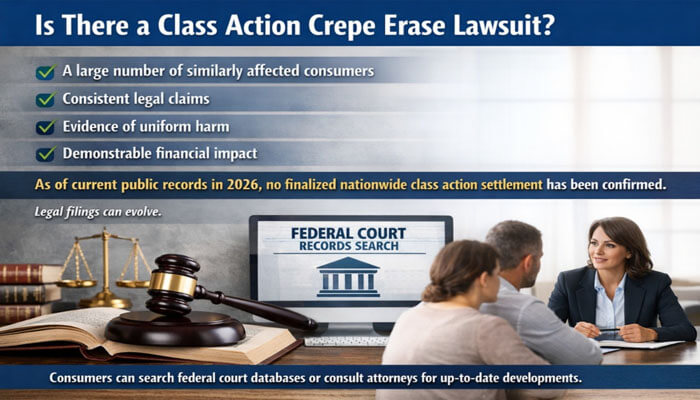
Class action cases require:
- A large number of similarly affected consumers
- Consistent legal claims
- Evidence of uniform harm
- Demonstrable financial impact
As of current public records in 2026, no finalized nationwide class action settlement has been confirmed. However, legal filings can evolve.
Consumers may search federal district court databases or consult attorneys for up-to-date developments.
Potential Legal Grounds in Consumer Cases
If litigation were pursued, possible legal claims could include:
1. False Advertising
Allegations that product claims were not properly substantiated.
2. Unfair and Deceptive Trade Practices
Violations of state consumer protection statutes (often called UDAP laws).
3. Breach of Warranty
Failure to meet express or implied product representations.
4. Unjust Enrichment
Profiting from alleged misleading representations.
5. Failure to Disclose Subscription Terms
Inadequate disclosure of recurring billing obligations.
Consumer Protection Laws That May Apply
Several laws protect consumers from deceptive marketing or unclear subscription practices:
- Federal Trade Commission Act
- State Unfair and Deceptive Acts and Practices (UDAP) statutes
- State Automatic Renewal Laws
- Electronic Fund Transfer Act
These laws require transparency, clear disclosures, and substantiated advertising claims.
How Much Could a Settlement Be Worth?
Settlement amounts in consumer advertising cases vary significantly.
Factors influencing potential recovery include:
- Number of claimants
- Amount spent per consumer
- Duration of recurring billing
- Strength of evidence
- Scope of alleged deception
In many consumer product class actions, individual recoveries may range from partial refunds to reimbursement of purchase costs. Large aggregate settlements can reach millions of dollars, but individual payouts are often modest.
How to Know If You May Qualify for a Claim

You may wish to consult an attorney if:
- You purchased based on specific anti-aging claims
- You were enrolled in an auto-renewal program without clear consent
- You experienced unexpected recurring charges
- You attempted cancellation and faced unreasonable barriers
Helpful documentation includes:
- Order confirmations
- Billing statements
- Marketing screenshots
- Email correspondence
Maintaining records strengthens any potential claim.
What To Do If You Believe You Were Misled
- Contact the company directly for resolution.
- Dispute unauthorized charges with your bank or credit card issuer.
- File a complaint with the FTC.
- Consult a consumer protection attorney for evaluation.
Many attorneys offer free case reviews in consumer protection matters.
Emotional Impact on Consumers
Anti-aging products are often purchased during transitional life stages. When expectations are not met, the disappointment can extend beyond financial loss.
Transparency in marketing and billing practices is essential to maintaining consumer trust in the skincare industry.
Final Thoughts
The discussion surrounding a potential Crepe Erase lawsuit highlights broader concerns about marketing transparency and subscription billing practices in the beauty industry.
While not every consumer complaint results in legal liability, consistent patterns of dissatisfaction can prompt regulatory review or litigation.
Consumers who stay informed, document transactions, and understand their legal rights are in the strongest position to protect themselves.
Crepe Erase Lawsuit FAQs
Is Crepe Erase currently being sued?
Public case status may vary. No nationwide finalized class action settlement has been confirmed as of 2026.
Are Crepe Erase reviews reliable?
Reviews are mixed. Crepe erase reviews are mixed. Some consumers report positive hydration effects, while others express dissatisfaction with pricing or results.
Does Crepe Erase Have Complaints About Auto Billing?
Yes. Some consumers have reported concerns regarding subscription enrollment and recurring charges.
Can I get a refund From Crepe Erase?
Refund eligibility depends on the company’s policies and timing of your request.
How do I join a Erase lawsuit lawsuit?
You would need to consult a consumer protection attorney to determine eligibility.
Disclaimer: This article is for informational purposes only and does not constitute legal advice. Legal outcomes vary based on individual circumstances. Consult a qualified attorney for advice regarding your specific situation.