

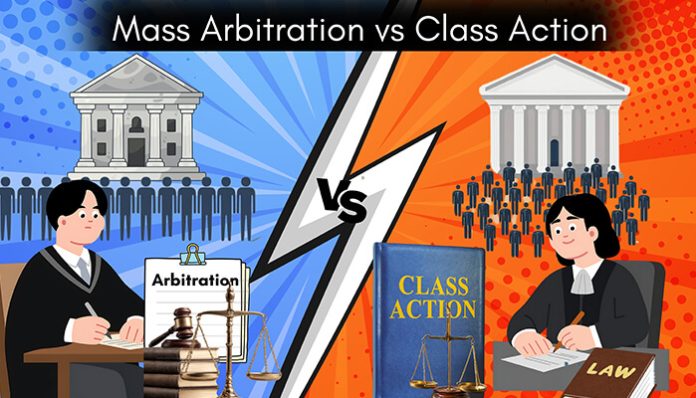
When comparing mass arbitration vs class action, many people are trying to understand which legal path offers better results. Both options allow individuals with similar claims to pursue action against the same company, but they differ in procedure, cost, settlement structure, and legal strategy. Understanding how mass arbitration and a class action lawsuit work can help you decide which approach fits your situation.
What Is Mass Arbitration?
Mass arbitration is a process where a large number of individuals file separate arbitration claims against the same company, often under identical or nearly identical circumstances. Unlike traditional arbitration, which typically involves one dispute at a time, mass arbitration consolidates numerous claims to improve efficiency.
Key Features:
- Claims are filed individually but often managed together.
- Each participant has their own arbitrator and case.
- Can result in individual awards or settlements.
Mass arbitration cases are increasingly common in industries like finance, consumer contracts, and employment agreements, particularly when companies include arbitration clauses in contracts that prevent class action lawsuits.
What Is a Class Action?
A class action lawsuit allows a group of people with similar legal claims to sue a defendant as a single entity. This approach can save time and resources by consolidating multiple individual claims into one lawsuit.
Key Features:
- Filed in court as a single legal action.
- Plaintiffs share the same legal representation.
- Settlements are distributed to all class members via a class action settlement fund.
Class actions are often used in cases involving consumer fraud, product liability, employment disputes, and large-scale financial misconduct.
Mass Arbitration vs Class Action: Key Differences
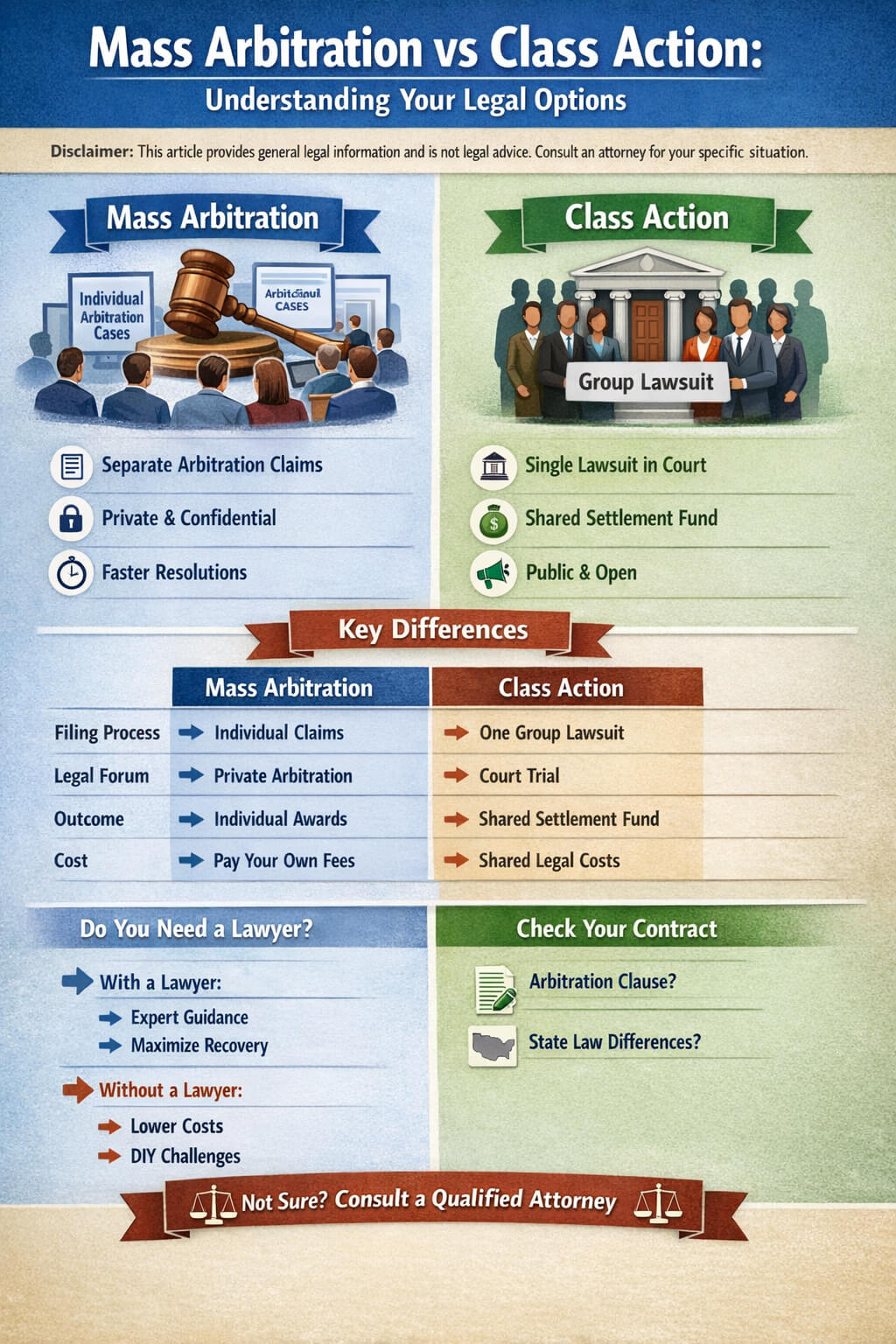
| Feature | Mass Arbitration | Class Action Lawsuit |
| Filing Process | Individual claims filed separately | One lawsuit for all plaintiffs |
| Legal Forum | Arbitration (private) | Court (public) |
| Outcome | Individual awards; sometimes settlements | Collective settlement fund or judgment |
| Timeframe | Often faster than court | Can take years due to litigation process |
| Costs | Parties often bear individual arbitration fees | Shared litigation costs, sometimes contingent on success |
| Publicity | Private and confidential | Public record; settlements and rulings may be published |

What Is a Mass Arbitration Settlement Fund?
A mass arbitration settlement fund is a pool of money established by a company to resolve multiple individual arbitration claims filed against it. Unlike class action settlement funds, which are distributed collectively to class members, mass arbitration settlement funds are typically allocated to individual claimants based on separate arbitration awards or negotiated settlements.
When to Choose Mass Arbitration vs Class Action
Deciding between these options often depends on your specific situation, including cost considerations, the presence of an arbitration clause, and the number of people involved.
Mass Arbitration May Be Better If:
- Your contract requires arbitration.
- You want faster resolution than a class action.
- You prefer confidential proceedings.
Class Action May Be Better If:
- Multiple plaintiffs share the same claims.
- You want to leverage a collective legal strategy.
- You prefer a publicly accountable process.
What to Know About Mass Arbitration Settlement Funds
While class action settlement funds are common and well-understood, some mass arbitration cases may also result in settlement funds. These are usually managed individually rather than pooled collectively, meaning awards can vary from participant to participant based on arbitrator decisions.
- Check eligibility carefully: not all claims may qualify for a settlement fund.
- Understand timelines: arbitrators may resolve cases at different speeds.
- Verify award distribution: individual arbitration may require separate collection processes.
Practical Considerations: Do You Need a Lawyer?
Whether pursuing mass arbitration or a class action lawsuit, hiring a lawyer can significantly affect outcomes:
With a Lawyer:
- Expert guidance on filing procedures.
- Higher likelihood of maximizing recovery.
- Assistance with arbitration rules or class certification.
Without a Lawyer:
- Potentially lower costs.
- Must navigate complex rules and deadlines independently.
- Risk of missing crucial procedural steps.
In some mass arbitration cases, individuals successfully proceed without legal representation, but for complex claims, legal advice is recommended.
State-Specific Considerations
Legal rules for mass arbitration and class actions can vary by state. For example:
- California: Strong consumer protection laws can affect arbitration clauses.
- New York: Courts often favor arbitration but maintain strict rules for class actions.
- Texas: Some arbitration agreements may limit mass filings.
Always review your contract and local laws to understand your rights and options.
Conclusion: Making an Informed Choice
Choosing between mass arbitration and a class action lawsuit requires careful consideration of your legal context, costs, and desired outcomes. Key takeaways:
- Mass arbitration allows individual claims under a coordinated approach.
- Class actions consolidate claims, often resulting in a shared settlement fund.
- Hiring a lawyer can improve your chances of success, but self-representation is possible for simpler cases.
- State laws and arbitration clauses play a crucial role in your options.
If you’re unsure which route to take, consider reviewing your contract, checking for arbitration clauses, and consulting a qualified attorney. Understanding the practical differences between mass arbitration and class action lawsuits helps you make the best legal decision for your situation.
FAQs: Mass Arbitration vs Class Action
Q: Can I participate in both mass arbitration and a class action?
A: Usually not. Contracts with arbitration clauses often prohibit class actions.
Q: How long does mass arbitration take?
A: Typically faster than class actions, but timelines vary by arbitrator and case complexity.
Q: Are settlements guaranteed in mass arbitration?
A: No. Each arbitration case is decided individually, though settlements are possible.
Q: How do I know if I qualify for a mass arbitration case?
A: Review your contract or legal agreement, and consult an attorney if unsure.
Disclaimer: This article provides general legal information and is not legal advice. Laws vary by jurisdiction; consult a qualified attorney for advice about your specific situation.