

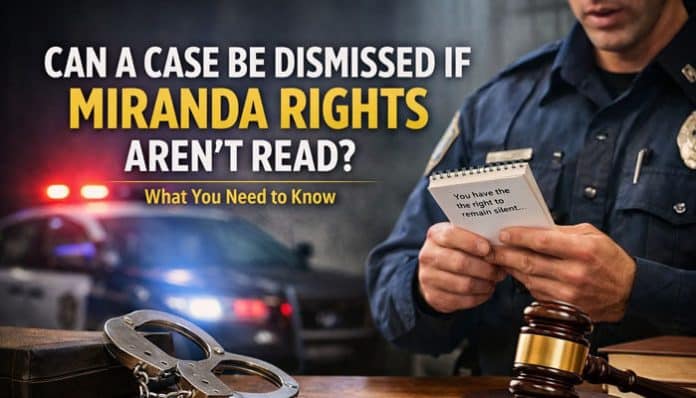

If you’ve been involved in a criminal case, understanding the importance of Miranda rights is crucial. Many people wonder, Can a case be dismissed if Miranda rights aren’t read? The simple answer is no, but there are nuances that can affect the outcome of your case. This article will provide a clear breakdown of Miranda rights, the consequences of not being read your rights, and how appellate judges review these cases.
What Are Miranda Rights?
Miranda rights are a set of legal warnings that police must inform you of before questioning you while you’re in custody. These rights are rooted in the landmark U.S. Supreme Court decision Miranda v. Arizona (1966), which protects your Fifth Amendment right against self-incrimination. Here’s what is typically included in the warning:
- You have the right to remain silent
- Anything you say can be used against you in court
- You have the right to an attorney
- If you cannot afford an attorney, one will be provided for you
These rights are meant to ensure that any confession made during police questioning is voluntary and informed. However, Miranda rights don’t prevent police from arresting you or questioning you before you’re in custody.
When Must Miranda Rights Be Read?
Miranda rights must be read only in specific situations:
- Custody: You must be in custody, meaning a reasonable person would not feel free to leave (e.g., you’re handcuffed or at a police station).
- Interrogation: The police must plan to ask you questions that are likely to elicit incriminating statements.
If both of these conditions are met, then Miranda rights must be read before any questioning begins.
Can a Case Be Dismissed if Miranda Rights Aren’t Read?
No, a case is not automatically dismissed if Miranda rights aren’t read. However, there are significant consequences:
What Happens If Miranda Rights Aren’t Read?
- Statements Are Suppressed:
If you’re in custody and interrogated without being read your Miranda rights, any statements you make cannot be used as evidence in court. This is called suppression of evidence. - Other Evidence May Still Be Admissible:
Even if your statements are suppressed, other evidence—such as physical evidence, witness testimony, or video footage—can still be used in court. - The Case Can Still Proceed:
If the prosecution has strong evidence that does not rely on your statements, the case can continue. Failure to read your Miranda rights does not automatically result in a dismissal.
Cases Dismissed Due to Miranda Rights Violations:
While Miranda violations may weaken the prosecution’s case, they rarely lead to a full case dismissal. The case’s fate largely depends on whether the prosecution can proceed without the suppressed statements.
Do You Have to Be Read Miranda Rights for a DUI?
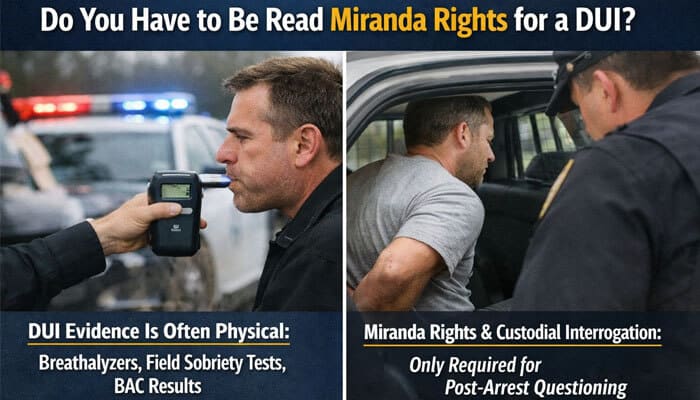
In many DUI (Driving Under the Influence) cases, Miranda rights are not required for two main reasons:
- DUI Evidence Is Often Physical:
Much of the evidence in DUI cases—such as breathalyzer results, field sobriety tests, and blood alcohol concentration (BAC)—is physical evidence, not statements made by the suspect. - Miranda Rights Apply to Custodial Interrogation:
Since DUI arrests usually involve immediate physical evidence rather than custodial questioning, Miranda rights may not be necessary unless the police intend to ask questions after the arrest.
DUI Arrest Without Miranda:
Even if the police don’t read your Miranda rights during a DUI stop, the case can still proceed based on physical evidence.
What Happens If You Are Not Read Your Miranda Rights?
If you were not read your Miranda rights when you should have been:
1. Statements Are Suppressed:
Any statements made after being taken into custody and before being read your Miranda rights are typically inadmissible in court. This can hurt the prosecution’s case if your statements were crucial.
2. Charges May Continue:
Despite the suppression of your statements, charges may continue if there is enough other evidence to support the case.
3. Potential Defense Benefits:
The failure to read Miranda rights can be used as part of your defense strategy. Your attorney might use this violation to argue for a reduced charge or seek a favorable settlement, but it does not guarantee a case dismissal.
Do Cops Have to Read Miranda Rights?
Police are required to read Miranda rights only when both of these conditions are met:
- Custody: You are not free to leave, such as being handcuffed or detained at a police station.
- Interrogation: The police intend to ask questions that might elicit self-incriminating statements.
If either of these conditions is missing, police are not obligated to read you Miranda rights.
Can You Sue for Not Being Read Your Miranda Rights?

The short answer is no—under current U.S. law, a violation of Miranda rights does not automatically allow you to sue the officers for damages. This was established in the Vega v. Tekoh case (2022), where the Supreme Court ruled that the failure to administer Miranda warnings does not grant an individual the right to claim monetary damages.
You may still have the right to challenge any statements made during custodial interrogation, and the evidence derived from those statements may be suppressed.
Quick Summary: When Are Miranda Rights Required?
| Situation | Miranda Rights Required? | Evidence Excluded? | Case Dismissed? |
|---|---|---|---|
| Traffic stop questions | No | No | No |
| DUI arrest, before questioning | No | No | No |
| Custodial interrogation without Miranda | Yes | Statements suppressed | No |
| Custodial interrogation with Miranda | Yes | All evidence allowed | No |
Final Takeaway
If you’re wondering Can a case be dismissed if Miranda rights aren’t read?, the answer is no, a case is not automatically dismissed. However, Miranda violations can still impact your defense. Failing to read Miranda rights typically results in the suppression of statements made after custody and before the warning. This can weaken the prosecution’s case if those statements were crucial.
Miranda rights only apply when you are in custody and being interrogated. If not read, your statements may be excluded, but the case can proceed with other evidence. Appellate courts closely review Miranda issues to ensure proper legal procedures were followed. If you believe your rights were violated, consulting a skilled criminal defense lawyer is essential for the best defense strategy.
Can a Case Be Dismissed if Miranda Rights Aren’t Read FAQs
1. Can a case be dismissed if Miranda rights aren’t read?
No, a case is not automatically dismissed if Miranda rights aren’t read. However, statements made without them may be excluded from evidence.
2. What happens if the police don’t read you your Miranda rights before arrest?
Failure to read Miranda rights doesn’t automatically invalidate the case, but statements made before being read your rights may be excluded as evidence.
3. Can police still use my confession if they didn’t read me my Miranda rights?
Police cannot use confessions made before reading Miranda rights, but physical evidence and other testimonies may still be admissible.
4. Do police need to read Miranda rights during an interrogation at a traffic stop?
Miranda rights are not required during a traffic stop unless you’re in custody and being interrogated by the police.
5. What if I waived my Miranda rights and confessed? Can my confession be used in court?
If you voluntarily waive your Miranda rights, your confession can be used in court, provided the waiver was made knowingly and without coercion.
6. How can I prove my Miranda rights were violated?
To prove a violation, you must show you were in custody and interrogated without being read your Miranda rights; an attorney can help with this.
Disclaimer:
The information provided in this article is for general informational purposes only and is not intended as legal advice. If you are facing legal issues related to Miranda rights or any criminal matter, it is strongly recommended that you consult with a qualified attorney who can provide guidance based on your specific circumstances.
