


Legal battles can take months or even years to resolve, leaving many plaintiffs under serious financial pressure. This is where uplift legal funding becomes an important financial lifeline for individuals waiting for settlement payouts.
In 2026, uplift legal funding is growing rapidly due to rising legal costs, delayed settlements, and increasing demand for quick financial support. Many plaintiffs now depend on uplift legal funding to manage essential expenses such as rent, medical bills, and daily living costs without compromising their legal position.
From a practical perspective, uplift legal funding allows individuals to focus on their legal case instead of financial stress. This added stability often leads to better legal outcomes, as plaintiffs are not forced into accepting low settlement offers due to urgent financial needs.
What Is Uplift Legal Funding?
Uplift legal funding is a pre-settlement funding solution that provides plaintiffs with cash advances based on the expected value of their legal claim. Unlike traditional loans, uplift legal funding is not based on your credit score or employment status. Instead, approval depends on the strength of your legal case and the likelihood of a successful outcome. This makes uplift legal funding accessible to a wider range of individuals.
Another important aspect is that uplift legal funding is non-recourse. This means you only repay the amount if you win or settle your case. If you lose, you typically owe nothing, which significantly reduces financial risk compared to traditional borrowing.
Key Features of Uplift Legal Funding:
- Non-recourse structure (repay only if you win)
- No credit score requirement
- Approval based on case strength
- Fast processing compared to banks
- No monthly repayments
- Flexible use of funds
Because of these features, uplift legal funding is widely considered a practical and accessible financial option during legal proceedings.
How Uplift Legal Funding Works
The process of obtaining uplift legal funding is simple, fast, and designed to meet urgent financial needs. Unlike traditional loans that may take weeks, uplift legal funding can often be approved within a few days. This speed is essential for individuals facing immediate financial challenges during a lawsuit.
Additionally, funding companies typically work directly with your attorney. This ensures that your case is evaluated accurately and reduces the burden of paperwork on your end.
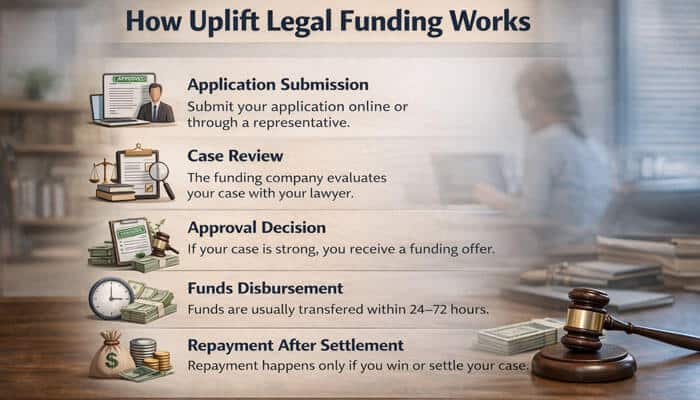
Step-by-Step Process:
- Application Submission: Submit your application online or through a representative.
- Case Review: The funding company evaluates your case with your lawyer.
- Approval Decision: If your case is strong, you receive a funding offer.
- Funds Disbursement: Funds are usually transferred within 24–72 hours.
- Repayment After Settlement: Repayment happens only if you win or settle your case.
Why This Matters:
- Faster than traditional loans
- Minimal documentation required
- Immediate financial relief
- No financial obligation if you lose
This efficient process is one of the main reasons why uplift legal funding continues to grow in popularity.
Key Benefits of Uplift Legal Funding
Understanding the benefits of uplift legal funding helps you decide whether it is the right option for your situation. One of the biggest advantages is financial flexibility. You can use uplift legal funding for essential expenses without worrying about monthly repayments or credit impact.
Another major benefit is improved negotiation power. When financial pressure is reduced, plaintiffs are less likely to accept low settlement offers, allowing their legal team to pursue fair compensation.
Major Advantages:
- Immediate access to funds
- No upfront fees
- No monthly installments
- No repayment if the case is lost
- Helps avoid early settlement pressure
- Supports financial stability
These advantages make uplift legal funding a valuable financial tool during long legal cases.
Uplift Legal Funding Interest Rates & Fees
While uplift legal funding provides convenience and speed, it is important to understand the associated costs. Since repayment depends on the outcome of the case, funding providers take on a higher risk. As a result, the cost of uplift legal funding is generally higher than traditional financing options.
Another key factor is compounding interest. Over time, the total repayment amount can increase significantly, especially if the legal case takes longer than expected.
Typical Costs:
- Monthly interest rates: 2% to 4% or higher
- Compounding interest over time
- Administrative or processing fees
- Risk-based pricing
Important Considerations:
- Longer cases lead to higher repayment amounts
- Compounding can significantly increase costs
- Always request a full repayment estimate
- Compare multiple funding providers
Because of these factors, uplift legal funding should be used strategically and only when necessary.
Pros and Cons of Uplift Legal Funding
✅ Pros:
- No repayment if you lose your case
- Fast access to emergency funds
- No credit checks required
- Reduces financial stress
- Supports better settlement decisions
❌ Cons:
- Higher cost than traditional loans
- Interest compounds over time
- Reduces the final settlement amount
- Not suitable for weak cases
Understanding these pros and cons ensures that you use uplift legal funding wisely.
Who Should Use Uplift Legal Funding?
Uplift legal funding is best suited for individuals who are experiencing financial pressure during a lawsuit. It is particularly helpful for plaintiffs dealing with medical expenses, loss of income, or other urgent financial obligations. In such cases, uplift legal funding provides necessary support without immediate repayment pressure.
However, if you have sufficient savings or access to lower-cost financing, uplift legal funding may not be the most cost-effective option.
Ideal Candidates:
- Personal injury victims
- Accident claimants
- Individuals with medical expenses
- People with lost income
Not Recommended For:
- Financially stable individuals
- Short-term legal cases
- Weak or uncertain claims
Is Uplift Legal Funding Safe?
Uplift legal funding is part of a growing financial industry, but it requires careful evaluation before use. Reputable providers operate transparently and coordinate with your attorney to ensure fair agreements. However, the industry is not strictly regulated in all regions, which means due diligence is important.
Signs of a Reliable Provider:
- Transparent agreements
- Clear fee structure
- Works with attorneys
- No hidden charges
Risks to Watch:
- Lack of strict regulation
- Hidden fees in some contracts
- Varying customer experiences
Before choosing Uplift Legal Funding, always review the terms carefully and consult your lawyer.
Alternatives to Uplift Legal Funding
Before committing to uplift legal funding, it is important to explore alternative financial options. Some alternatives may offer lower costs, but they may also come with stricter eligibility requirements or repayment obligations.
Possible Alternatives:
- Personal loans
- Credit cards (short-term use)
- Borrowing from family or friends
- Attorney-based arrangements
- Settlement negotiation strategies
Comparing these options ensures that you make the most informed financial decision.
Common Mistakes to Avoid
Many individuals misuse uplift legal funding, which can negatively impact their final settlement. Understanding these mistakes helps you avoid unnecessary financial strain and use uplift legal funding effectively.
Avoid These Mistakes:
- Borrowing more than necessary
- Ignoring compounding interest
- Not comparing providers
- Signing agreements without legal advice
- Using funds for non-essential spending
Avoiding these mistakes ensures that uplift legal funding works in your favor.
Expert Tips for Using Uplift Legal Funding
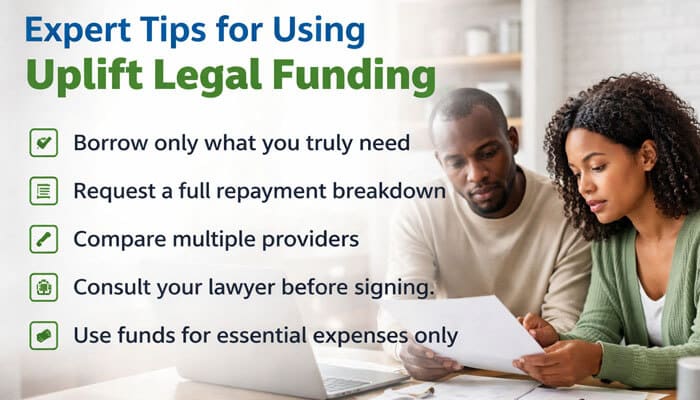
Using uplift legal funding strategically can improve your financial stability during a lawsuit. Smart decision-making helps you reduce costs and maximize the benefits of funding support.
- Borrow only what you truly need
- Request a full repayment breakdown
- Compare multiple providers
- Consult your lawyer before signing
- Use funds for essential expenses only
These tips help you get the most value from uplift legal funding.
Conclusion
Uplift legal funding can be a powerful financial solution for plaintiffs facing long legal battles. Its non-recourse structure makes uplift legal funding less risky than traditional loans, but the higher costs require careful planning.
When used correctly, uplift legal funding helps maintain financial stability, reduces pressure, and allows you to wait for a fair settlement. Always evaluate your options, understand the terms, and consult your attorney before making a decision.
Uplift Legal Funding FAQs
1. What is uplift legal funding?
Uplift legal funding is pre-settlement funding that gives plaintiffs cash before a lawsuit is resolved. It helps cover urgent expenses like rent, bills, and medical costs while waiting for a settlement.
2. How does uplift legal funding work?
Uplift legal funding works by reviewing your case with your attorney and offering a cash advance if the claim is strong. Repayment usually happens only if you win or settle your lawsuit.
3. Do I have to repay uplift legal funding if I lose my case?
In most cases, uplift legal funding is non-recourse, so you do not repay it if you lose. This makes uplift legal funding less risky than many traditional borrowing options.
4. Is uplift legal funding expensive?
Uplift legal funding can be expensive because it often includes higher rates and compounding fees over time. Always review the full repayment amount before accepting uplift legal funding.
5. Is uplift legal funding safe?
Uplift legal funding can be safe if you choose a reputable provider with clear terms and transparent fees. It is smart to review the agreement carefully and discuss it with your attorney first.
Disclaimer: This article is for informational purposes only and is not legal or financial advice. Always review uplift legal funding terms carefully and consult your attorney before making a decision.