

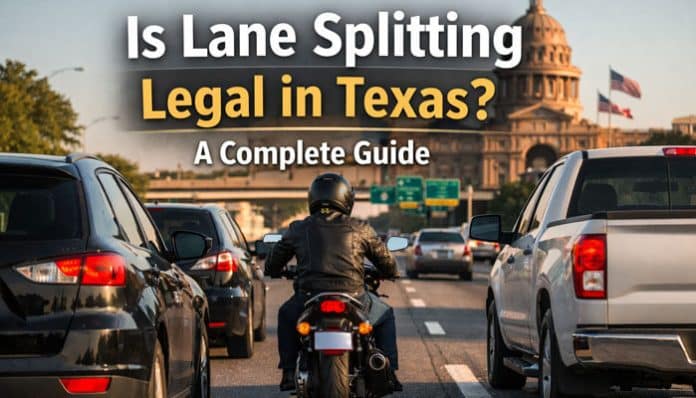

Is Lane Splitting Legal in Texas, a practice commonly associated with motorcycle riders, occurs when a motorcyclist rides between two lanes of traffic, often during slow or stopped traffic. It’s a topic that sparks much debate among both riders and drivers. For some, lane splitting is a way to reduce travel time and avoid traffic congestion, while others view it as an unsafe maneuver that could lead to accidents.
If you’re a motorcyclist in Texas, you may be wondering: Is lane splitting legal in Texas? The answer may surprise you, especially if you’re familiar with its legality in other states, like California. While some states have embraced lane splitting under specific conditions, Texas does not. In fact, lane splitting is explicitly prohibited under Texas law.
In this article, we’ll explore Is Lane Splitting Legal in Texas, what the law says, and what alternatives riders have to navigate through traffic safely. Whether you’re a seasoned rider or a motorcycle enthusiast, it’s crucial to understand the legal implications of this practice to ensure your safety and avoid potential fines or legal issues.
What Is Lane Splitting?
Lane splitting is the act of riding a motorcycle between lanes of slow-moving or stopped vehicles. Riders often use it to bypass congestion and maintain movement during traffic jams. While it may seem efficient, it increases exposure to unpredictable driver behavior.
It is important to distinguish lane splitting from similar terms, as confusion can lead to legal violations.
🔍 Key Points:
- Riding between lanes of cars
- Common in heavy traffic
- Used to avoid congestion delays
Texas Lane Splitting Law (2026 Update)
Texas law now explicitly prohibits lane splitting, removing any previous ambiguity. House Bill 4122 introduced clear restrictions under the Texas Transportation Code, ensuring uniform enforcement across the state.
This clarity benefits both riders and law enforcement by reducing confusion and improving legal consistency.
Legal Status:
-
- Lane splitting is illegal statewide
- Covered under Texas Transportation Code §545.0605
- Strict enforcement across all cities
Why Did Texas Ban Lane Splitting?
Texas banned lane splitting primarily due to safety concerns. Motorcycles are less visible than other vehicles, making them vulnerable in tight traffic conditions. Drivers may not expect a motorcycle between lanes, increasing the likelihood of sudden collisions.
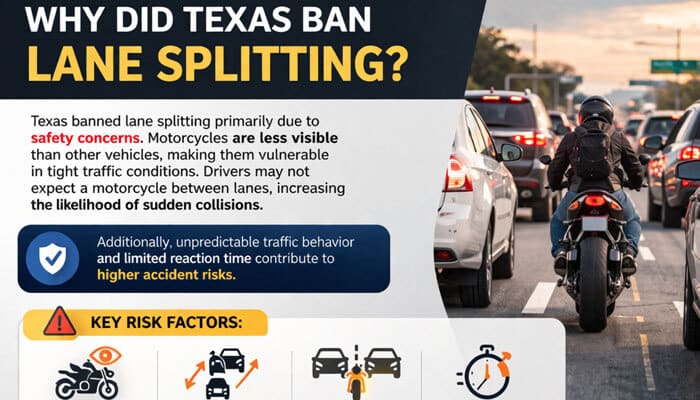
Additionally, unpredictable traffic behavior and limited reaction time contribute to higher accident risks.
Key Risk Factors:
-
-
- Low visibility of motorcycles
- Sudden lane changes by drivers
- Narrow riding space
- Reduced reaction time
-
Lane Splitting vs. Lane Filtering: Definitions That Matter
Here’s a quick comparison of the two terms:
| Term | Definition | Traffic Law Status in Texas |
| Lane Splitting | Riding between moving or stopped vehicles | Illegal |
| Lane Filtering | Slowly moving between stopped vehicles at a light | Illegal |
| Lane Sharing | Two motorcycles riding side by side in the same lane | Legal, but only within the same lane |
| Shoulder Riding | Riding on the shoulder of the road or passing on the shoulder | Generally illegal, with limited exceptions for disabled vehicles |
While lane splitting and filtering may sound similar, Texas law doesn’t differentiate between them, considering both illegal. Lane sharing, however, is legal if both motorcycles remain in the same lane.
Is Lane Splitting Legal in Texas? (The Law)
Texas state law does not have any specific provisions that allow for lane splitting or lane filtering. According to Texas law, all vehicles, including motorcycles, are required to stay within a single lane of traffic.
The Texas Transportation Code explicitly states that:
- Riders must remain in a single lane and pass vehicles according to the rules of the road.
- Passing between vehicles is considered improper passing.
The lack of legal authorization means that motorcycles cannot legally ride between lanes in Texas, whether traffic is moving slowly or stopped.
Lane Splitting vs Lane Sharing
Many riders confuse lane splitting with lane sharing, but they are legally different. Texas allows lane sharing but prohibits lane splitting.
Understanding this distinction is critical to avoid legal issues.
📊 Comparison Table:
| Practice | Legal in Texas? | Description |
| Lane Splitting | ❌ Illegal | Riding between lanes |
| Lane Filtering | ❌ Illegal | Riding between stopped cars |
| Lane Sharing | ✅ Legal | Two motorcycles in one lane |
Is Lane Filtering Legal in Texas?
Lane filtering involves moving between stopped vehicles, such as at traffic lights. Although allowed in some states, Texas treats it the same as lane splitting.
Motorcyclists must remain within their designated lane at all times.
🚫 Key Points:
- Lane filtering is illegal
- Same law as lane splitting
- No exceptions in traffic
Where Is Lane Splitting Legal in the U.S.?
Lane splitting laws vary across the United States. Some states allow it under strict conditions, while others, like Texas, prohibit it completely.
Understanding these differences is important for riders traveling across states.
📍 Legal Comparison:
| State | Status |
| California | ✅ Legal |
| Arizona | ⚠️ Limited filtering |
| Utah | ⚠️ Restricted filtering |
| Texas | ❌ Illegal |
What Motorcyclists Should Do Instead
Since lane splitting is illegal, riders should adopt safe and legal alternatives. Defensive riding techniques can significantly reduce accident risks.
These practices also help ensure compliance with Texas law.
✅ Safe Alternatives:
- Maintain safe following distance
- Stay visible to drivers
- Avoid blind spots
- Use proper lane positioning
- Wear protective gear
What to Do If You’re Ticketed for Lane Splitting
If you receive a ticket, handling it properly can reduce penalties and legal complications. Understanding your options is key.
📌 Steps to Take:
- Review the ticket carefully
- Pay or contest the fine
- Consult a traffic attorney
- Avoid admitting fault
Texas Traffic Laws That Affect Lane Splitting
Though Texas does not have a law explicitly prohibiting lane splitting, related laws make it clear that this practice is not allowed:
Key Traffic Laws:
- Texas Transportation Code §545.060: All vehicles must stay within a single lane of traffic unless overtaking and passing another vehicle in the same lane.
- §545.058: Regulates overtaking vehicles and passing others in the same lane, which lane splitting violates.
- §551.101: The “Rules of the Road” apply to motorcycles, ensuring their operation is consistent with that of other vehicles.
How Is Lane Splitting Enforced in Texas?
Lane splitting is typically enforced under the broader categories of reckless driving, improper passing, or failure to maintain a lane. While the Texas code doesn’t call out lane splitting specifically, police can cite motorcyclists for these violations if they are caught weaving between lanes.
Motorcyclists engaged in lane splitting could face a ticket or fines for improper passing or even reckless driving depending on the situation. These penalties can vary by region and the specifics of the offense.
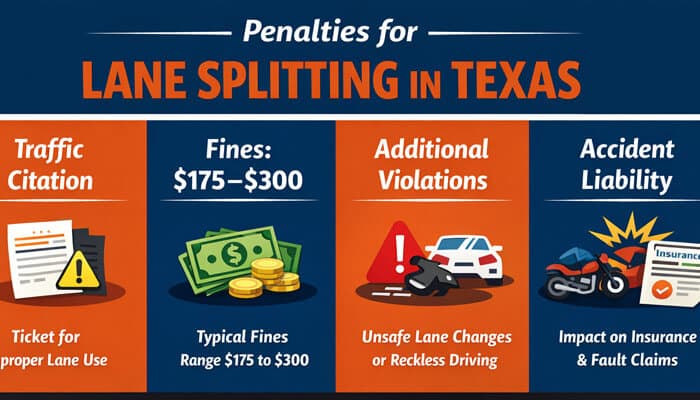
Violating lane splitting laws can result in both financial and legal consequences. Even minor violations can become serious if they lead to accidents or injuries.
Texas enforces these penalties to discourage unsafe riding and maintain road discipline.
Consequences:
- Traffic ticket (Class C misdemeanor)
- Fines ($100–$300+)
- Points on driving record
- Increased insurance premiums
Is Lane Splitting Legal in Other U.S. States?
While lane splitting is illegal in Texas, several other states have laws that either allow or regulate the practice:
| State | Lane Splitting Legal? | Conditions |
| California | Yes | Regulated with safety guidelines |
| Utah | Yes | Allowed when traffic is stopped or moving <25 mph |
| Florida | No | Similar to Texas — lane splitting is illegal |
| New York | No | Lane splitting is illegal |
Lane splitting laws vary significantly across the United States. While Texas remains conservative regarding lane splitting, other states, particularly on the West Coast, have moved toward legalization under certain conditions.
Motorcycle Accident Statistics Related to Lane Splitting
Motorcycle accident data highlights the risks of riding in congested traffic. A large percentage of motorcycle crashes occur in urban environments where traffic density is high and visibility is limited.
While some controlled studies suggest potential benefits, unrestricted lane splitting significantly increases the chance of side-impact collisions.
📊 Key Insights:
- Many motorcycle accidents occur in traffic congestion
- Visibility issues are a leading cause
- Urban areas have higher crash rates
📊 Quick Safety Comparison Table
| Factor | Lane Splitting | Normal Riding |
| Visibility | Low | High |
| Risk Level | High | Moderate |
| Legal Status (Texas) | ❌ Illegal | ✅ Legal |
| Collision Risk | High | Lower |
Texas Comparative Fault Rule Explained
Texas follows a modified comparative negligence rule (51%), which determines how compensation is awarded in accidents. If a rider is partially responsible, their compensation is reduced accordingly.
Lane splitting can significantly increase fault percentage, affecting the outcome of claims.
Key Points:
- Compensation reduced by fault percentage
- Over 50% fault = no compensation
- Lane splitting increases liability risk
How Lane Splitting Affects Insurance Claims
Insurance companies assess rider behavior when processing claims. Engaging in illegal actions like lane splitting can negatively impact claim outcomes.
Riders may face reduced payouts or even claim denial due to perceived negligence.
💡 Insurance Impact:
- Claims may be reduced
- Claims may be denied
- Higher insurance premiums
- Increased liability classification
Insurance Impact Table
| Situation | Insurance Outcome |
| Legal riding | Normal claim processing |
| Lane splitting accident | Reduced payout |
| High fault (50%+) | Claim denied |
Safety Research on Lane Splitting
Research on lane splitting offers mixed conclusions:
- Some studies suggest that lane splitting can help prevent rear-end collisions by allowing motorcyclists to maneuver through traffic.
- Other studies warn that splitting lanes increases the risk of side-impact crashes, as motorists may not expect motorcyclists to appear between lanes.
Despite these mixed results, agencies like the National Highway Traffic Safety Administration (NHTSA) and the Motorcycle Safety Foundation (MSF) recommend riding cautiously in heavy traffic, even if lane splitting is not legal.
Can Texas Legalize Lane Splitting in the Future?
There have been discussions about legalizing lane splitting in Texas, but no proposals have been approved. Safety concerns remain the primary barrier to legalization.
While some states have adopted controlled lane splitting, Texas continues to prioritize strict road safety regulations.
Future Outlook:
- Possible legislative debates
- Safety concerns remain high
- No legalization as of 2026
Conclusion
The Is lane splitting legal in Texas, and there are no exceptions under current law. Motorcyclists are required to stay within a single lane at all times, and riding between vehicles—whether traffic is moving or stopped—can result in fines, penalties, and increased liability in case of an accident.
While some states have adopted limited forms of lane splitting or filtering, Texas continues to prioritize road safety, predictability, and uniform traffic rules. The risks associated with lane splitting—such as low visibility, sudden driver movements, and reduced reaction time—make it a dangerous practice on Texas roads.
For riders, the smartest choice is to follow legal and defensive riding techniques, including maintaining lane discipline, avoiding blind spots, and staying visible to other drivers. These habits not only keep you compliant with the law but also significantly reduce the risk of accidents and insurance complications.
Is Lane Splitting Legal in Texas FAQs
1. Is lane splitting legal in Texas?
No, lane splitting is illegal in Texas. Motorcyclists are prohibited from riding between lanes, whether traffic is moving slowly or stopped.
2. What is lane filtering, and is it legal in Texas?
Lane filtering involves moving slowly between stopped vehicles at traffic signals. It is also illegal in Texas, similar to lane splitting.
3. Why did Texas ban lane splitting?
Texas banned lane splitting due to safety concerns. Motorcycles are less visible, and lane splitting increases the risk of sudden collisions in traffic.
4. What penalties can I face for lane splitting in Texas?
Motorcyclists caught lane splitting can face traffic citations, fines starting around $175, and possible points on their driving record.
5. Is lane splitting legal in any other U.S. states?
Lane splitting is legal in California and Utah under certain conditions. However, it is illegal in Texas, Florida, and several other states.
Disclaimer: This article is for informational purposes only and not legal advice. Laws may change, and details can vary by situation. For accurate guidance, consult a qualified legal professional or official Texas laws.