

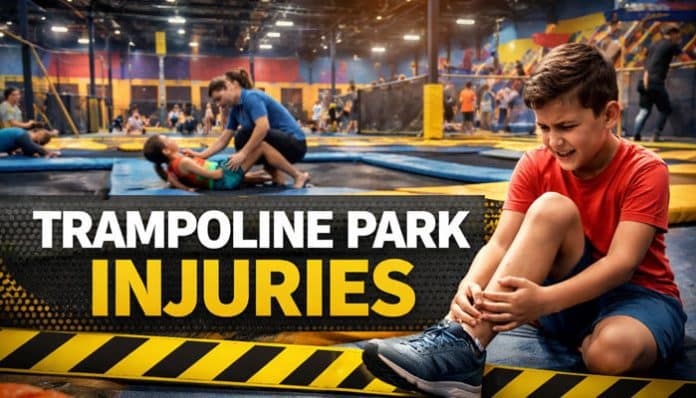

Trampoline parks are a popular destination for fun and exercise, offering a safe, controlled environment for kids and adults alike. However, like any recreational activity, there are risks involved. Trampoline park injuries often result from falls, collisions, or improper use of equipment. As trampoline parks grow in popularity, so does the risk of injury. While these parks provide exciting experiences, safety precautions are essential.
In this article, we’ll explore common injuries, their causes, and prevention tips, helping you and your loved ones enjoy these fun activities safely.
What Is a Trampoline Park?
A trampoline park is an indoor facility with interconnected trampolines, foam pits, dodgeball courts, and obstacle courses. Major chains like Sky Zone, Urban Air Adventure Park, and DEFY operate nationwide. Despite safety measures, injuries can still occur due to the high-impact and unpredictable nature of the activities.
- An estimated 14,000 trampoline-related injuries occur annually in the U.S. (CPSC).
- 75% of injuries in trampoline parks are caused by falls (American Academy of Pediatrics).
- Collisions between jumpers account for the remaining injuries.
- Trampoline parks are safer than backyard trampolines due to supervision and safer equipment.
- Despite safety measures, the risk of injury remains high.
Trampoline Park Injuries vs. Backyard Trampoline Injuries
| Factor | Trampoline Park Injuries | Backyard Trampoline Injuries |
| Frequency | Higher due to more participants. | Less frequent, but still significant. |
| Supervision | Often supervised by staff. | Usually unsupervised or with parents. |
| Injury Severity | Can be more severe. | Generally less severe. |
| Types of Injuries | Fractures, concussions, spinal injuries. | Sprains, strains, fractures. |
| Safety Equipment | Helmets, guards, and mats are available. | Limited equipment, mostly none. |
| Risk of Collision | Higher due to multiple jumpers. | Lower, typically fewer jumpers. |
| Maintenance | Regular, professional maintenance. | Varies by homeowner, often less frequent. |
| Design & Equipment | High-quality, professionally maintained. | Varies, often less durable. |
Common Causes Of Trampoline Injuries
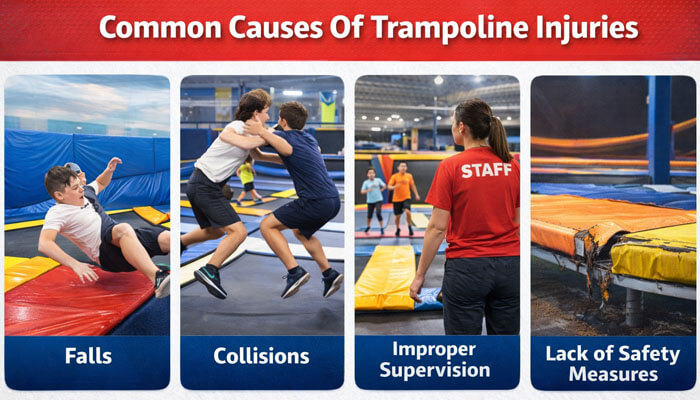
Understanding the causes of trampoline injuries is essential in identifying ways to prevent them. Here are the primary contributors:
1. Falls: Jumpers falling off the trampoline or landing incorrectly after a jump are the most common cause of injuries. Falls onto hard surfaces or other trampolines are particularly dangerous.
2. Collisions: Multiple people jumping at once often leads to collisions, which can cause sprains, fractures, or head injuries.
3. Improper Supervision: In trampoline parks, injury risk increases when attendants are not vigilant or when safety rules are not enforced.
4. Lack of Safety Measures: Insufficient padding, safety nets, or barriers around trampolines can expose jumpers to more severe injury risks.
Common Types of Injuries
Trampoline park injuries vary in severity. Some of the most common types of injuries include:
- Fractures: Broken bones, especially in the arms, legs, or wrists, occur when a jumper lands incorrectly.
- Sprains and Strains: Overstretching or twisting can lead to injuries in joints, especially the ankles and knees.
- Head and Neck Injuries: These injuries can occur from falls, collisions, or improper landings. Concussions and whiplash are common.
- Soft Tissue Injuries: Bruises, cuts, and abrasions are common due to falls or rough landings.
Trampoline Park Injury Trends
Trampoline parks have evolved significantly over the years, and so have the types and frequency of injuries. Here are a few injury trends that have emerged:
- Increase in Adult Injuries: Initially, trampoline parks catered mostly to children, but now adults also frequent these parks. The risk of injury among adults has risen, especially with high-impact tricks or activities.
- Injury Severity: While injuries have become more frequent, they are often less severe in trampoline parks, thanks to safety measures like padded floors and safety nets. However, cases involving spinal injuries have been reported.
- Increased Legal Claims: As the popularity of trampoline parks grows, so does the number of injury claims. Legal battles have emerged over issues like insufficient safety measures, overcrowding, and improper supervision.
Why These Injuries Occur
Trampoline park injuries can be attributed to several factors:
- Inexperience: Jumpers who lack experience in trampoline activities may not know how to land safely or avoid risky maneuvers.
- Overcrowding: When trampoline parks become too crowded, the risk of collisions increases, leading to more accidents.
- Inadequate Training: Staff members may not always be adequately trained in injury prevention, emergency procedures, or supervising large groups of jumpers.
- Poorly Maintained Equipment: Faulty or poorly maintained trampolines, pads, or nets can exacerbate the chances of injury.
Trampoline Park Safety Tips
To ensure a safe and enjoyable experience at trampoline parks, here are a few safety tips:
- Follow the Rules: Always adhere to the park’s safety guidelines, which typically include rules about age limits, jump height, and the number of people allowed on a trampoline at once.
- Wear Appropriate Clothing: Avoid loose clothing or jewelry, as these can get caught during a jump. Also, make sure your footwear is appropriate—usually, trampoline parks require jumping in socks to prevent slipping.
- Supervision is Key: Ensure children are always supervised by an adult or staff member to minimize the risk of injury.
- Limit Jumps and Stunts: Avoid performing risky tricks or jumps beyond your ability. The more experienced you are, the safer your trampoline experience will be.
Tips for Safer Trampoline Use
- Warm Up: Just like any physical activity, warming up before jumping helps prevent injury.
- Check the Equipment: Ensure the trampoline and surrounding areas are well-maintained, with no visible damage or missing safety features.
- Don’t Overcrowd: Limit the number of jumpers on each trampoline to reduce the risk of collisions.
Trampoline Park Pros and Cons
While trampoline parks offer fun and entertainment, they also come with certain risks. Here are the pros and cons:
Pros:
- Designed with safety in mind
- Multiple attractions for different ages and skill levels
- Supervision and staff on-site
Cons:
- Costly admission fees
- Can become crowded, increasing the risk of accidents
Cost Comparison: Trampoline Park vs. Backyard Trampolines
When considering trampoline activities, it’s essential to look at both the cost and long-term investment:
| Cost Factor | Trampoline Park | Backyard Trampolines |
| Initial Cost | $10 to $30 per hour (depends on location and time). | $200 to $1,000 (one-time purchase). |
| Maintenance Cost | Included in admission fee (staff, equipment). | Ongoing maintenance (replacement parts, safety mats). |
| Additional Costs | Add-ons like special activities and private bookings. | Optional upgrades (larger trampoline, accessories). |
| Long-Term Investment | Pay-as-you-go model with no long-term investment. | One-time purchase with potential long-term use. |
Preventing Trampoline Park Injuries
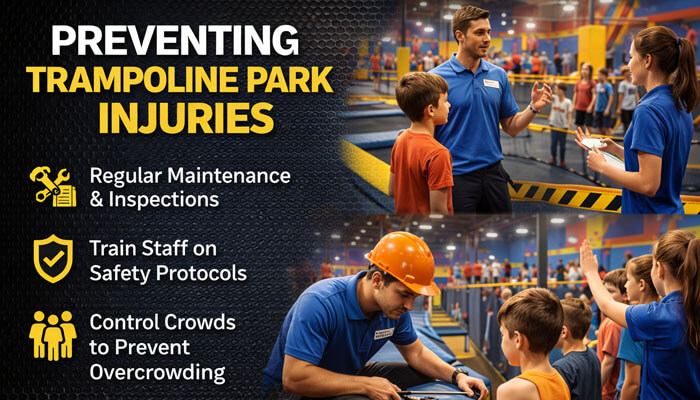
To reduce the likelihood of injuries at trampoline parks, park owners and visitors alike must take responsibility for safety. Key actions include:
- Regular maintenance and inspections
- Ensuring staff are well-trained in safety protocols
- Implementing crowd control measures to avoid overcrowding
What Safety Laws Govern Trampoline Parks?
- Victims can recover compensation for medical bills and lost wages.
- Legal action may be needed if negligence occurred.
- Faulty equipment or lack of supervision may lead to claims.
- Consult a lawyer for compensation guidance.
What Should I Do If My Child Has Been Injured at a Trampoline Park?
If your child is injured at a trampoline park, follow these steps:
1. Seek immediate medical attention: Even if the injury seems minor, it’s essential to get an evaluation.
2. Report the incident: Notify the trampoline park staff about the injury.
3. Document everything: Take photos of the injury and gather any available medical records or witness statements.
4. Consult a lawyer: If the injury was caused by negligence, consider speaking with a personal injury lawyer to discuss potential compensation.
Conclusion
Trampoline parks provide fun for all ages, but with that excitement comes the risk of injury, often from falls, collisions, and overcrowding. While they are generally safer than backyard trampolines due to supervision and safety features, accidents can still occur. By following safety guidelines and practicing injury prevention, both park operators and visitors can significantly reduce risks. Understanding your legal rights in case of an injury is also crucial to ensure proper compensation.
Trampoline Park Injuries FAQs
1. What are the most common trampoline park injuries?
Ans: Fractures, sprains, strains, and head/neck injuries are common, often caused by falls or collisions.
2. Are trampoline parks safer than backyard trampolines?
Ans: Yes, trampoline parks are typically safer due to supervision, safety features, and adherence to safety standards, but injuries can still occur.
3. What should I do if I get injured at a trampoline park?
Ans: Seek medical attention, report the injury to staff, document the incident, and consult a lawyer if negligence is involved.
5. How can I prevent trampoline park injuries?
Ans: Follow safety rules, avoid overcrowding, ensure supervision, wear proper attire, and avoid risky maneuvers if inexperienced.
6. Are there any laws governing trampoline parks?
Ans: Yes, trampoline parks must adhere to local regulations on supervision, equipment maintenance, and insurance to ensure safety.
Disclaimer: This article provides general information on trampoline park injuries and is not medical or legal advice. Consult a medical professional and a lawyer for personalized guidance if injured.