

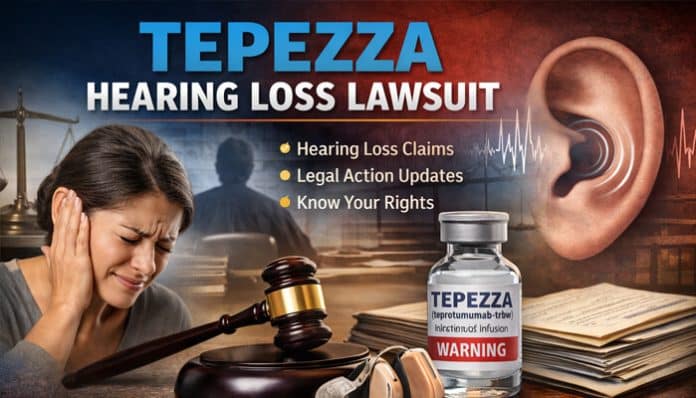

If you’re researching a Tepezza lawsuit, you’re probably trying to answer a few important questions:
- Can hearing loss linked to Tepezza qualify for legal action?
- How does the Tepezza litigation process actually work?
- Do I really need a lawyer to file a claim?
This guide explains what these lawsuits involve, how courts are handling them, how deadlines apply, and what realistic outcomes may look like.
What Is the Tepezza Hearing Loss Lawsuit About?
Tepezza is a prescription biologic infusion drug approved to treat thyroid eye disease. It was originally developed by Horizon Therapeutics, which was later acquired by Amgen.
Patients who have filed lawsuits allege that:
- Tepezza can cause permanent sensorineural hearing loss
- The warning labels did not adequately explain the severity or permanence of this risk
- Patients were not properly monitored for hearing damage
Most cases are based on product liability law, specifically a legal theory known as failure to warn. In simple terms, plaintiffs argue that the manufacturer either knew — or should have known — about the risk of long-term hearing damage and did not provide sufficient warnings.
Courts are currently evaluating scientific evidence, internal company records, and expert testimony to determine whether those claims are supported.
Is This a Tepezza Class Action Lawsuit?
Many people search for a “Tepezza class action lawsuit,” but that isn’t technically how these cases are structured.
Instead, Tepezza claims are being handled through multidistrict litigation (MDL), coordinated under the federal court system through the U.S. Judicial Panel on Multidistrict Litigation.
Here’s the key difference:
| Class Action | Mass Tort (MDL) |
| One case represents everyone | Individual lawsuits filed separately |
| One shared settlement | Compensation depends on individual injury |
| Less personalized | Injury severity affects payout |
In an MDL, cases are grouped together for efficiency during pretrial proceedings. However, each plaintiff maintains their own claim. That means outcomes can vary significantly depending on the severity of hearing loss and supporting medical evidence.
This structure directly affects how any potential Tepezza lawsuit payout is calculated.
How Tepezza Litigation Works in Practice
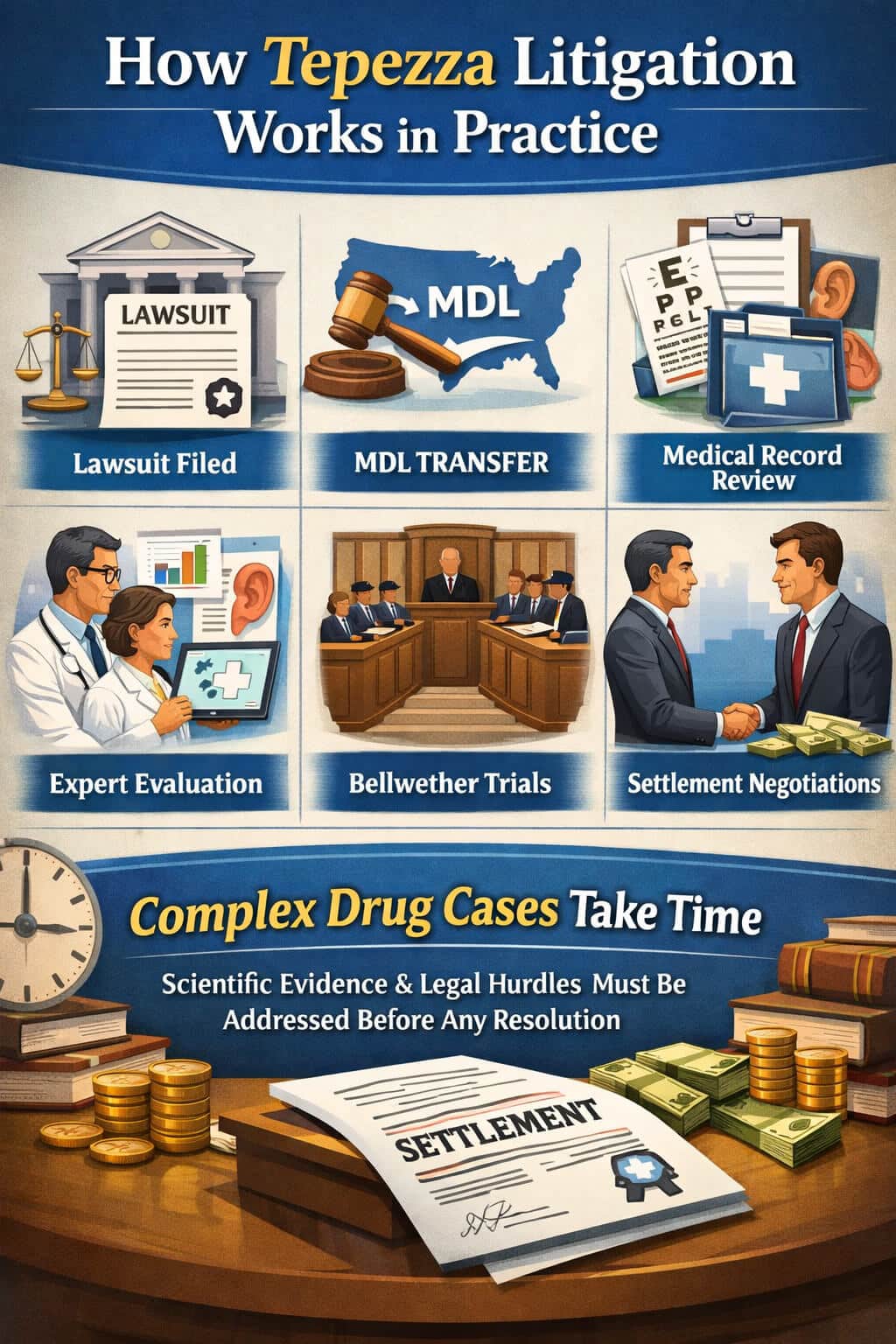
Pharmaceutical mass tort cases usually follow a predictable structure:
- A lawsuit is filed in federal court
- The case is transferred into the MDL
- Medical records are reviewed
- Experts evaluate whether Tepezza caused the injury
- Bellwether trials may be selected to test jury reactions
- Settlement negotiations may occur afterward
It’s important to understand that these cases typically take years. Quick settlements are rare in complex drug litigation. Courts must evaluate scientific evidence and procedural issues before any resolution discussions begin.
Tepezza Lawsuit Payout Per Person: What Affects Settlement Value?
There is no guaranteed settlement amount. Compensation depends heavily on the specifics of each case.
Factors that often influence value include:
- Degree of documented hearing loss
- Whether the damage is permanent
- Need for hearing aids or medical treatment
- Age of the injured person
- Impact on employment and daily life
- Strength of medical documentation
Cases involving severe, permanent hearing impairment generally receive higher valuations in mass tort frameworks.
Be cautious of websites promising specific payout ranges. Litigation outcomes vary widely, and no attorney can ethically guarantee a settlement figure.
Do I Need a Tepezza Lawsuit Lawyer?
Whether to hire a lawyer is ultimately a personal risk-management decision.
You may strongly consider legal counsel if:
- An audiologist has confirmed measurable hearing loss
- Medical records document permanent damage
- The injury affects your ability to work or function normally
You may not need immediate legal action if:
- Symptoms were temporary and resolved
- There is no documented hearing damage
Pharmaceutical litigation involves federal procedural rules and expert testimony. Most product liability attorneys work on a contingency fee basis, meaning they are only paid if compensation is recovered.
Tepezza Lawsuit Statute of Limitations and Filing Deadlines
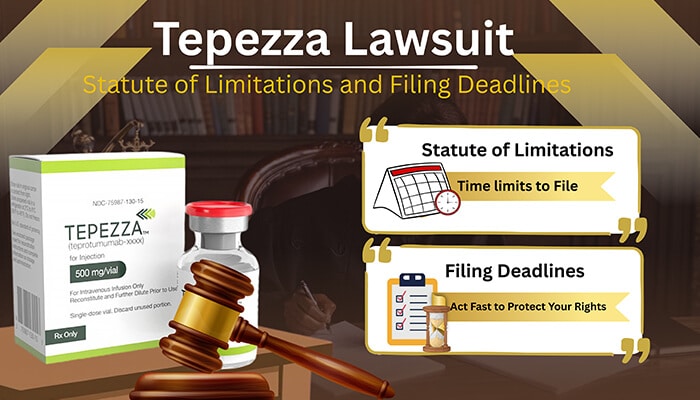
Although Tepezza cases are centralized federally, your individual claim is still governed by your home state’s statute of limitations.
In many states, the filing deadline begins when:
- The injury occurred, or
- The injury was discovered (known as the “discovery rule”)
Some states allow one year. Others allow two or three years. Missing the deadline can permanently bar your claim, regardless of its merits.
Because deadlines vary by jurisdiction, reviewing your state’s product liability statute before making decisions is critical.
Why Is Tepezza So Expensive?
Many patients also ask why Tepezza is so costly.
Tepezza is a biologic infusion therapy. Its high price is often attributed to:
- Complex manufacturing processes
- Extensive research and development
- Orphan drug exclusivity protections
- Limited competition in its treatment category
However, pricing alone does not create legal liability. The lawsuits focus on whether hearing loss risks were adequately disclosed — not on the cost of the medication itself.
Common Misconceptions About the Tepezza Lawsuit
1. Everyone who took Tepezza qualifies.
Not necessarily. A valid claim generally requires documented hearing loss and medical causation evidence.
2. This is a fast payout situation.
Mass tort drug litigation often takes several years to resolve.
3. It’s automatically a class action.
No. These are individual claims coordinated in an MDL, not a traditional class action.
What Happens If You File a Claim?
Typical steps include:
- Medical record review
- Case eligibility screening
- Filing of complaint
- Participation in coordinated discovery
- Possible settlement or trial
Drug injury litigation requires patience. Outcomes often depend on expert testimony and documented causation.
Practical Next Steps
If you believe Tepezza caused hearing damage:
- Obtain complete medical records
- Schedule a comprehensive audiology exam
- Confirm when symptoms first appeared
- Review your state’s statute of limitations
- Consider consulting a qualified product liability attorney
The most important factors in these cases are documentation and timing.
Final Thoughts
Tepezza litigation is still evolving. Courts are examining scientific evidence, manufacturer disclosures, and expert testimony to determine liability.
If you are experiencing hearing loss after Tepezza treatment, the key questions are:
- Is the injury medically documented?
- When did symptoms begin?
- Are you still within your state’s filing deadline?
Carefully reviewing those factors can help you decide whether pursuing a Tepezza lawsuit makes sense in your situation.
Disclaimer: This article provides general legal information and is not legal advice. Laws vary by state. Speak with a qualified attorney about your specific situation.