


Construction projects create opportunity, but they also create risk. A single job can involve owners, general contractors, subcontractors, suppliers, architects, engineers, insurers, and sureties. When timelines slip, payments stop, change orders pile up, or defects appear, a construction lawyer helps protect your legal position before the dispute becomes more expensive.
A construction lawyer is a legal professional who handles the contracts, claims, compliance issues, and disputes connected to building and infrastructure projects. This area of law blends contract law, business law, insurance, negligence, liens, and dispute resolution, which is why construction disputes are rarely simple once money, schedule, and responsibility become contested.
Whether you are a homeowner dealing with a problematic renovation, a contractor chasing unpaid invoices, a developer reviewing project risk, or a subcontractor worried about lien rights, the right construction lawyer can save time, money, and leverage. In many cases, the best legal result comes from early contract review and claim strategy, not from waiting until litigation is unavoidable.
What Is a Construction Lawyer?
A construction lawyer advises clients on legal issues tied to construction projects from the pre-contract stage through project closeout and, if necessary, formal dispute resolution. Their work can include drafting and negotiating contracts, reviewing risk allocation, handling change-order issues, resolving payment disputes, preserving lien rights, analyzing delays, pursuing defect claims, and representing clients in mediation, arbitration, or court.
In practical terms, a construction lawyer helps answer questions like these:
- Does this contract unfairly shift risk?
- Can I recover money for extra work?
- What happens if the project is delayed?
- Can I file a mechanic’s lien?
- Who is responsible for defective work?
- Should this dispute go to mediation, arbitration, or litigation?
What Does a Construction Lawyer Do?
A construction lawyer specializes in legal issues related to the construction industry, helping clients navigate the complexities of construction projects. They work with contractors, developers, homeowners, engineers, and architects, offering legal advice, drafting contracts, and representing clients in disputes. Here are some of the key roles a construction lawyer plays:
1. Contract Drafting and Review: A construction lawyer ensures that construction contracts are clear and comprehensive. They define roles, responsibilities, payment terms, timelines, and risk allocation to protect the interests of all parties involved.
2. Payment Disputes and Recovery: Construction projects often face payment issues. A construction lawyer helps recover unpaid invoices and manage disputes, using tools such as contract enforcement, mechanic’s liens, and bond claims to ensure payment is made.
3. Delay and Disruption Claims: If a project faces delays or disruptions, a construction lawyer analyzes the causes and helps clients claim compensation or defend against such claims, ensuring timelines are adhered to.
4. Construction Defect Disputes: Lawyers also deal with cases related to poor workmanship, design errors, or material failures that affect the quality or safety of the construction.
5. Dispute Resolution: When disputes arise, construction lawyers facilitate negotiation, mediation, arbitration, or litigation to resolve the issues efficiently and avoid costly court battles.
Overall, a construction lawyer plays an essential role in protecting the legal and financial interests of all parties involved in construction projects, ensuring compliance with relevant laws, and helping resolve conflicts efficiently.
Types of Construction Lawyers

Not all construction lawyers handle the same work. Common types include:
1. Contract Lawyers
Contract lawyers specialize in drafting, reviewing, and negotiating contracts for construction projects. They ensure that agreements are legally sound, clear in scope, and protect their client’s interests by addressing key elements such as timelines, payment schedules, and dispute resolution methods.
2. Litigation Lawyers
Litigation lawyers represent clients in construction disputes that require court intervention or arbitration. They handle a wide range of cases, from breach of contract and construction defects to personal injury claims, guiding clients through the legal process to seek compensation or resolve issues efficiently.
3. Claims Consultants
Claims consultants are experts in handling delays and cost claims that arise during construction projects. They assess the causes of delays, quantify losses, and assist in negotiating settlements or pursuing claims for additional costs, ensuring that project timelines and budgets are respected.
4. Owner/Developer Lawyers
These lawyers represent project owners or developers, ensuring that construction projects are completed on time, within budget, and in compliance with all relevant laws. They handle matters such as contract negotiation, regulatory compliance, and managing disputes with contractors or other stakeholders.
5. Contractor/Subcontractor Lawyers
Contractor and subcontractor lawyers focus on defending against payment disputes, construction defect claims, and other legal issues faced by contractors or subcontractors. They work to ensure that their clients receive fair payment for their work and provide defense against claims of poor workmanship or breach of contract.
Construction Lawyer for Homeowners vs Contractors
| Aspect | Homeowners | Contractors/Subcontractors |
|---|---|---|
| Common Legal Needs | Unfinished work, overbilling, poor workmanship, disputes | Unpaid work, claims, delays, scope creep, lien rights, and defense |
| Focus Areas | Repair costs, contract performance, disputes | Payment rights, schedule entitlement, documentation |
| Legal Strategy | Ensure contract fulfillment and repair costs | Protect payment, project timelines, and claims |
| Key Legal Tools | Breach of contract, repair cost recovery | Mechanic’s liens, contract enforcement, and dispute filing |
| Primary Concerns | Work completion and quality | Payment, delays, defending claims |
Who Needs a Construction Lawyer?
A construction lawyer is necessary for various parties involved in construction projects who may face legal issues. They provide essential guidance and representation in a variety of construction law matters.
- Homeowners facing poor workmanship, delay, or contractor abandonment
- General contractors dealing with claims, payment disputes, or subcontractor issues
- Subcontractors and suppliers are trying to preserve payment rights
- Developers and property owners reviewing project risk
- Architects and engineers facing design-related claims
- Construction businesses need contract systems and compliance support
When Should You Hire a Construction Lawyer?
It is crucial to hire a construction lawyer at specific points in a project to avoid complications. Early consultation can help prevent future disputes and costly legal issues.
- Before signing a contract, ensure all terms are favorable and clearly defined.
- When payments are delayed, it helps recover owed amounts.
- During disputes over change orders, ensure that any modifications are handled legally.
- When project delays occur, advise on the legal course of action for delays caused by other parties.
- If defective work is alleged, to protect your legal rights and possibly resolve the issue.
- Before terminating a contract, to understand the legal implications and avoid potential lawsuits.
Common Issues a Construction Lawyer Handles
A construction lawyer deals with a wide range of issues that can arise during construction projects, helping to resolve disputes and ensure legal compliance.
- Contract disputes, such as disagreements over terms or performance.
- Payment delays and non-payment, recovering funds for work completed.
- Mechanic’s liens and bond claims protect the right to be paid for work done.
- Construction defects, addressing problems with workmanship or design.
- Project delays and cost overruns, determining responsibility and ensuring compensation.
- Insurance and risk management, advising on coverage and claims for project protection
How a Construction Lawyer Helps Prevent Problems
One of the biggest misconceptions is that a construction lawyer only appears after a dispute begins. In reality, prevention is often where the value is highest. Many expensive disputes begin with poor drafting and weak project administration.
A construction lawyer can help prevent problems by:
- Tightening contract language before signing
- Setting up change-order and notice procedures
- Preserving payment and lien rights
- Reviewing insurance and bond obligations
- Advising on documentation during performance
- Preparing a claim strategy before positions harden
How to Choose the Right Construction Lawyer
Choosing the right construction lawyer ensures your case is handled with expertise and precision. Here’s what to look for:
- Relevant Experience: The lawyer should have experience in construction law.
- Knowledge of Local Laws: They must know local regulations.
- Dispute Resolution Skills: Ensure they are skilled in arbitration, mediation, and litigation.
Questions to Ask Before Hiring a Construction Lawyer
Before you hire a construction lawyer, ask:
- Have you handled disputes like mine before?
- Do you usually represent owners, contractors, subcontractors, or homeowners?
- What deadlines should I be worried about right now?
- Does my contract require mediation or arbitration?
- What documents do you need first?
- Can this be resolved without full litigation?
- What are the biggest risks in my position?
These questions help you move beyond marketing language and identify whether the lawyer understands the practical side of your construction issue.
Why the Right Construction Lawyer Matters
A skilled construction lawyer is essential to successfully navigate construction law and avoid costly mistakes that can arise from disputes.
- Reduces financial risk by providing legal strategies to prevent costly errors.
- Protects legal rights, ensuring your position is legally secure.
- Resolves disputes efficiently, saving time and money.
- Avoids costly mistakes by offering expert advice throughout the project.
How Much Does a Construction Lawyer Cost?
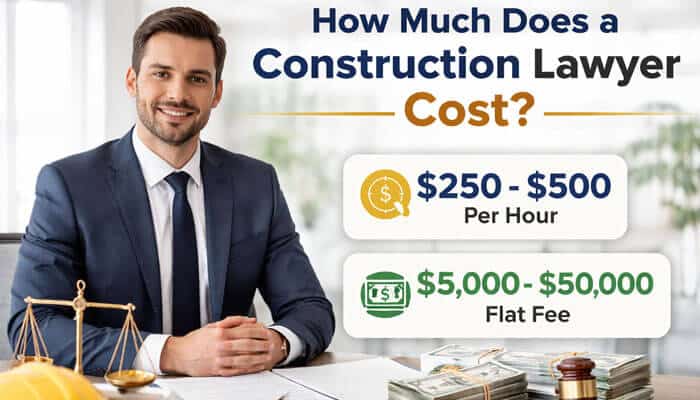
The cost of hiring a construction lawyer depends on various factors, including the complexity of the case and the lawyer’s experience.
| Cost Factor | Description |
| Hourly Rates | $150 to $500+, based on experience. |
| Flat Fees | For tasks like contract review. |
| Retainers | Upfront payment for ongoing services. |
| Case Complexity | Disputes and litigation cost more. |
Conclusion
A construction lawyer plays a critical role in modern building and infrastructure projects because construction risk lives in the contract, the schedule, the payment chain, and the documentation. When a problem appears, early legal advice can be the difference between a manageable claim and a long, expensive dispute.
If you are dealing with a construction contract, nonpayment, delays, defective work, or a growing dispute, speaking with a construction lawyer early is often the smartest step. The right legal guidance helps you understand your rights, protect your remedies, and make better business decisions before the project problem becomes a legal crisis.
Construction Lawyer FAQs
1. What is a Construction Lawyer?
A construction lawyer handles legal issues in construction projects, including contract drafting, disputes, and claims. They assist with payment disputes, delays, and defective work. Their goal is to protect clients’ legal rights throughout the process.
2. When Should I Hire a Construction Lawyer?
Hire a construction lawyer before signing contracts, when payments are delayed, or if project disputes arise. Early legal advice can prevent costly mistakes. It’s crucial to act before issues escalate into larger problems.
3. How Much Does a Construction Lawyer Cost?
Construction lawyers typically charge hourly rates between $150 and $500+. Flat fees may apply for tasks like contract review, and retainers are required for ongoing services. Litigation cases tend to cost more due to their complexity.
4. What Can a Construction Lawyer Do to Prevent Problems?
A construction lawyer can tighten contract language, set up proper procedures, and preserve payment rights. They also advise on insurance and bonding obligations. Proactive legal help reduces the risk of future disputes.
5. What Questions Should I Ask a Construction Lawyer Before Hiring?
Ask about their experience with similar cases and their approach to dispute resolution. Inquire about critical deadlines and whether litigation can be avoided. Understanding their process will help you make an informed decision.
Disclaimer: This article is for informational purposes only and does not constitute legal advice. Laws vary by jurisdiction, so consult a qualified construction lawyer for advice tailored to your situation.