


The Yes Communities lawsuit has emerged as a high‑profile legal matter involving both a major data breach class action and broader resident grievances tied to Yes Communities’ operations as one of the largest owners and operators of manufactured home communities in the United States.
Legal actions against the company span claims relating to data privacy failures and alleged unfair practices affecting residents — issues that continue to unfold in federal court and beyond.
What is the Yes Communities Lawsuit?
The Yes Communities lawsuit refers to several ongoing legal actions against Yes Communities LLC, primarily stemming from:
1. A significant data breach in 2024, which exposed personal and financial data of thousands of residents.
2. Allegations of unfair practices related to eviction procedures, rent hikes, and the management of its manufactured home communities.
3. Antitrust litigation, accusing Yes Communities and other industry players of engaging in anticompetitive behavior by colluding to increase rents and restrict competition in the manufactured housing market.
These lawsuits, many of which have culminated in class actions, seek justice for affected residents and challenge the practices of one of the largest mobile home park operators in the country.
Understanding the 2024 Data Breach and the Yes Communities Lawsuit
In late 2024, Yes Communities LLC experienced a data breach, affecting thousands of current and former residents, triggering legal action and an ensuing Yes Communities lawsuit.
According to court filings and published reports:
- The breach occurred in December 2024, exposing sensitive personal data, including names, addresses, Social Security numbers, and other financial information.
- Those affected received notification of the incident and the potential compromise of their information, which led plaintiffs’ attorneys to investigate and pursue the Yes Communities lawsuit.
In response, Yes Communities agreed to a preliminary settlement deal in early 2026 as part of the Yes Communities lawsuit settlement amounts negotiations.
What the Yes Communities Lawsuit Settlement Offers
Under the proposed settlement terms:
- Eligible class members could receive up to $2,500 for documented out‑of‑pocket losses associated with the breach.
- Individuals also may be compensated up to $80 for time spent dealing with the fallout from the breach itself.
- Additional remedies include access to credit monitoring services and other forms of identity protection tailored to affected residents.
These Yes Communities lawsuit settlement amounts are designed to reflect a combination of tangible damages (like expenses incurred) and broader consumer protection considerations.
Eligibility and Claims Process in the Yes Communities Lawsuit
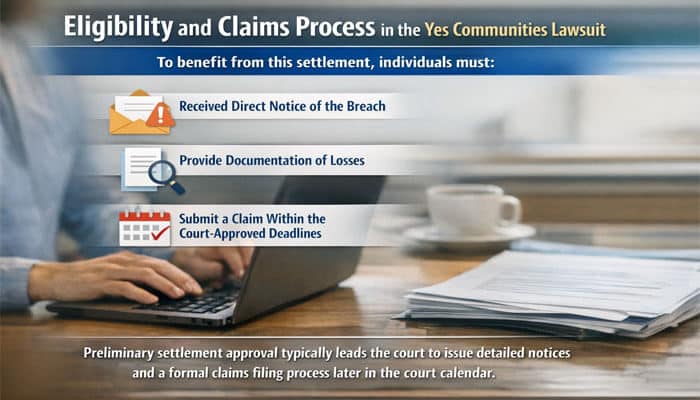
To benefit from this settlement, individuals must:
- Have received direct notice of the breach.
- Provide documentation of losses where applicable.
- Submit a claim within the court‑approved deadlines once they are set and publicized.
Typically, preliminary settlement approval leads the court to issue detailed notices and a formal claims filing process later in the court calendar.
Wider Legal Context: Why Residents Are Suing Yes Communities
While the data breach lawsuit is the most visible legal action, it is not the only legal pressure point involving Yes Communities.
Antitrust and Other Legal Trends in the Yes Communities Lawsuit
Yes Communities is named among several large manufactured home community owners in broader antitrust litigation spanning multiple defendants nationwide. This includes claims that community owners have colluded or engaged in practices that raise lot rents or restrict competitive market conditions for residents.
These consolidated antitrust cases, often titled something like In re Manufactured Home Lot Rents Antitrust Litigation, work on behalf of a nationwide class of residents — and their progress and eligibility continue as courts assess certification and potential outcomes.
Resident Complaints and Non‑Breach Claims in the Yes Communities Lawsuit
Outside of formal federal class actions, other disputes and complaints involve:
- Allegations related to eviction practices and tenant rights concerns, sometimes tied to partners like financial services firms such as 21st Mortgage.
- Consumer‑reported issues with rent increases, conditions of management, and other landlord‑tenant tensions (though such reports do not always translate into judicial findings).
These broader issues highlight ongoing scrutiny of Yes Communities as it operates hundreds of mobile home parks and engages private equity ownership structures.
What This Means for Residents and Investors in the Yes Communities Lawsuit
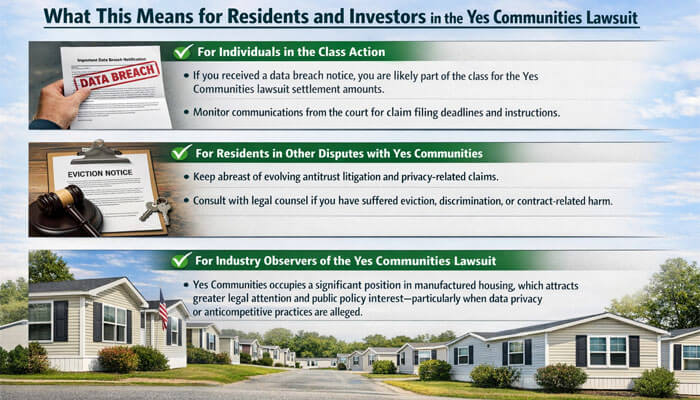
1. For Individuals in the Class Action
- If you received a data breach notice, you are likely part of the class for the Yes Communities lawsuit settlement amounts.
- You should monitor communications from the court for claim filing deadlines and instructions.
2. For Residents in Other Disputes with Yes Communities
- Keep abreast of evolving antitrust litigation and privacy‑related claims.
- Consult with legal counsel if you have suffered eviction, discrimination, or contract‑related harm.
3. For Industry Observers of the Yes Communities Lawsuit
Yes Communities occupies a significant position in manufactured housing, which attracts greater legal attention and public policy interest — particularly when data privacy or anticompetitive practices are alleged.
Expanded Legal Background and Company Information on Yes Communities
Yes Communities is one of the largest owners and operators of manufactured home communities in the United States. The company, founded in 2008, owns and operates over 200 communities across the country, providing affordable housing options for millions of residents.
The company is backed by significant private equity investment, and its business model revolves around purchasing, managing, and leasing residential lots within its communities. However, recent lawsuits and controversies have cast a shadow over its reputation, with residents and legal advocates voicing concerns over rent hikes, eviction practices, and data privacy issues. The Yes Communities lawsuit is part of a larger trend of growing scrutiny faced by private equity-owned companies in the housing sector.
Conclusion: The Yes Communities Lawsuit and Its Implications
The Yes Communities lawsuit is a multifaceted legal development rooted both in cybersecurity liabilities and broader resident‑centric claims. The recent data breach settlement provides tangible relief opportunities for affected individuals, while other litigation avenues — including antitrust and resident rights claims — continue to evolve.
For residents, investors, and consumer advocates, this case underscores the importance of corporate data safeguards and fair housing practices across the manufactured home industry.
Yes Communities Lawsuit FAQs
1. What should I do if I was affected by the Yes Communities lawsuit?
If you were affected by the Yes Communities lawsuit, review the breach notice and submit a claim if eligible. Monitor your credit and consider free credit monitoring if offered.
2. How long does the Yes Communities lawsuit settlement take to finalize?
The Yes Communities lawsuit settlement can take months or years, depending on court approval and the claims process. Delays may occur due to appeals or objections.
3. What legal options do I have if I live in a Yes Communities property?
If you live in a Yes Communities property and face eviction or rent hikes, you may be eligible for a class action. Consult a tenant rights attorney for possible legal actions.
Disclaimer: The information in this article is for general purposes only and does not constitute legal advice. For any legal concerns related to the Yes Communities lawsuit, please consult with a qualified attorney.
