


Cannabis laws in the United States are constantly evolving, and many people are asking an important question: Is THCA legal in Florida? As hemp-derived cannabinoids become more popular, the legal status of THCA in Florida has gained attention among consumers, businesses, and lawmakers.
THCA (tetrahydrocannabinolic acid) is a naturally occurring cannabinoid found in raw cannabis plants. Unlike THC, THCA does not produce intoxicating effects in its natural state. However, when heated through smoking, vaping, or cooking, THCA converts into THC — the compound responsible for the psychoactive effects associated with cannabis.
Because of this transformation, THCA legality in Florida can be complex. This guide explains the Florida THCA laws, hemp regulations, legal risks, and possible future changes, helping consumers understand where THCA stands in the state today.
What Is THCA?
THCA (tetrahydrocannabinolic acid) is a naturally occurring compound found in cannabis and hemp plants. It is the precursor to THC (tetrahydrocannabinol), the psychoactive compound commonly associated with marijuana. THCA itself is non-psychoactive, meaning it does not produce a “high” when consumed in its raw form.
Key Characteristics of THCA
- Non-psychoactive in raw form
- Converts to THC when heated
- Naturally present in hemp and cannabis plants
- Found in products such as flower, tinctures, concentrates, and vapes
THCA vs THC Comparison
| Feature | THCA | THC |
| Psychoactive | No (raw form) | Yes |
| Found in | Raw cannabis plants | Heated cannabis |
| Legal status | Depends on hemp laws | Controlled substance |
| Conversion | Converts to THC when heated | Already psychoactive |
Because THCA can convert into THC, regulators often debate how it should be classified under Florida hemp law.
Is THCA Legal in Florida in 2026?
Under the 2018 Farm Bill, hemp products are legal if they contain no more than 0.3% delta-9 THC by dry weight. Florida adopted these rules through the Florida Hemp Program, which regulates hemp products statewide.
THCA is Generally Legal If the Product Is:
- Derived from federally compliant hemp
- Tested by third-party laboratories
- Containing less than 0.3% delta-9 THC
- Sold through licensed hemp retailers
When these requirements are met, hemp-derived THCA in Florida is usually legal.
However, the law becomes more complicated when total THC levels are considered.
Why THCA Exists in a Legal Gray Area
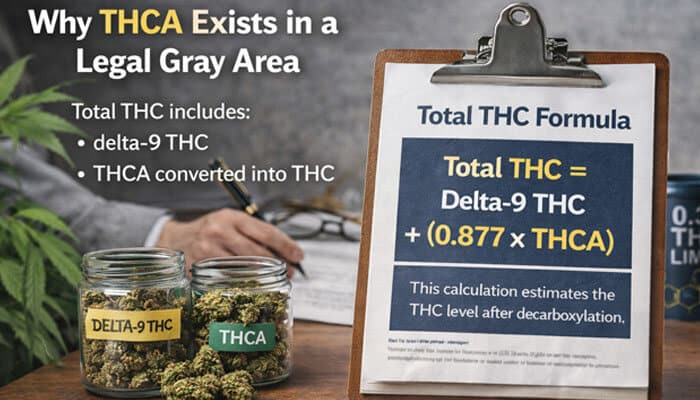
Although hemp products may meet federal THC limits, regulators sometimes evaluate total THC rather than just delta-9 THC.
Total THC includes:
- delta-9 THC
- THCA converted into THC
Total THC Formula
Total THC = Delta-9 THC + (0.877 × THCA)
This calculation estimates the THC level after decarboxylation.
Example
| Component | Percentage |
| Delta-9 THC | 0.15% |
| THCA | 25% |
| Calculated Total THC | Over the legal limit |
In this scenario, the product would exceed legal THC limits despite having low delta-9 THC initially.
This is why THCA flower in Florida can fall into a legal gray area.
Current Legal Status of THCA in Florida (2026)
Florida regulates hemp through the Florida Department of Agriculture and Consumer Services (FDACS).
Key Rules for Hemp Products
- Must contain less than 0.3% delta-9 THC
- Must undergo third-party laboratory testing
- Must have compliant labeling and packaging
- Can only be sold to adults age 21 or older
These rules apply to many hemp-derived cannabinoids, including THCA.
Florida Hemp Regulations Summary
| Requirement | Description |
| THC Limit | Less than 0.3% delta-9 THC |
| Testing | Third-party lab verification required |
| Age Limit | 21+ for consumable hemp products |
| Retailers | Must be licensed hemp sellers |
How Florida Calculates THCA to Determine Permissibility
Florida’s rule states that hemp or hemp extract intended for human ingestion and/or inhalation must not contain more than 0.3% “Total delta-9 THC” concentration. At first glance, one might assume that only the measured delta-9 THC content is relevant. However, Florida law defines “Total delta-9 THC concentration” as:
[delta-9 THC] + (0.877 × [delta-9 THCA])
This formula accounts for the amount of THC that would result from the decarboxylation of THCA. In other words, THCA is factored into the total THC calculation even before heating or consumption.
Example: Applying the Formula
A Certificate of Analysis (COA) issued by an independent testing laboratory for a hemp flower strain shows:
-
Delta-9 THC: 0.167%
-
THCA: 25.883%
Using Florida’s formula:
0.167 [delta-9 THC] + (0.877 × 25.883 [THCA]) = 22.866% Total delta-9 THC
This result is far above the legal threshold of 0.3%. Accordingly, the flower product is impermissible for inhalation under Florida law, despite having less than 0.3% delta-9 THC.
How to Identify Legal THCA Products in Florida
Consumers should verify that THCA products comply with state hemp regulations before purchasing.
Steps to Identify Legal THCA Products
- Check for a Certificate of Analysis (COA)
- Verify delta-9 THC is below 0.3%
- Buy from licensed hemp retailers
- Ensure packaging includes product testing information
Product labels should include
- batch number
- lab test results
- ingredient list
- cannabinoid percentages
Following these steps helps ensure the product meets Florida hemp compliance standards.
Where to Buy THCA in Florida
Consumers can find THCA products in Florida through several legal channels.
Common Retail Sources
- licensed hemp retailers
- CBD stores
- cannabis wellness shops
- online hemp marketplaces
Many online retailers also ship hemp-derived THCA products to Florida, provided they comply with federal hemp laws.
However, buyers should always verify laboratory testing before purchasing.
Age Restrictions and Consumer Rules
Florida has introduced consumer protection regulations for hemp products.
Important Rules
- Hemp products must be sold only to adults 21 and older
- Products cannot target children in marketing
- Packaging must comply with labeling regulations
- Retailers must follow FDACS guidelines
These regulations help ensure the safe distribution of hemp-derived cannabinoids.
Legal Risks of THCA in Florida
Although THCA legality in Florida exists under hemp regulations, some legal risks remain.
Potential Legal Concerns
- THCA flower looks identical to marijuana
- Law enforcement may test total THC levels
- Regulatory changes could alter legality
- Some products may exceed THC limits after conversion
Because of these factors, enforcement can sometimes vary depending on circumstances.
Future Laws That Could Affect THCA
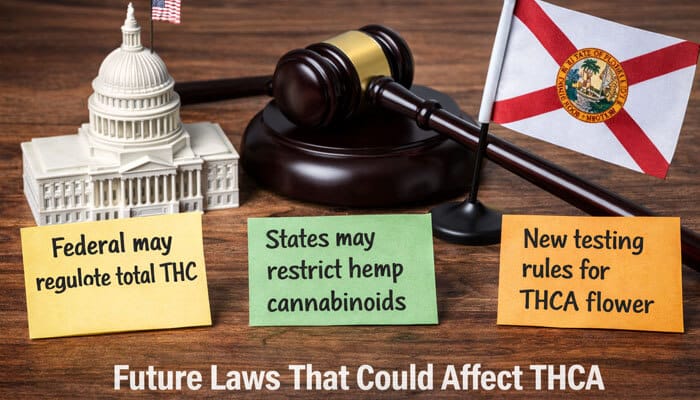
The hemp industry is currently undergoing regulatory discussions at both the federal and state levels.
Possible Future Changes
- The federal government may regulate total THC instead of delta-9 THC
- States may restrict intoxicating hemp cannabinoids
- New testing rules could impact THCA flower sales
These potential changes could significantly affect THCA legal status in Florida in the future.
THCA vs THC Legal Differences in Florida
| Compound | Psychoactive | Legal Status in Florida |
| THCA (hemp-derived) | No (raw form) | Legal if compliant with hemp laws |
| Delta-9 THC (hemp) | Yes | Legal under 0.3% |
| Marijuana THC | Yes | Illegal recreationally |
| Medical cannabis | Yes | Legal with a medical marijuana card |
Florida allows medical marijuana through licensed dispensaries, but recreational marijuana remains illegal.
Conclusion
Understanding is THCA legal in Florida requires looking at both federal hemp laws and Florida’s state regulations. In general, hemp-derived THCA products are legal in Florida if they contain less than 0.3% delta-9 THC and meet the requirements of the Florida Hemp Program.
However, because THCA converts into THC when heated and may be included in total THC calculations, certain products—especially high-THCA flower—can fall into a legal gray area. This means enforcement and interpretation of the law can sometimes vary.
As cannabis regulations continue to evolve, consumers should stay updated on Florida hemp laws, THC limits, and regulatory changes. Before purchasing or using THCA products, it is always important to verify lab testing, check product compliance, and buy from reputable retailers to ensure the product follows current legal standards.
Is THCA legal in Florida? FAQs
1. Is THCA legal in Florida in 2026?
Yes, hemp-derived THCA is generally legal in Florida if it contains less than 0.3% delta-9 THC and complies with state hemp regulations.
2. Can you buy THCA flower legally in Florida?
Yes, consumers can buy THCA flower in Florida from licensed hemp retailers as long as it meets federal hemp THC limits.
3. Do you need a medical marijuana card to purchase THCA in Florida?
No, compliant hemp-derived THCA products can be purchased without a Florida medical marijuana card.
4. Why is THC considered a legal gray area in Florida?
THCA can convert into THC when heated, and regulators may calculate total THC levels, which can affect legality.
5. What is the THC limit for legal THCA products in Florida?
Legal hemp products must contain less than 0.3% delta-9 THC by dry weight under federal and Florida hemp laws.
Disclaimer: This article is for informational purposes only and does not constitute legal advice. Cannabis and hemp laws, including THCA legality in Florida, may change over time. Readers should verify current regulations with official government sources or consult a legal professional before making any decisions related to THCA products.