

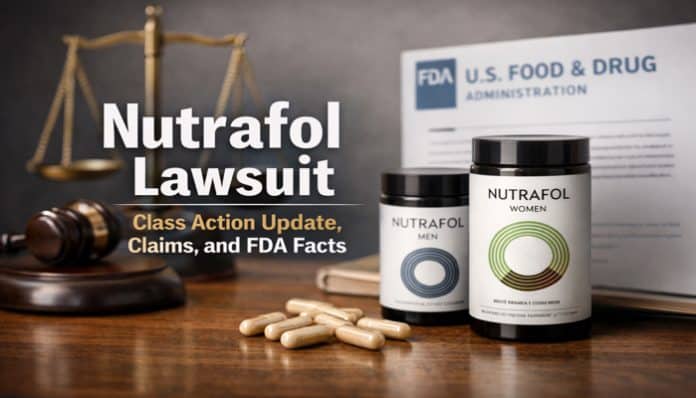

Nutrafol lawsuit coverage has grown as consumers and legal observers examine how the popular hair-growth supplement was marketed. Several public lawsuits alleged that Nutrafol used phrases such as “clinically proven,” “medical-grade,” and “physician-formulated” in ways that misled buyers about the product’s scientific support and regulatory standing.
Publicly available sources, including a case tracker and court records, indicate that one Nutrafol-related case was settled and dismissed, while another set of claims was consolidated in federal court. while another set of claims was consolidated in federal court. At the same time, FDA guidance makes clear that dietary supplements are not FDA-approved the way prescription and over-the-counter drugs are.
This guide explains the Nutrafol lawsuit allegations, the known case status, and what consumers should know before buying. Importantly, these lawsuits reflect allegations, not a final court finding that Nutrafol committed wrongdoing.
Important Legal Note
This article discusses public allegations made in lawsuits and public regulatory guidance. Allegations in a complaint are not the same as proven facts, and readers should not treat a filed lawsuit as a final finding of liability. Publicly available sources show multiple Nutrafol-related consumer cases were filed, but the procedural status differs by case.
What Is the Nutrafol Lawsuit?
The Nutrafol lawsuit refers to consumer class-action allegations claiming that Nutrafol marketed its hair-growth supplements with phrases like “clinically proven,” “medical-grade,” and “physician-formulated” in ways plaintiffs say misled buyers about the strength of the science behind the products; public records show related cases including Smith v. Nutraceutical Wellness, Inc. and Sheehan et al. v. Nutraceutical Wellness, Inc., with one Nutrafol-related matter tracked as settled and dismissed and others consolidated in federal court, although these remain allegations rather than a final finding that Nutrafol did anything wrong.
In simple terms, what is the lawsuit against Nutrafol?
Plaintiffs alleged that Nutrafol:
- Overstated the scientific proof behind its products
- Used “clinically proven” language too broadly
- Used “medical-grade” and “physician-formulated” wording in a misleading way
- Marketed supplements in a way that may have sounded more like approved treatments than dietary supplements
- Charged premium prices based on those allegedly misleading claims
Case Names and Court Filings
Here are the main public case names tied to the Nutrafol class action lawsuit reporting:
1. Smith v. Nutraceutical Wellness, Inc., filed May 4, 2023, in the U.S. District Court for the Southern District of New York, challenged Nutrafol marketing that described certain products as “clinically proven.”
2. Sheehan et al. v. Nutraceutical Wellness, Inc., filed June 30, 2023, also in the Southern District of New York, focused on Nutrafol Women advertising and challenged phrases such as “clinically proven,” “medical-grade,” and “physician-formulated.”
3. Malich et al. v. Nutraceutical Wellness, Inc. was another related federal matter later addressed in consolidation proceedings.
4. The related actions were referred to collectively as In re Nutraceutical Wellness, Inc. Consumer Fraud Litigation after consolidation.
Nutrafol Class Action Lawsuit Allegations
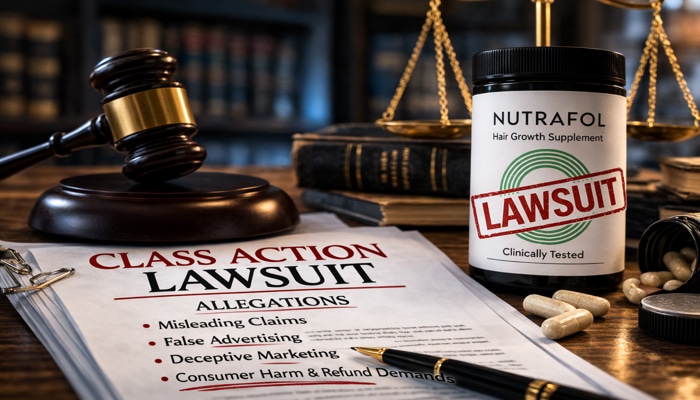
The Nutrafol class action lawsuit reporting consistently points to a few recurring issues.
1. “Clinically Proven” Claims
The lawsuits alleged Nutrafol advertised certain products as clinically proven to improve hair growth and reduce shedding, while plaintiffs argued the studies did not support such strong claims.
2. “Medical-Grade” Claims
One complaint alleged that calling ingredients or products “medical-grade” gave consumers the impression of a higher clinical or regulatory standard than was actually established.
3. “Physician-Formulated” Marketing
Plaintiffs also challenged the phrase “physician-formulated,” arguing it could lead consumers to believe doctors widely prescribed or medically validated the product in a stronger sense than the evidence showed.
4. Premium Price Justification
The public allegations also tied the marketing language to the product’s premium price, claiming buyers paid more because they believed the claims reflected stronger scientific backing.
Nutrafol Lawsuit Update
A fair nutrafol lawsuit update should separate the different matters.
Here is the clearest public record currently available:
1. A Nutrafol products class action tracked by Truth in Advertising is listed as settled and dismissed with prejudice.
2. The separate Sheehan and Malich matters were consolidated in federal court as In re Nutraceutical Wellness, Inc. Consumer Fraud Litigation.
3. Public docket summaries show the consolidated matter involved a stay and a plan to file a consolidated amended complaint in the lower-numbered case.
Because public summaries do not fully spell out every later development in one easily accessible source, the most reliable wording is this: one Nutrafol-related case was settled and dismissed, while another set of claims was consolidated in federal court.
Timeline of the Nutrafol Lawsuit
| Date | Event |
| April 2023 | Truth in Advertising reported Nutrafol to the FTC and FDA over marketing claims |
| May 4, 2023 | Smith lawsuit filed in federal court alleging misleading “clinically proven” claims |
| June 30, 2023 | Sheehan case filed involving Nutrafol Women advertising allegations |
| August 2023 | Related matters were consolidated in federal court |
| Public tracker status | Smith-related matter listed as settled and dismissed with prejudice |
Is Nutrafol FDA Approved?
No, Nutrafol is not FDA approved as a drug.
The FDA states that it does not approve dietary supplements before they are marketed for safety and effectiveness the way it approves drugs. Supplement companies are responsible for ensuring their products are safe and that their label claims are truthful and not misleading.
| Question | Answer |
| Is Nutrafol a dietary supplement? | Yes |
| Is Nutrafol FDA approved? | No |
| Does FDA approve supplements before sale? | No |
| Who is responsible for truthful labeling? | The manufacturer or distributor |
Why the FDA Question Matters in the Nutrafol Lawsuit
This distinction matters because many consumers wrongly assume that terms like:
- Clinically proven
- Physician-formulated
- Medical-grade
- Backed by science
mean that a supplement has gone through an FDA approval process. It has not. FDA sources explain that supplements operate under a different regulatory framework than drugs, and companies can market them without pre-approval as long as they comply with the law.
That is why the nutrafol class action lawsuit focuses on whether the company’s advertising language may have overstated the science or blurred the line between supplement claims and treatment-style claims.
FTC and FDA Rules on Supplement Marketing
This is an important missing section because it explains why marketing language matters so much. The FTC’s Health Products Compliance Guidance says health-related advertising claims do not receive premarket approval, but advertisers must still have adequate support for those claims and must avoid deceptive messaging. The FTC also notes that claims based on limited or emerging science may need qualifying language if the evidence is not strong enough for an unqualified claim. FDA guidance similarly explains that dietary supplements are regulated differently from drugs and are not preapproved for safety and effectiveness before sale.
In practical terms, this means a company can legally sell a supplement without FDA approval, but it still cannot overstate what the science proves. That legal distinction helps explain the theory behind the Nutrafol lawsuit allegations.
Does the Nutrafol Lawsuit Mean the Product Does Not Work?
Not necessarily. A lawsuit is a set of allegations, not a final scientific verdict. The legal issue is not simply whether Nutrafol has any research at all, but whether the marketing language matched the strength of the evidence being presented to consumers. There is at least one published study involving a Nutrafol formulation, but the lawsuits argue that the company’s broader marketing claims overstated what the evidence could reliably support.
What that means for readers:
- A supplement may have some studies behind it
- That does not automatically justify broad “clinically proven” claims
- Marketing language can still face legal scrutiny even if some supportive evidence exists
Who May Qualify in a Nutrafol Class Action?
In general, people most likely to be affected are consumers who purchased Nutrafol products marketed with the challenged representations, such as “clinically proven,” “medical-grade,” or “physician-formulated,” during the relevant time periods alleged in the lawsuits. Public complaints identify products including Nutrafol Women, Nutrafol Women’s Vegan, Nutrafol Women’s Balance, Nutrafol Postpartum, and Nutrafol Men.
Potential readers who think they may qualify should:
- Keep receipts, order confirmations, or subscription records
- Watch for official court-approved notices
- Review settlement terms carefully if any class settlement is announced
- Speak with a licensed attorney for case-specific advice
Nutrafol vs. FDA-Approved Hair-Loss Treatments
| Topic | Nutrafol | FDA-Approved Hair-Loss Drugs |
| Product category | Dietary supplement | Drug |
| FDA pre-approval | No | Yes |
| Regulatory path | Sold under dietary supplement rules | Must meet drug approval standards |
| Marketing implication | Cannot use misleading claims | Must comply with approved labeling and drug rules |
Consumer Takeaways Before Buying
If you are researching the Nutrafol lawsuit before purchasing, keep these points in mind:
- Do not confuse FDA approval with legal sale of a supplement
- Treat phrases like “clinically proven” carefully
- Look for independent, well-designed studies
- Compare supplements with FDA-approved options when appropriate
- Remember that lawsuits contain allegations, not final judgments
Final Thoughts
The Nutrafol lawsuit is primarily about whether the company’s marketing went too far. Public complaints alleged that Nutrafol overstated the scientific support behind its hair-growth supplements through phrases such as “clinically proven,” “medical-grade,” and “physician-formulated.” Public records also indicate that one Nutrafol-related case was settled and dismissed, while another group of claims was consolidated in federal court. FDA guidance further confirms that Nutrafol, as a dietary supplement, is not FDA-approved the same way as a drug.
Nutrafol Lawsuit FAQs
What is the lawsuit against Nutrafol?
The lawsuit against Nutrafol alleges the company used misleading marketing phrases such as “clinically proven,” “medical-grade,” and “physician-formulated” to sell hair-growth supplements.
Is there a Nutrafol class action lawsuit?
Yes. Public filings and legal trackers show multiple consumer class-action-style cases were filed against Nutrafol in 2023.
What is the latest Nutrafol lawsuit update?
One Nutrafol-related case is publicly tracked as settled and dismissed with prejudice, while another set of claims was consolidated in federal court.
Is Nutrafol FDA approved?
No. Nutrafol is a dietary supplement, and the FDA does not approve dietary supplements before sale the way it approves drugs.
Does the Nutrafol lawsuit prove the product does not work?
No. The lawsuits raise allegations about the strength and accuracy of the marketing claims, not a final scientific ruling that the product cannot work.
Who may qualify in a Nutrafol class action?
Potential class members are generally consumers who bought the challenged Nutrafol products marketed with the representations described in the public complaints, but exact eligibility depends on any court-approved class definition or settlement terms.
Disclaimer: This article discusses public lawsuit allegations and regulatory information. Allegations are not proven facts, and case status may change. Nothing here is legal or medical advice.
