

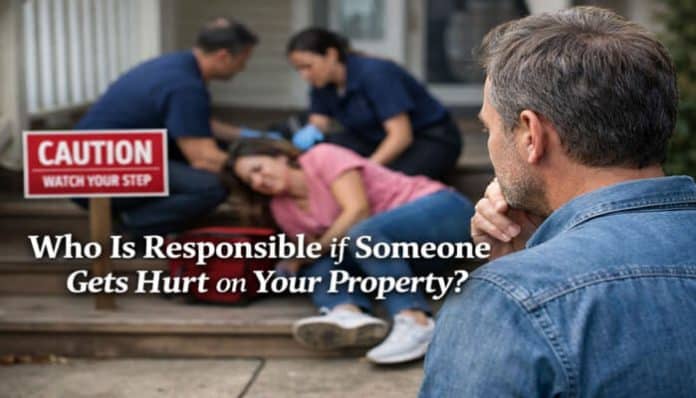

When someone gets hurt on your property, it can be confusing and stressful. Many people ask: Who is responsible if someone gets hurt on your property? This article explains the law in simple words, how liability works, and what you should do if an accident happens.
- Who is responsible if someone gets hurt on your property?
- What happens if someone gets injured on your property?
- Can a trespasser sue for injury?
- If someone gets hurt on your property can they sue?
- If someone gets hurt on your property are you liable?
This guide will answer all of these questions in a simple and clear way, ensuring you understand the responsibilities you hold as a property owner. We’ll also explain legal terms and real-life scenarios that help you understand how property liability works.
What Does “Liability” Mean?
In simple terms, liability means legal responsibility. When someone gets hurt on your property, the question arises: Are you responsible for the injury?
In law, liability isn’t automatic. It depends on several factors, including:
- Who was injured? (A guest, a customer, or a trespasser?)
- What caused the injury? (A wet floor, broken steps, poor lighting?)
- What did you know? (Did you know about the danger or hazard?)
Who Is Responsible if Someone Gets Hurt on Your Property?
The answer depends on the type of visitor and the nature of the injury. Property owners have different legal duties toward different types of visitors.
1. Invitees
An invitee is someone invited onto your property for business purposes or public use. For example, a customer at your store or a delivery person.
Responsibility:
You owe invitees the highest duty of care. You must make sure the property is safe and free from hazards. If there are any dangers (e.g., a broken floorboard or slippery steps), you must fix them or at least warn visitors about them.
2. Licensees
A licensee is someone allowed onto your property for their own use or enjoyment (e.g., a friend visiting your house).
Responsibility:
You must warn them of any known dangers. However, you don’t need to look for hidden dangers unless you know about them.
3. Trespassers
A trespasser is someone who enters your property without permission. For example, someone who climbs over your fence or sneaks into your yard.
Responsibility:
Your duty to trespassers is minimal. You don’t need to fix hidden dangers for them. However, if you intentionally harm them (e.g., setting traps), you can be held responsible.
If Someone Gets Hurt on Your Property, Can They Sue?
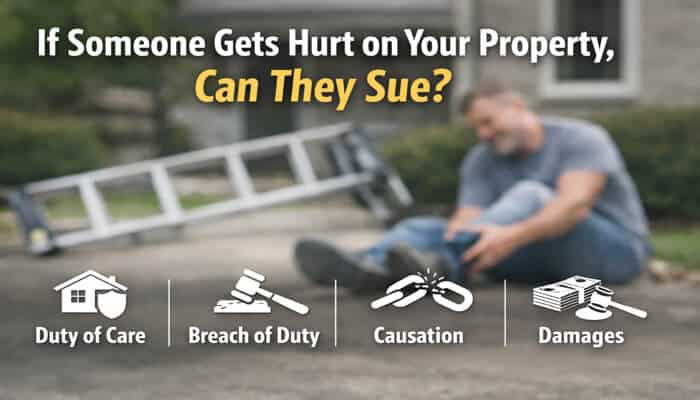
Yes, if certain legal conditions are met, an injured person can file a lawsuit. Here’s how that works:
Legal Requirements for a Lawsuit
To win a personal injury lawsuit, the injured person must prove these 4 things:
1. Duty of Care: You had a legal obligation to keep the property safe. The level of duty depends on the type of visitor.
2. Breach of Duty: You didn’t meet that duty. For example, you didn’t repair a broken step or place a warning sign.
3. Causation: The injury was directly caused by the danger on your property. If the injury was unrelated (e.g., caused by something they did), you are not responsible.
4. Damages: The injured person must show that the injury caused them real harm (e.g., medical bills, lost wages, pain, or emotional suffering).
For example:
If a guest trips over a loose rug you knew about but didn’t fix, they might be able to sue for the medical costs and other damages.
Can a Trespasser Sue for Injury?
This is one of the most frequently asked questions in property liability cases.
Yes, but under limited conditions:
Typically, a trespasser cannot sue simply for being injured while illegally on your land. However, in certain cases, courts may allow trespassers to sue if:
- You intentionally harmed the trespasser (e.g., setting a trap).
- You knew the trespasser regularly came onto your property and failed to take action to warn them of dangers.
For example:
- Example 1: If a trespasser enters your yard and steps on a rake you left out on purpose, causing harm, you might be liable.
- Example 2: If a trespasser trips over a rock in an open field, you usually won’t be responsible.
What Happens if Someone Gets Injured on Your Property?
If someone is injured on your property, here’s a step-by-step look at what typically happens:
1. Emergency Response: Call emergency services right away if the injury seems serious. The first priority is to get medical help.
2. Report the Incident: If the person injured is a customer or business-related visitor, you should report the injury to your insurance company immediately.
3. Document the Incident: Take notes and photographs of the area where the injury happened. Documenting the hazard (like a wet floor or broken stair) is important in case a lawsuit follows.
4. Insurance Involvement: Most property owners have insurance (like homeowners or commercial insurance) that may cover medical expenses or damages. The insurance company will investigate the claim.
5. Potential Lawsuit
If the injury is serious, the injured person may decide to sue for:
- Medical expenses
- Lost income
- Pain and suffering
- Future care costs
Important Factors That Affect Responsibility
Here are a few factors that can affect your liability:
- Warning Signs
If you place warning signs near hazards (e.g., “Wet Floor” or “Slippery When Wet”), this helps show you took steps to warn others, which can reduce your liability.
- Regular Maintenance
You need to regularly check your property for dangers. If a step is broken or the walkway is cracked, you should fix it immediately to avoid injuries.
- Hidden Dangers
Failing to warn guests about hidden risks (e.g., a concealed hole or sharp object) can result in liability.
Special Situations
- Children on Property: Children are often given extra protection under the law. Even if they are trespassers, you may owe a higher duty of care if children are likely to enter your property (e.g., near playgrounds).
- Commercial Property: Businesses have the highest duty of care. For example, stores or restaurants need to keep aisles clear, repair broken equipment, and ensure the premises are safe for customers.
How to Protect Yourself Legally
Here are simple steps you can take to minimize your risk of being held responsible for an injury on your property:
- Regularly inspect your property for hazards.
- Fix dangerous conditions immediately (e.g., broken stairs, leaks).
- Place clear warning signs when needed.
- Have proper insurance to cover accidents.
- Document incidents immediately if something happens.
How Homeowners Insurance Handles Injury Claims
When someone gets injured on your property, one of the first things you’ll likely turn to is your homeowners insurance. Most standard homeowners insurance policies include liability coverage, which can help pay for medical bills and damages if someone is injured on your property. Here’s how it typically works:
What Does Liability Insurance Cover?
Liability coverage under your homeowners insurance typically covers:
- Medical Expenses: If a guest or visitor is injured on your property, the policy may cover their medical bills.
- Legal Costs: If the injured person decides to file a lawsuit, your insurance may help cover the legal expenses, including attorney fees and court costs.
- Settlement or Judgment: If the lawsuit results in a settlement or judgment against you, your liability coverage may help cover those costs up to the policy limit.
Reporting an Injury
It’s crucial to report any injury to your insurance company as soon as possible. Most policies require prompt reporting to ensure that your claim is handled properly. Be sure to document the injury and the hazardous condition that caused it (e.g., a broken step, wet floor, etc.).
Does Homeowners Insurance Cover All Injuries?
While homeowners insurance covers many injuries, there may be exclusions. For example, it may not cover injuries caused by intentional acts or injuries that occur due to illegal activities on your property. It’s essential to review your policy to understand the specific coverage limits and exclusions.
What Happens if the Injury Is Serious?
If the injury leads to a serious lawsuit, your homeowners insurance might not be enough to cover all damages, especially if they exceed your policy’s limits. In these cases, you might be personally responsible for the remaining balance, so it’s important to assess your coverage limits and consider adding umbrella insurance for extra protection.
Conclusion
In conclusion, liability for injuries on your property depends on the type of visitor and the cause of the injury. Property owners must ensure safety and take reasonable precautions. With proper maintenance and insurance, you can reduce your liability. Always seek legal advice if you’re unsure of your responsibilities or if an injury occurs.
Who Is Responsible if Someone Gets Hurt on Your Property FAQs
1. Who Is Responsible if Someone Gets Hurt on Your Property?
Property owners are generally responsible if someone gets hurt on their property, with liability depending on the visitor type and negligence. The duty of care varies for each type of visitor.
2. Can I be sued if someone gets injured on my rental property?
Yes, landlords can be held responsible if the injury is due to their negligence in maintaining the property.
3. What should I do if someone is injured on my property but doesn’t want to call an ambulance?
Document the injury, gather information, and inform your insurance company to protect yourself legally.
4. If a child gets hurt on my property, am I more liable?
Yes, children are given special protection, and you may owe a higher duty of care, especially in hazardous areas.
5. What if the person injured on my property was intoxicated?
Being intoxicated doesn’t eliminate your liability, but it may reduce the damages if their actions contributed to the injury.
6. Can a homeowner be responsible for injuries caused by pets?
Yes, if your pet causes harm, you can be held liable for the injuries, especially if the pet has a history of aggression.
Disclaimer:
The information in this article is for general informational purposes only and should not be considered legal advice. Liability laws vary by jurisdiction, and it is recommended to seek advice from a qualified attorney regarding your specific circumstances. The author and website are not responsible for any actions taken based on the information provided.