


If you are pursuing compensation after an accident or dispute, you may be wondering how long after demand letter can I expect settlement. A demand letter is usually the first formal step in resolving a legal or insurance claim without going to court.
This document outlines your damages, presents supporting evidence, and requests a specific compensation amount from the responsible party or their insurance company. After the letter is sent, the settlement process begins, but the timeline can vary depending on several factors.
Some claims settle within a few weeks, while others may take months or longer. Understanding how the process works can help you set realistic expectations and prepare for negotiations.
This guide explains the typical timeline after sending a demand letter, factors that affect settlement speed, and what steps follow once an agreement is reached.
What Is a Demand Letter?
A demand letter is a formal written request asking the responsible party or their insurance company to compensate you for damages.
It is commonly used in cases such as the following:
- Personal injury claims
- Car accidents
- Property damage disputes
- Insurance claims
- Contract disputes
The demand letter serves as the starting point of settlement negotiations and often allows disputes to be resolved without filing a lawsuit.
What a Demand Letter Usually Includes:
A strong demand letter typically contains several important elements.
| Section | What It Includes |
| Incident Description | Explanation of what happened |
| Liability Statement | Why is the other party responsible |
| Injury or Damage Details | Medical bills, property damage, or financial loss |
| Evidence | Photos, reports, witness statements |
| Compensation Request | Total amount requested for settlement |
| Response Deadline | Usually 15–30 days |
A well-prepared demand letter increases the chances of receiving a quicker response from the insurance company.
Typical Timeline After Sending a Demand Letter
Many people ask how long after a demand letter can I expect a settlement, but the process usually occurs in stages.
Settlement Timeline Overview
| Stage | What Happens | Typical Time |
| Demand Letter Sent | The claimant submits a demand for compensation | Day 1 |
| Insurance Review | The insurance company investigates the claim | 2–4 weeks |
| Initial Response | The insurer accepts, denies, or counters | 30–45 days |
| Negotiation Phase | Settlement discussions begin | 1–3 months |
| Settlement Agreement | Both parties agree to compensation | 2–6 months |
In straightforward cases, settlements may occur within 4–8 weeks, but complex cases can take several months.
Average Settlement Timeline by Case Type
Different types of claims have different settlement timelines.
| Case Type | Typical Settlement Time |
| Minor insurance claims | 4–8 weeks |
| Moderate injury claims | 2–6 months |
| Complex personal injury cases | 6–12 months |
| Cases involving lawsuits | 1–2 years |
Simple cases with clear liability often resolve faster, while cases involving serious injuries or disputes require more time.
Factors That Affect Settlement Time
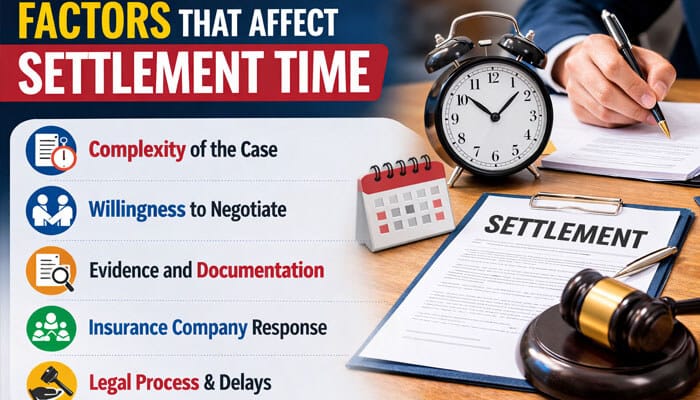
Several factors influence how long after a demand letter you can expect a settlement.
1. Insurance Company Investigation
Insurance companies must review evidence before responding. This may include:
- Police reports
- Medical records
- Witness statements
- Damage assessments
This investigation process can take several weeks.
2. Strength of Evidence
The stronger the evidence supporting your claim, the faster negotiations may proceed.
Important evidence includes:
- Medical documentation
- Photos of injuries or damages
- Accident reports
- Expert opinions
- Financial records
Clear evidence of liability often speeds up settlement.
3. Severity of Injuries
Serious injuries can slow the settlement process because insurers must evaluate the following:
- Long-term medical costs
- Rehabilitation expenses
- Lost earning potential
Many lawyers recommend waiting until maximum medical improvement (MMI) before negotiating a settlement.
4. Negotiation Process
Insurance companies rarely accept the first demand immediately.
Typical negotiation steps include the following:
- Demand letter submitted
- Insurance company counteroffers
- Additional negotiations occur
- Final settlement agreement reached
This process may take several weeks or months.
5. Liability Disputes
If the insurance company disputes fault, additional investigation may occur, including:
- Accident reconstruction
- Witness interviews
- Legal analysis
These disputes can extend settlement timelines significantly.
What Determines the Settlement Amount?
Insurance companies calculate settlements based on several factors.
| Factor | Impact on Settlement |
| Medical expenses | Directly increases compensation |
| Lost wages | Adds economic damages |
| Pain and suffering | Non-economic damages |
| Property damage | Vehicle or property repair costs |
| Future medical care | Long-term treatment costs |
| Liability strength | A clear fault increases settlement value |
The stronger your documentation, the more likely you are to receive a fair settlement.
Example Demand Letter Structure
A simplified demand letter example looks like this:
- Introduction:
Explain the incident and when it occurred. - Liability Statement:
Describe why the other party is responsible. - Damage Summary:
List medical bills, lost wages, and other damages. - Evidence:
Attach documentation supporting your claim. - Settlement Demand:
State the compensation amount requested. - Response Deadline:
Typically, request a response within 30 days.
Common Insurance Company Delay Tactics
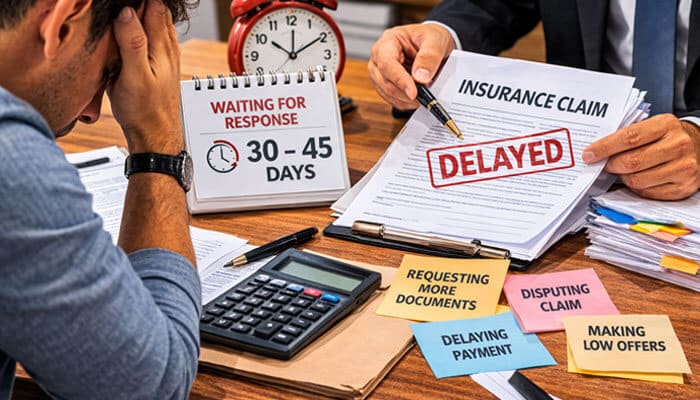
Insurance companies sometimes slow negotiations to reduce settlement amounts.
Common tactics include:
- Requesting repeated documentation
- Making extremely low initial offers
- Delaying responses
- Questioning medical treatment
- Disputing liability
Understanding these strategies can help claimants negotiate more effectively.
When Settlement May Take Longer
Certain situations may delay the settlement process.
Common Reasons for Delays
- Ongoing medical treatment
- Disputed liability
- Missing documentation
- Multiple parties involved
- Large financial claims
- Insurance policy disputes
In these situations, negotiations may continue for several months.
What Happens After a Settlement Agreement?
Once both parties agree on compensation, the process moves to finalization.
Final Settlement Steps
| Step | Description |
| Settlement Agreement | Both parties agree to compensation |
| Release Form Signed | The claimant agrees not to pursue further claims |
| Payment Processing | The insurance company prepares the payment |
| Settlement Check Issued | Compensation is paid |
Payment usually arrives within 2–6 weeks after signing the release agreement.
When You Should Hire a Lawyer
Although some claims settle without legal assistance, hiring an attorney may be helpful if:
- The insurance company denies your claim
- Injuries are serious
- Settlement offers are very low
- Liability is disputed
- Multiple parties are involved
Legal representation can improve negotiation outcomes and ensure fair compensation.
Statute of Limitations for Filing a Lawsuit
If settlement negotiations fail, you may need to file a lawsuit before the legal deadline expires.
| Case Type | Typical Deadline |
| Personal injury | 2–3 years |
| Property damage | 2–4 years |
| Medical malpractice | 1–3 years |
Missing the statute of limitations can prevent you from pursuing compensation.
Tips to Speed Up a Settlement After a Demand Letter
While some delays are unavoidable, several steps may help speed up the process.
Helpful Tips
- Provide complete documentation
- Respond quickly to requests
- Maintain communication with the insurer
- Keep medical records organized
- Work with an experienced attorney if needed
Well-prepared claims often resolve faster.
Final Thoughts
Understanding how long after demand letter can I expect settlement helps claimants prepare for the legal process. Most insurance companies respond to demand letters within 30 to 45 days, but reaching a final settlement may take several weeks to several months, depending on negotiations and case complexity.
Simple cases with clear evidence may settle quickly, while more complicated disputes involving serious injuries or liability questions can take longer. Being organized, providing strong documentation, and staying patient throughout negotiations are key to achieving a fair settlement.
Frequently Asked Questions (FAQs)
1. How long after a demand letter can I expect a settlement?
In most cases, insurance companies respond to a demand letter within 30 to 45 days. If negotiations go smoothly, a settlement may be reached within a few weeks to several months, depending on the complexity of the case and the strength of the evidence.
2. What happens after a demand letter is sent?
After a demand letter is sent, the insurance company or responsible party will review the claim, investigate the evidence, and evaluate damages. They may accept the demand, reject it, or make a counteroffer, which begins the negotiation process.
3. Can a settlement happen immediately after sending a demand letter?
Yes, but it is uncommon. Immediate settlements typically occur only when liability is clear, damages are well documented, and the demand amount is reasonable.
4. How long does it take to receive payment after a settlement agreement?
Once both parties agree to a settlement and sign the release form, the insurance company usually issues payment within 2 to 6 weeks.
5. What should I do if the insurance company does not respond to my demand letter?
If the insurance company fails to respond, you may need to follow up, negotiate further, or consider filing a lawsuit. Consulting a lawyer can help move the process forward.
6. Does hiring a lawyer affect how long it takes to settle after a demand letter?
Yes, hiring a lawyer can sometimes speed up negotiations and improve settlement outcomes, because attorneys understand the legal process and know how to handle insurance companies.
Disclaimer: This article is for informational purposes only and does not constitute legal advice. Laws and settlement timelines may vary by case and location. For advice about your specific situation, consult a qualified attorney.