

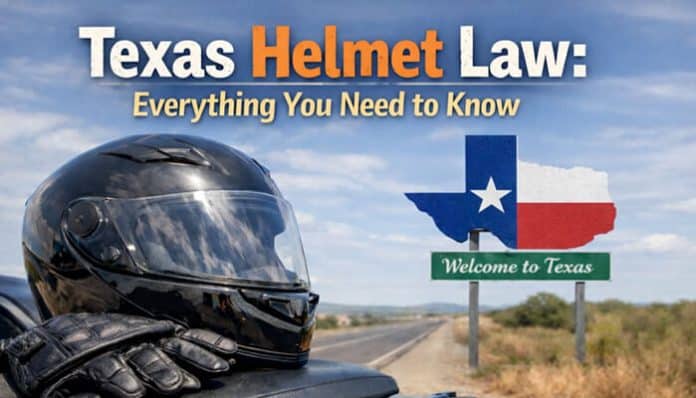

Motorcycle safety is a significant concern in Texas, and the Texas Helmet Law is designed to protect riders from severe head injuries. As a motorcycle rider or passenger in Texas, you may be wondering: Does Texas have a helmet law? Is it illegal to ride a motorcycle without a helmet? And do you have to wear a motorcycle helmet in Texas?
In this comprehensive guide, we’ll break down everything you need to know about Texas Helmet Law Requirements. From who must wear a helmet to the penalties for non-compliance, this article will answer all your questions and clarify any doubts about motorcycle helmet regulations in Texas.
What Is the Texas Helmet Law?
Texas does have a helmet law for motorcycles, but it’s not a universal law. This means the law is not the same for all riders. Here’s a breakdown of the Texas Helmet Law Requirements:
- Riders under 21 must wear a helmet at all times while riding a motorcycle or as a passenger. There are no exceptions.
- Riders 21 and older can choose not to wear a helmet if they meet certain requirements.
Texas Transportation Code § 661.003 outlines the rules for helmet use in the state. Riders under the age of 21 must wear a helmet regardless of their riding experience or any other factors.
Does Texas Have a Helmet Law for Motorcycles?
Yes. Texas has a motorcycle helmet law, but it’s not the same for all riders. Riders under 21 are required to wear helmets, while riders 21 and older may be exempt if they meet certain conditions. The Texas Helmet Law is specific and provides exemptions for adult riders, allowing them the choice to forgo wearing a helmet under certain circumstances.
Helmet Requirements for Riders in Texas
Here’s a table that summarizes the texas helmet law requirements for different riders:
| Rider Age | Helmet Required? | Exceptions Available? |
|---|---|---|
| Under 21 | Yes | No exceptions — helmets are always required. |
| 21 or older | Maybe | Helmet optional with motorcycle safety course or health insurance. |
Is It Illegal to Ride a Motorcycle Without a Helmet in Texas?
The legality of riding without a helmet in Texas depends on your age and whether you meet the exemptions provided by the Texas Helmet Law.
- Under 21: It is illegal to ride without a helmet. No exceptions exist for this age group.
- 21 or older (without exemptions): It is illegal to ride without a helmet unless you meet certain conditions.
- 21 or older (with exemptions): It is legal to ride without a helmet if you have completed a motorcycle safety course or have health insurance that will cover injuries from motorcycle accidents.
When Can You Ride Without a Helmet?

If you’re 21 years old or older, you can ride without a helmet if you meet one of the following conditions:
- You have completed a motorcycle safety course approved by the Texas Department of Licensing and Regulation.
- You have valid health insurance that will cover injuries resulting from a motorcycle accident. This insurance must be active and provide coverage for injuries that could happen in a crash.
Note: Law enforcement cannot stop you solely to check if you meet the exemption requirements unless you are stopped for another violation.
What Kind of Helmet Must You Wear?
If you’re required to wear a helmet, it must meet specific standards:
- It must meet Federal Motor Vehicle Safety Standard (FMVSS) #218, which ensures the helmet provides adequate protection.
- The helmet must have a secure chin strap to ensure it stays in place.
- The helmet should display the DOT (Department of Transportation) logo, signifying it’s been tested for safety and is approved for motorcycle use.
Penalties for Breaking the Helmet Law
If you break the texas helmet law, you could face a fine. The typical fine for not wearing a helmet when required is:
- $10 to $50 for a first-time violation. However, additional fees and court costs may increase the total amount you owe.
- A second offense may result in higher fines.
Note that law enforcement cannot stop you just to check your helmet compliance. They must have another reason, such as a traffic violation, to stop you.
Can Police Stop You for Not Wearing a Helmet in Texas?
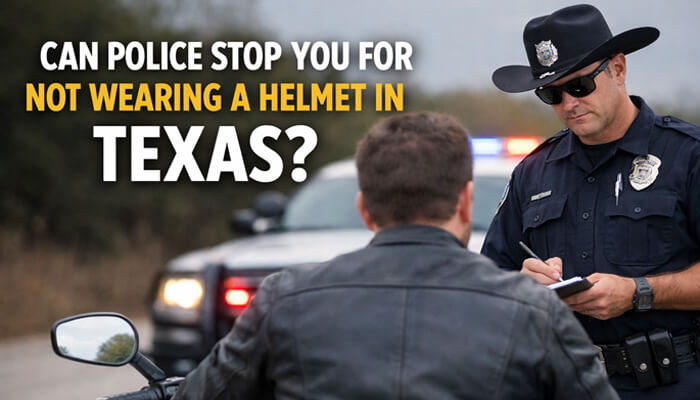
In Texas, law enforcement cannot stop you solely to check whether you are wearing a helmet. Police officers must have another reason, such as a traffic violation, to pull you over. However, if you are stopped for another reason, such as speeding or erratic driving, officers may issue a citation for not complying with the Texas Helmet Law if they determine that you should be wearing one.
Police cannot stop you just to check helmet compliance, but if you are already pulled over for another violation, they can issue a fine for not wearing a helmet if required.
Does Riding Without a Helmet Affect Accident Claims?
Riding without a helmet may affect your insurance claim or lawsuit if you are injured in an accident. While helmets are not always required, failure to wear a helmet can be used as evidence in court or by insurance companies. They may argue that your injuries were more severe because you didn’t wear a helmet, which could lead to a reduced settlement or compensation.
Riders should always weigh the risks of not wearing a helmet, even if it’s legally allowed.
Why Should You Wear a Helmet?
Even if it’s not required by law, helmets are essential for safety. Helmets reduce the risk of brain injuries and fatalities significantly:
- Helmets reduce the risk of brain injury by approximately 69%.
- Helmets lower the chance of fatal injuries by 37%.
The law is designed to protect your health and safety, but wearing a helmet goes beyond the minimum requirement — it can save your life.
What Happens if You Crash Without a Helmet in Texas?
If you are involved in a crash while riding without a helmet, the consequences can be severe both legally and physically. While the Texas Helmet Law may allow certain riders aged 21 and older to forgo wearing a helmet under specific conditions, riding without a helmet significantly increases the risk of serious head injuries.
Legal Consequences:
-
Non-compliance with the law: If you are under 21 or do not meet the exemption conditions, you may face fines ranging from $10 to $50 for violating the helmet law.
-
Impact on injury claims: Insurance companies and courts may use your failure to wear a helmet as evidence that your injuries were worsened by not wearing proper safety gear, potentially leading to reduced compensation in a personal injury case.
Physical Consequences:
-
Increased risk of severe injuries: Crashes can lead to traumatic brain injuries (TBI), concussions, or even fatalities. Helmets are proven to reduce the risk of brain injuries by 69% and fatal injuries by 37%.
Summary: Texas Helmet Law Key Points
- Texas does have a helmet law for motorcycles, but it only applies to riders under the age of 21.
- Riders 21 and older may ride without a helmet if they meet certain conditions, such as taking a safety course or having health insurance.
- Helmets must meet FMVSS #218 standards if you’re required to wear one.
- Penalties for breaking the helmet law range from fines of $10 to $50.
- Riding without a helmet can impact your injury claims and could reduce your compensation.
Final Thoughts: Prioritize Safety Over Legal Minimums
While the Texas helmet law allows some flexibility for adult riders regarding helmet usage, safety should always come first. The risks of serious injury or death in a motorcycle accident are significantly reduced by wearing a helmet, regardless of the law. Always consider the long-term health risks and the potential financial consequences before deciding whether to wear a helmet.
Texas Helmet Law FAQs
1. What type of vehicles count under the Texas Helmet Law?
The Texas Helmet Law applies to motorcycles and certain mopeds with an engine size over 50cc and designed for use on public roads.
2. Is there a difference between a motorcycle and a moped under Texas helmet laws?
Yes, mopeds are generally defined by engine size and speed but must also comply with the helmet law if used on public roads.
3. Does the Texas Helmet Law require eye protection?
Eye protection is required if the motorcycle does not have a windshield; otherwise, it is not mandated by law.
4. Do passengers follow the same helmet requirements as riders?
Yes, passengers must follow the same Texas Helmet Law as riders, with similar age-based requirements and exemptions.
5. Is lane splitting legal in Texas?
No, lane splitting (riding between lanes) is illegal in Texas, regardless of the traffic situation.
Disclaimer:
The information in this article is for general informational purposes only and is not legal advice. For specific legal guidance, please consult a licensed attorney.