

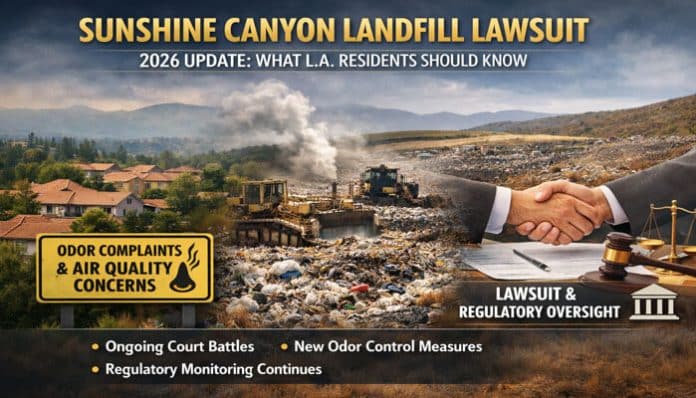

If you live near Sunshine Canyon Landfill, you may have concerns about persistent odors, air quality, and the ongoing sunshine canyon landfill lawsuit. This guide explains what the lawsuit involves, which agencies regulate the site, and what the 2026 update means for residents in northern Los Angeles.
What Is the Sunshine Canyon Landfill Lawsuit?
The Sunshine Canyon Landfill lawsuit refers to civil nuisance claims filed by residents who allege that landfill operations caused persistent foul odors and interfered with the use and enjoyment of their property. These cases are typically framed as public nuisance, private nuisance, and negligence claims under California law.
Environmental nuisance lawsuits often involve large groups of homeowners and may proceed as class-action litigation.
Where Is Sunshine Canyon Landfill Located?
Sunshine Canyon Landfill sits between the City of Los Angeles and unincorporated Los Angeles County land. It is near residential communities including:
- Granada Hills
- Sylmar
Jurisdiction is complex because regulatory oversight is shared between city, county, and state agencies.
Who Regulates the Landfill?
Several government bodies oversee landfill operations:
- South Coast Air Quality Management District – regulates air emissions and odor complaints
- Los Angeles County Department of Regional Planning – land use and conditional use permits
- California environmental agencies – broader compliance and environmental standards
Administrative enforcement actions are separate from private civil lawsuits.
Why Is Sunshine Canyon Landfill Controversial?
1. Odor Complaints
Residents have reported strong trash and landfill gas odors over multiple years. Complaint spikes have led to regulatory investigations and corrective measures.
2. Air Quality Concerns
Landfills generate methane and other gases. Regulators require gas collection systems and emissions monitoring to ensure compliance.
3. Permit and Capacity Issues
Community concerns have included:
- Waste intake limits
- Environmental impact
- Compliance with conditional use permits
Because of these issues, the site has faced regulatory scrutiny and civil litigation.
How Environmental Lawsuits Typically Progress
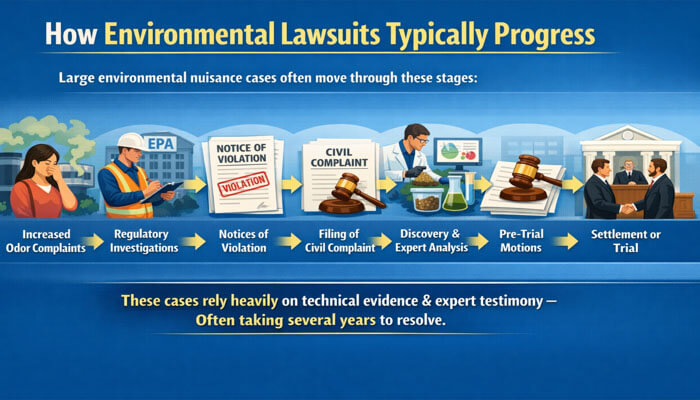
Large environmental nuisance cases often move through these stages:
- Increased odor complaints
- Regulatory investigations
- Notices of violation (if issued)
- Filing of civil complaint
- Discovery phase (expert analysis, environmental data review)
- Pre-trial motions
- Settlement discussions or trial
Because these cases rely heavily on technical evidence and expert testimony, they can take several years to resolve.
Legal Basis of the Lawsuit
Most claims fall under California nuisance law. Under California Civil Code Section 3479, a nuisance includes anything that is injurious to health or interferes with the comfortable enjoyment of life or property.
To succeed, plaintiffs generally must prove:
- The odor or emissions were substantial
- The interference was unreasonable
- The landfill operator caused or failed to prevent the condition
- Actual harm occurred (property value loss, quality-of-life impact)
Simply living near a landfill is not enough to win damages.
Timeline Overview (Generalized)
While individual cases vary, environmental litigation typically follows this path:
- Odor complaints increase
- Regulatory investigations begin
- Notices of violation may be issued
- Residents file civil complaint
- Discovery phase (experts, environmental data, testimony)
- Motions and procedural hearings
- Settlement negotiations or trial
Large environmental cases often take years to resolve.
2026 Update: What Has Changed?
As of the sunshine canyon landfill lawsuit 2026 update, several developments are important:
1. Ongoing Court Proceedings
The case continues through California’s civil court system. Environmental litigation often involves technical expert analysis and complex damages modeling.
2. Odor Control Measures
Landfill operators have reportedly tested additional mitigation tools such as enhanced gas capture systems and biocover technology to reduce emissions.
3. Continued Regulatory Monitoring
Air regulators continue investigating complaints and may issue enforcement actions if violations are found.
No automatic payout occurs simply because a lawsuit exists.
Can Residents Receive Compensation?
Potential compensation in environmental nuisance cases may include:
- Property value impact damages
- Loss of use and enjoyment of property
- Inconvenience damages
However:
- Compensation is not guaranteed
- Plaintiffs must demonstrate measurable harm
- Class certification must be approved (if applicable)
Settlement amounts depend on evidence, scope of impact, and legal findings.
Can the Landfill Be Forced to Close?
Closure is uncommon unless:
- Severe regulatory violations occur
- Permits are revoked
- Courts find extreme noncompliance
More frequently, courts or regulators require:
- Fines
- Operational changes
- Monitoring systems
- Technology upgrades
Environmental compliance orders are more typical than shutdowns.
How Class Actions Work in California?
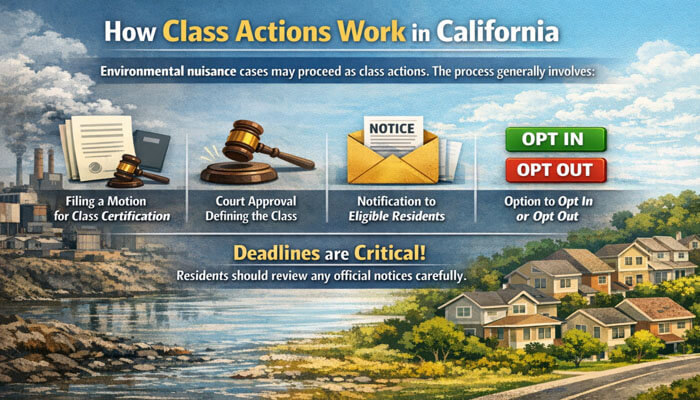
Environmental nuisance cases may proceed as class actions. The process generally involves:
- Filing a motion for class certification
- Court approval defining the class
- Notification to eligible residents
- Option to opt in or opt out
Deadlines are critical. Residents should review any official notices carefully.
What Should Residents Do?
If you live near Sunshine Canyon Landfill:
- Document odor incidents (date, time, intensity)
- File complaints with air regulators
- Retain copies of any correspondence
- Monitor court updates
- Review any class action notices carefully
Documentation strengthens any potential claim.
Common Misconceptions
Myth 1: Filing a lawsuit means automatic closure.
Courts may order operational changes or damages, but closure is rare.
Myth 2: Everyone nearby receives compensation.
Only those who meet legal criteria and demonstrate harm may qualify.
Myth 3: Odor complaints automatically win cases.
Civil damages require proof of measurable impact.
Frequently Asked Questions
1. Is Sunshine Canyon Landfill still operating in 2026?
Yes. It remains operational under regulatory oversight unless official closure orders are issued.
2. What is the Sunshine Canyon Landfill lawsuit about?
It concerns allegations of persistent odors and interference with residential property enjoyment.
3. Has there been a settlement?
Environmental cases move slowly. Settlement status depends on court proceedings and negotiations.
4. Can landfill odors cause health problems?
Regulators monitor emissions for compliance. Specific health claims require medical and scientific evidence in court.
5. How do I know if I qualify for a class action?
Eligible residents typically receive official notification if a class is certified.
Final Summary
The sunshine canyon landfill lawsuit reflects broader tensions between landfill operations and nearby residential communities. Regulatory agencies oversee emissions and enforce compliance, while residents pursue civil nuisance claims through the courts.
As of the 2026 update, litigation and oversight continue. Environmental lawsuits are complex, evidence-driven, and rarely resolved quickly.
Residents should stay informed, document concerns carefully, and review official notices before taking legal action.
Legal Disclaimer
This article provides general informational content about the Sunshine Canyon Landfill lawsuit. It is not legal advice and does not create an attorney-client relationship. Lawsuits and regulatory matters are fact-specific. Residents should consult a qualified California attorney for advice about their individual situation.