


If you’re searching “what is a toxic tort”, you’re likely trying to understand whether exposure to a harmful chemical, product, or environmental hazard can lead to a lawsuit — and whether you may need legal help.
This guide explains the toxic tort definition, how a toxic tort case works in real life, common types of toxic tort claims, and when hiring a toxic tort lawyer may (or may not) make sense.
Jurisdiction note: Toxic tort law in the United States is primarily handled under state personal injury law, though federal environmental regulations may also apply. Specific rules, deadlines, and proof requirements vary by state.
Toxic Tort Definition
A toxic tort is a civil lawsuit filed by someone who claims they were injured by exposure to a dangerous substance.
According to the legal definition discussed by sources like Legal Information Institute, toxic tort cases typically involve harm caused by chemicals, pollutants, drugs, or hazardous materials.
In simple terms:
A toxic tort lawsuit claims that exposure to a toxic substance caused physical injury, illness, or long-term health damage.
Unlike car accidents or slip-and-fall cases, toxic torts often involve:
- Delayed symptoms
- Scientific evidence
- Medical causation disputes
- Corporate or industrial defendants
What Is a Toxic Tort Case?
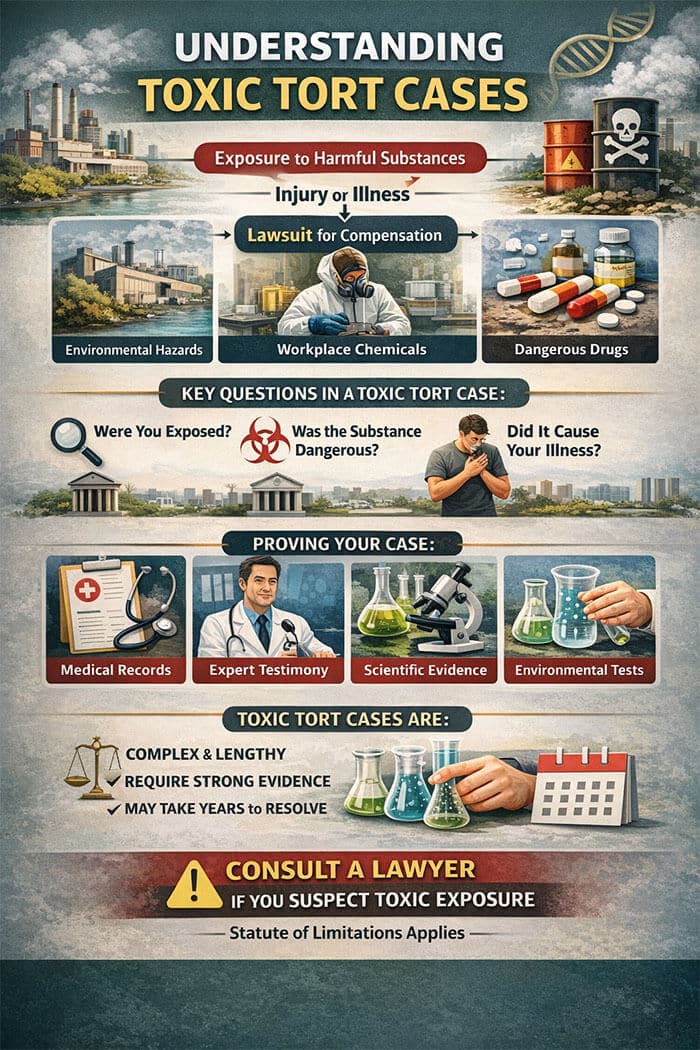
A toxic tort case usually involves four key legal questions:
1. Was there exposure to a harmful substance?
2. Was the substance actually dangerous?
3. Did the exposure cause the illness or injury?
4. Is a company, manufacturer, employer, or property owner legally responsible?
These cases often require:
- Medical records
- Expert testimony
- Scientific studies
- Environmental testing
Because of this, toxic tort cases are more complex than typical injury claims.
Common Types of Toxic Tort Claims
| Type of Toxic Tort Claim | Common Sources of Exposure | Who Is Usually Affected | Key Legal Challenge | May Overlap With Other Laws? |
| Environmental Contamination | Contaminated water, industrial waste, air pollution, soil contamination | Residents, communities, property owners | Proving long-term exposure and linking it to illness | Yes — may involve federal environmental regulations |
| Workplace Chemical Exposure | Asbestos, benzene, pesticides, industrial solvents | Employees in industrial, construction, or agricultural jobs | Determining whether the claim belongs under workers’ compensation or civil court | Yes — often overlaps with state workers’ compensation laws |
| Pharmaceutical & Medical Exposure | Prescription drugs, chemical ingredients, defective medical products | Patients and consumers | Proving drug defect or failure to warn | Yes — often part of mass tort or multi-district litigation |
How Toxic Tort Cases Differ From Other Lawsuits
Toxic tort lawsuits are usually harder to prove because:
- Symptoms may appear years later
- Multiple exposures may exist
- Defense experts often challenge medical causation
- Scientific disagreement is common
Unlike a broken bone from a car accident, illnesses like cancer, neurological conditions, or respiratory damage require complex evidence linking exposure to disease.
What Must Be Proven in a Toxic Tort Lawsuit?
To succeed in a toxic tort lawsuit, a plaintiff generally must prove:
- Duty: The defendant had a responsibility to prevent harm
- Breach: They failed to meet that responsibility
- Causation: The toxic exposure caused the injury
- Damages: Actual harm occurred
The most difficult element is usually medical causation.
Courts often require:
- Epidemiological studies
- Expert medical opinions
- Exposure level evidence
Without strong scientific support, these cases can be dismissed.
Are Toxic Tort Cases Class Actions?
Sometimes — but not always.
Toxic tort cases may proceed as:
- Individual lawsuits
- Class actions
- Mass torts consolidated in federal court
Large-scale environmental contamination cases often involve many plaintiffs, but each person still must prove individual injury.
Do I Need a Toxic Tort Lawyer?
When a Lawyer Is Usually Necessary
You will likely need a toxic tort lawyer if:
- Your illness is serious or permanent
- The defendant is a corporation or manufacturer
- Expert testimony is required
- There are multiple affected victims
- The case involves federal environmental laws
Toxic tort litigation is highly technical and expensive. Most individuals cannot realistically pursue these cases alone.
When People Sometimes Start Without a Lawyer
Some individuals begin by:
- Requesting environmental records
- Filing complaints with state environmental agencies
- Gathering medical documentation
However, filing a formal toxic tort lawsuit without legal counsel is extremely difficult because procedural and evidentiary rules are strict.
How Much Does a Toxic Tort Lawyer Cost?
Most toxic tort lawyers work on a contingency fee basis, meaning:
- No upfront payment
- Lawyer takes a percentage (often 30–40%) if the case succeeds
Costs increase if:
- Expert witnesses are required
- Scientific testing is needed
- Litigation lasts several years
Some firms advance case costs and recover them from settlements.
How Long Do Toxic Tort Cases Take?
These cases often take:
- 1–3 years for simpler claims
- 3–7 years for complex environmental cases
- Longer if appeals are involved
Delays often occur due to:
- Scientific disputes
- Motions to dismiss
- Multi-party litigation
Statute of Limitations: A Critical Issue
Each state has a deadline for filing personal injury claims.
In toxic tort cases, many states apply a “discovery rule.”
This means:
The filing deadline may begin when you discovered (or reasonably should have discovered) the injury — not necessarily when exposure occurred.
Because deadlines vary significantly by state, timing is extremely important.
Common Misunderstandings About Toxic Tort Cases
Myth 1: If I was exposed, I automatically have a case
Not necessarily. You must prove actual injury and causation.
Myth 2: Big companies always settle quickly
Many companies aggressively defend toxic tort claims.
Myth 3: These cases always result in million-dollar payouts
Large verdicts make headlines, but many cases settle for modest amounts or are dismissed.
Real-World Consequences of Filing a Toxic Tort Lawsuit
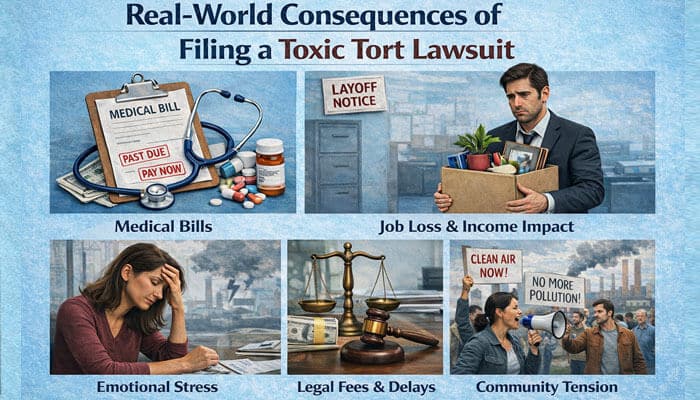
Before filing, consider:
- Emotional strain
- Medical record scrutiny
- Long litigation timelines
- Expert depositions
- Possibility of dismissal
These cases are serious legal undertakings — not quick settlements.
What Should You Do If You Suspect Toxic Exposure?
Practical next steps:
- Seek medical evaluation immediately
- Document symptoms and exposure history
- Preserve evidence (photos, reports, lab tests)
- Check your state’s statute of limitations
- Consider consulting a lawyer experienced in toxic tort cases
You do not need to commit to filing a lawsuit immediately, but early documentation matters.
Final Summary: What Is a Toxic Tort?
A toxic tort is a lawsuit claiming that exposure to a harmful substance caused injury or illness. These cases are complex, evidence-heavy, and often involve scientific disputes.
They differ from ordinary injury claims because proving medical causation is significantly harder.
Whether you need a toxic tort lawyer depends on:
- Severity of harm
- Strength of evidence
- Applicable state laws
- Filing deadlines
Disclaimer:
This article provides general legal information for U.S. readers and is not legal advice. Laws vary by state, and individual situations differ.
Frequently Asked Questions on Toxic Tort
1. What is a toxic tort case example?
Examples of toxic tort cases include:
- Residents exposed to contaminated drinking water
- Workers exposed to asbestos or industrial chemicals
- Patients harmed by dangerous pharmaceutical drugs
- Families exposed to toxic mold in rental housing
Each case requires proof that the exposure directly caused medical harm.
2. How hard is it to prove a toxic tort lawsuit?
Toxic tort lawsuits are often difficult to prove because plaintiffs must show:
- Exposure occurred
- The substance was dangerous
- The exposure caused the illness
- The defendant is legally responsible
Medical causation is usually the most challenging part of the case.
3. How long do toxic tort cases take?
Toxic tort cases can take several years.
Simple cases may resolve within 1–3 years, while complex environmental or multi-party cases may take much longer, especially if appeals are involved.