



If you’ve recently received a legal settlement, you might be wondering, “Are legal settlements taxable?” or “Do you have to pay taxes on settlements?” The answer depends on the type of settlement. While some legal settlements are not taxable, others are subject to taxes. In this guide, we’ll explore the different types of legal settlements, focusing on what type of legal settlements are not taxable, and help you understand the tax implications of your settlement.
What Are Legal Settlements?
A legal settlement is an agreement between two parties to resolve a legal dispute outside of a courtroom trial. Instead of going to court, the parties agree to a settlement where one party pays a specific amount of money to the other to resolve the issue. Legal settlements can arise from various situations, such as:
- Personal injury cases
- Workplace discrimination or wrongful termination
- Medical malpractice lawsuits
- Property damage disputes
Are Legal Settlements Taxable?
Whether or not your settlement is taxable depends on what the settlement is for. Let’s explore this in detail.
When Legal Settlements Are Not Taxable
In some cases, legal settlements are not taxable, meaning you won’t have to pay taxes on the amount you receive. The following types of settlements typically fall into this category:
1. Physical Injury or Sickness Damages
If the settlement you receive is for physical injury or sickness, the IRS generally does not consider it taxable income. This includes damages for:
- Pain and suffering
- Medical expenses
- Lost wages due to injury
- Permanent disability due to an accident
This exemption applies if the injury or illness was physical and not related to emotional distress.
2. Medical Bill Reimbursements
If your settlement is simply reimbursement for medical expenses you’ve already paid, it is not taxable. These settlements aim to repay you for out-of-pocket costs incurred due to an injury, and no tax is due.
3. Property Damage Settlements
Money received for the repair or replacement of property, such as a damaged car or home, is not taxable. This settlement is considered reimbursement for a loss, not taxable income.
When Legal Settlements Are Taxable
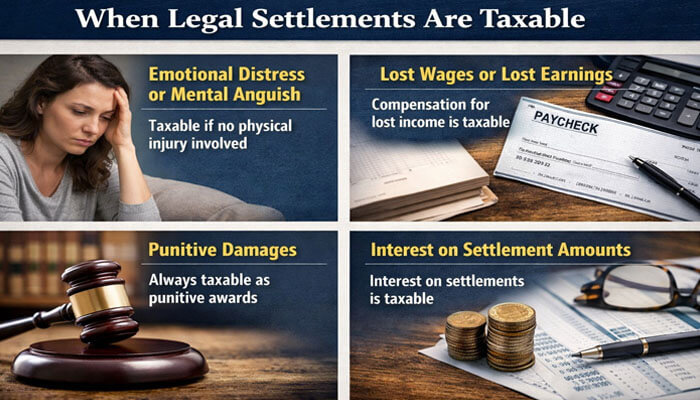
Some settlements are treated as taxable income. Here are a few situations where you might need to pay taxes:
1. Emotional Distress or Mental Anguish
If your settlement is for emotional distress or mental anguish, and there is no underlying physical injury, it is generally taxable. However, there is an exception if the emotional distress stems from a physical injury.
2. Lost Wages or Lost Earnings
Any part of the settlement that compensates for lost wages or lost earnings is usually taxable because it replaces income you would have earned. These are treated like regular wages and are subject to tax.
3. Punitive Damages
Punitive damages, which are designed to punish the defendant for their actions and deter future wrongdoing, are always taxable. These damages are not tied to any loss you experienced, so they are treated as income.
4. Interest on Settlement Amounts
In some cases, the settlement includes interest on the original payment. This interest is taxable and must be reported as income.
How Are Legal Settlements Reported for Tax Purposes?
If your settlement includes any taxable amounts, you may receive a Form 1099 from the payer. This form reports the amount of money you received and will be sent to both you and the IRS. Depending on the situation, you may receive a 1099-MISC or a 1099-INT for interest earned.
It’s important to keep records of your settlement and consult with a tax professional to ensure that you’re meeting all reporting requirements and paying the right amount of tax.
What Type of Legal Settlements Are Not Taxable?
| Type of Settlement | Taxable? | Why? |
|---|---|---|
| Physical injury or sickness | ❌ Not taxable | Compensation for physical injury or illness |
| Medical reimbursements | ❌ Not taxable | Reimbursement for medical bills paid out of pocket |
| Property damage | ❌ Not taxable | Reimbursement for damaged or destroyed property |
| Emotional distress | ✔ Taxable | Generally taxable unless tied to physical injury |
| Lost wages/earnings | ✔ Taxable | Replaces income, which is taxable |
| Punitive damages | ✔ Taxable | Designed to punish, not compensate for loss |
Conclusion: Are Legal Settlements Taxable?
It depends on the type of settlement you receive. Settlements for physical injuries, medical reimbursements, and property damage are generally not taxable. However, emotional distress, lost wages, punitive damages, and interest on settlements are typically taxable.
If you’re unsure about how your settlement affects your taxes, it’s always best to consult a tax professional who can guide you through the process and ensure you comply with tax laws.
Remember: Understanding what type of legal settlements are not taxable can save you from unnecessary taxes and headaches in the future!
What type of legal settlements are not taxable FAQs
1. Do I have to report my settlement even if it’s not taxable?
Yes, even non-taxable settlements should be reported if the IRS requires it or if you receive a form like Form 1099-MISC.
2. Does the IRS assume all settlements are taxable?
Yes, the IRS generally assumes that settlements are taxable unless clear exceptions like physical injury apply.
3. What happens if my settlement includes both taxable and non‑taxable parts?
You must report each part separately, as taxable and non-taxable portions are treated differently for tax purposes.
4. Are attorney fees always included in taxable income?
Yes, attorney fees from a settlement are usually considered taxable income, even if paid directly to the attorney.
5. Does interest on my settlement count as income?
Yes, any interest earned on a settlement amount is typically taxable as ordinary income.
6. Do state taxes treat settlements differently than federal taxes?
Yes, some states may tax settlement amounts that are exempt from federal income tax, so check your state’s rules.
7. What rules decide whether a settlement is taxable?
The IRS uses the origin of the claim rule, determining if the settlement replaces income or compensates for physical injury.
Disclaimer
The information in this article is intended for general purposes only and should not be considered as legal or tax advice. Tax laws are complex and vary by location, so it’s important to consult with a qualified tax professional or attorney to get advice tailored to your specific situation.