


Assaulting a police officer is a serious criminal offense with strict penalties. Courts treat these cases more harshly than regular assault because police officers are responsible for maintaining public safety. If you are searching for what is the minimum sentence for assaulting a police officer, this guide explains:
- Jail time and penalties
- First offense consequences
- Types of charges
- Legal defenses
What Does Assaulting a Police Officer Mean?
Assault means intentionally touching, hitting, threatening, or attempting to hurt another person. When this act happens to a police officer while they are doing their job, it becomes a special criminal offense. Courts treat it very seriously because police protect public safety.
Important:
- You can be charged even if the officer was not badly injured.
- It can be a misdemeanor (less serious) or a felony (very serious).
Assault on a Police Officer: Penalties and Minimum Sentences
The penalties depend on where the crime happened. Sentences vary widely between states in the U.S.
United States (Example Laws)
| Jurisdiction | Minimum Sentence | Maximum Sentence | Notes |
| Federal Law (18 U.S.C. § 111) | ~6–12 months (simple) | Up to 8–20 years (with injury/weapon) | Even touching a federal officer can be a crime. |
| Texas | ~2 years | Up to 10 years + fine | Any assault on officer is a felony. |
| New York | 3½ years for felony assault | Up to 15 years | Judge must give minimum sentence for serious assault. |
| Tennessee | 60 days | Up to 15+ years | Minimum 60 days even for smaller assaults. |
| California (Penal Code § 241(c)) | Up to 1 year (misdemeanor) | Up to $2,000 fine | Lesser punishment if no serious harm. |
| Virginia | 6 months | Higher | Mandatory minimum incarceration. |
Key Takeaway:
- Minimum jail time can start from as little as 60 days (in some areas) and go to several years or more depending on harm and jurisdiction.
- Federal assault laws increase penalties dramatically if injury or weapon is involved.
What Is the Minimum Sentence for Assaulting a Police Officer?
The minimum sentence for assaulting a police officer can vary depending on several factors, including the severity of the assault, whether a weapon was involved, and the defendant’s prior criminal record. Assault on an officer is considered a serious crime and is treated more severely than regular assault charges.
What to Expect
- Simple assault (e.g., pushing or shoving a police officer) may result in a minimum sentence of 60 days to 1 year in jail.
- Felony assault (e.g., using a weapon or causing serious injury to the officer) can lead to multiple years or even decades of imprisonment.
The legal system does not sugarcoat these charges. Even a first offense can lead to significant jail time, especially if the assault was violent or the officer was injured.
First Offense Assault on Police Officer

A first offense means this is the person’s first time being charged with assaulting an officer.
- Many courts still impose prison time on first offense, especially if there was physical contact.
- “Simple assault” against an officer (even a push or shove) is often charged as a felony, carrying a minimum prison sentence.
- First offenders may get probation only in rare and mild cases, but usually jail or prison is required.
Assault on Officer Charge: What Counts?
Types of Acts That Can Lead to Charges
✔ Hitting, punching, kicking a police officer
✔ Trying to push or shove them
✔ Threatening violence toward them
✔ Using a weapon against an officer
✔ Even minor contact (in some laws) can be charged as assault on officer if intentional.
Other Charges That Often Come With It
- Resisting arrest
- Obstructing justice
- Battery
- Threats or intimidation
These charges carry additional penalties and can raise your sentence further.
If a Police Officer Touches You, Is It Assault?
Not always. The law allows police officers to use reasonable force while doing their job. This can include touching you to handcuff you, guide you, or control a situation.
Key rule:
If the officer is acting lawfully within their duties, then their contact is not considered assault. If an officer uses force unlawfully or excessively, you may have legal remedies, but fighting back physically is never recommended and may lead to assault charges against you.
Jail Time for Assaulting a Police Officer — Real Consequences
Here’s a summary of potential jail penalties if convicted:
Typical Scenarios
- Simple assault on officer: Jail time (could be as low as 60 days–1 year).
- Felony assault with injury: Multiple years in prison.
- Assault with weapon: Even longer sentences (up to 20+ years).
Side Effects of a Conviction
- Permanent criminal record
- Difficulty finding jobs
- Restrictions on gun ownership
- Loss of civil rights (in some countries/states)
Factors That Can Affect Sentencing
The severity of the sentence can be affected by various factors, including:
- Whether the officer was injured or seriously harmed.
- Whether a weapon was involved in the assault.
- The prior criminal record of the defendant.
- Whether the assault was committed during another crime (e.g., resisting arrest).
- Whether the assault was committed by a minor (which might lead to reduced sentences).
Legal Defenses to Assault on a Police Officer Charges
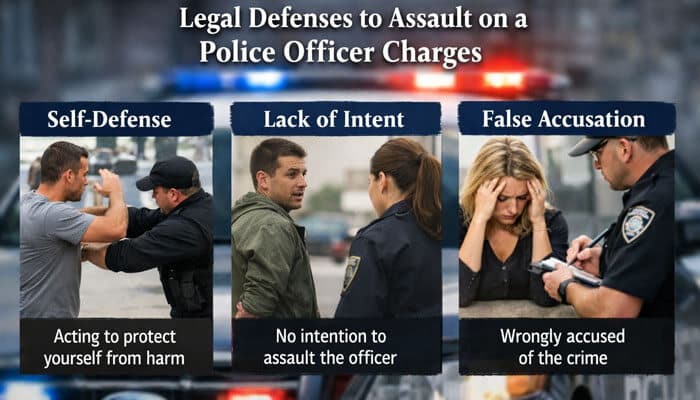
While assaulting a police officer is a serious crime, there are a few defenses that could be raised in court:
- Self-defense: If you were defending yourself from unlawful force used by the officer.
- Lack of intent: If the act was accidental and not done on purpose.
- False accusation: If you are wrongly accused and can prove you didn’t assault the officer.
Common Defenses to Assault on Officer Charges
In cases of assaulting a police officer, some common defenses may apply, depending on the situation:
- Self-defense: If you can prove that you were defending yourself from the officer’s unlawful actions, you may avoid conviction. For example, if the officer was using excessive force, and you had no other way to protect yourself, this could be a valid defense.
- False Accusation: Sometimes, police officers may falsely accuse someone of assaulting them. If there’s evidence that disproves the officer’s version of events (such as video footage or eyewitness testimony), the charge may be dropped.
- Mistaken Identity: If the person accused of assaulting the officer was not the person responsible, mistaken identity could be used as a defense.
- Lack of Intent: Assault requires an intentional act. If you were not intending to harm the officer but acted out of reflex or confusion, you might argue that there was no intent to commit assault.
Simple Tips If You Are Contacted by Police
- Stay calm and cooperate
- Do not resist physically
- Record the encounter if possible
- Contact a lawyer if you believe officer acted unlawfully
Retaliating physically can lead to assault charges against you, even if the officer was wrong.
Conclusion
What is the minimum sentence for assaulting a police officer? Assaulting a police officer is a serious crime with penalties ranging from months to years in prison. Even minor actions like a shove can lead to felony charges. The consequences can include a permanent criminal record and difficulty securing employment. Understanding the severity of these charges is crucial for anyone facing them.
While there are legal defenses available, such as self-defense or mistaken identity, the best course of action is to remain calm and cooperate if you find yourself in a situation with law enforcement. Seeking legal counsel can help protect your rights and ensure the best possible outcome if you’re facing charges related to assault on a police officer.
What Is the Minimum Sentence for Assaulting a Police Officer FAQs
1. What Is the Minimum Sentence for Assaulting a Police Officer?
2. Can you be charged for resisting arrest?
Yes, resisting arrest can lead to assault charges if physical contact occurs.
3. What are the penalties for assault in a school zone?
Penalties may be more severe in school zones or government property.
4. What’s the difference between misdemeanor and felony assault on an officer?
Misdemeanors involve less harm, while felonies involve serious injury or weapons.
5. Can assaulting an officer lead to federal charges?
Yes, if the officer is a federal agent or the incident is in federal jurisdiction.
6. Does the officer have to be injured for assault charges?
No, even minor contact or threatening behavior can lead to charges.
Disclaimer: This article is intended for informational purposes only and does not constitute legal advice. Laws vary by jurisdiction, and the content here may not reflect the most current legal standards. For specific legal guidance or assistance, it is recommended to consult with a qualified attorney.
