



A wrongful arrest occurs when law enforcement detains you without legal justification. This typically involves the absence of probable cause (a reasonable belief that you’ve committed a crime) or a valid arrest warrant. If you have been arrested unlawfully, you might wonder: Can you sue for wrongful arrest? The answer is yes. You can file a lawsuit if certain legal criteria are met.
In this guide, we will break down the necessary steps for proving a wrongful arrest, the compensation you may receive, and how you can take legal action.
What Is Wrongful Arrest?
A wrongful arrest takes place when law enforcement detains someone without having a legitimate reason or legal authority to do so. In most situations, the officer must have probable cause or a valid arrest warrant to make an arrest. If these conditions are not met, the arrest can be considered unlawful and a violation of your rights.
Key Legal Points:
- No Probable Cause: Law enforcement must have a reasonable belief that you committed or are about to commit a crime.
- No Valid Warrant: For certain arrests, a warrant is required. If an arrest occurs without one in situations where it’s needed, it could be deemed wrongful.
- Violation of Rights: If the officer used excessive force or did not respect your legal rights during the arrest, this could also lead to a wrongful arrest claim.
Legal Basis for Filing a Lawsuit
You have the right to file a lawsuit if you believe you were wrongfully arrested. Here’s the legal framework for bringing a claim:
1. U.S. Law:
- Fourth Amendment: Protects against unreasonable searches and seizures, which includes arrests without probable cause.
- 42 U.S.C. § 1983: Allows individuals to file civil rights claims against government officials, including law enforcement officers, for violations like wrongful arrest.
2. International Law:
- India: Article 21 of the Constitution ensures the right to life and personal liberty, which includes protection from arbitrary arrest.
- UK: The Police and Criminal Evidence Act (PACE) governs lawful arrests and protections against wrongful detention.
- Canada: Section 9 of the Canadian Charter of Rights and Freedoms provides protection from arbitrary detention.
These international frameworks provide similar protections for wrongful arrest cases, allowing individuals to seek justice if unlawfully detained.
Step-by-Step: What to Do After a Wrongful Arrest
1. Stay Calm and Cooperate
- Remain calm and avoid resisting. Resisting can make things worse.
2. Remember Your Rights
- You have the right to remain silent and the right to an attorney. Do not answer questions without a lawyer present.
3. Document the Arrest
- Write down officer names, the time, location, and reason for your arrest.
- Ask any witnesses to write down what they saw.
4. Take Photos or Video (If Possible)
- If you are injured or if excessive force was used, document it with photos or videos (if legal in your jurisdiction).
5. Seek Medical Attention
- If injured during the arrest, get medical help immediately and document any injuries.
6. Contact an Attorney
- Consult a civil rights lawyer who specializes in wrongful arrest cases to assess your options.
7. File a Complaint
- File a formal complaint with the police department or Internal Affairs if necessary.
8. Gather Evidence
- Collect all relevant documents (police reports, medical records, witness statements, and any footage).
9. Understand Your Legal Options
- You may have the option to file a civil rights claim or a false arrest lawsuit under 42 U.S.C. § 1983.
10. File Your Lawsuit
- File your wrongful arrest lawsuit within the statute of limitations (usually 2-3 years). Your attorney will guide you through this process.
11. Pursue Compensation
- If successful, you may receive compensatory damages, punitive damages, and attorney’s fees.
Can You File a Wrongful Arrest Lawsuit?

Yes, you can file a wrongful arrest lawsuit if certain conditions are met. Here’s a breakdown of the criteria:
1. No Probable Cause
Law enforcement must have a valid reason to arrest you, based on evidence or suspicion that you committed a crime. If they lacked probable cause, the arrest was unlawful.
2. No Valid Warrant
For specific types of arrests (e.g., felony arrests), law enforcement must have a valid warrant. If the officer arrests you without a warrant when one is required, your arrest may be wrongful.
3. Violation of Rights
If your rights were violated during the arrest, such as the following:
- Being denied Miranda warnings
- Being detained for too long without charges
- Enduring excessive force
These violations can strengthen your case for wrongful arrest.
Wrongful Arrest vs. False Imprisonment
There are distinctions between wrongful arrest and related legal claims, such as false imprisonment. Here’s a breakdown:
| Claim Type | Definition | Key Differences |
| Wrongful Arrest | Unlawful arrest by law enforcement | Involves law enforcement and a lack of probable cause or warrant |
| False Imprisonment | Any unlawful confinement of a person | Can involve private parties, not just law enforcement |
| Malicious Prosecution | Wrongful criminal charges initiated after an arrest | Requires a continuation of criminal proceedings |
False imprisonment can overlap with wrongful arrest, but it may also refer to a broader scope of unlawful confinement, even without an arrest.
Who Can Be Sued for Wrongful Arrest?
You can file a lawsuit against the following parties if you’ve been wrongfully arrested:
- Law Enforcement Officers – Officers who directly carry out the wrongful arrest can be personally sued for violating your rights.
- Police Department—In cases where department policies, procedures, or failure to train officers contribute to wrongful arrests, the department can be held liable.
- Municipalities—If the local government’s policies or practices led to the unlawful arrest, they may also be liable.
Qualified Immunity:
Law enforcement officers may be granted qualified immunity, meaning they are protected from lawsuits unless they violate “clearly established” constitutional rights. However, this immunity is not absolute, and officers can be held liable for unlawful arrests under certain circumstances.
What Compensation Can You Receive?
If your wrongful arrest lawsuit is successful, you may be entitled to the following types of compensation:
1. Compensatory Damages
Compensatory damages are designed to compensate you for the harm caused by the wrongful arrest, including:
- Lost wages from being detained
- Emotional distress caused by the arrest
- Legal costs you incurred in fighting the arrest
- Damage to reputation due to being wrongfully arrested
2. Punitive Damages
In cases where the law enforcement conduct was particularly egregious or malicious, you may also receive punitive damages. These damages are meant to punish the responsible party and deter future misconduct.
3. Attorney’s Fees
If you win your case under civil rights laws, you may be able to recover your attorney’s fees and litigation costs.
How to Prove Wrongful Arrest
To succeed in a wrongful arrest lawsuit, you need to prove several legal elements:
- You Were Arrested: There must be clear evidence that you were taken into custody.
- No Probable Cause: You need to show that the officer did not have reasonable grounds to believe you committed a crime.
- Rights Were Violated: Evidence of rights violations such as excessive force, failure to read Miranda rights, or unlawful detention.
- Harm Suffered: You must demonstrate that you suffered harm, whether emotional distress, financial losses, or physical injury, as a result of the wrongful arrest.
How to File a Wrongful Arrest Lawsuit
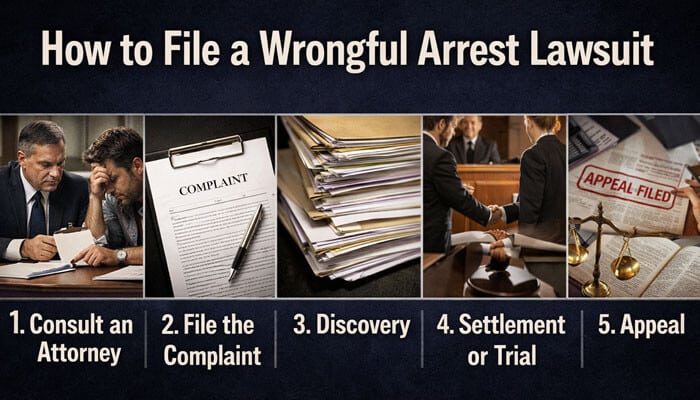
Filing a wrongful arrest lawsuit involves several legal steps:
1. Consult an Attorney
It’s crucial to speak with a civil rights attorney who can assess your case and guide you through the legal process.
2. File the Complaint
The lawsuit begins when you file a complaint with the court. This document outlines your legal claims, the events surrounding the arrest, and the damages you are seeking.
3. Discovery
The discovery phase involves the exchange of evidence, including:
- Police reports
- Body camera footage (if available)
- Testimonies from witnesses or experts
4. Settlement or Trial
Most wrongful arrest cases settle before going to trial. However, if a settlement can’t be reached, the case will go to trial.
5. Appeal
If you lose the case, you may have the right to appeal the decision, especially if legal errors occurred during the trial.
Statute of Limitations for Wrongful Arrest Lawsuits
There is a statute of limitations—a time limit for filing a lawsuit—that varies depending on your jurisdiction:
- U.S. Federal Law: You generally have 2-3 years to file a wrongful arrest claim under 42 U.S.C. § 1983.
- State Laws: Some states have different statutes of limitations, so check your local laws.
Filing after the statute of limitations has expired can bar your case from being heard in court.
Defenses Law Enforcement May Use
Police officers and their departments may argue the following defenses against wrongful arrest claims:
- Probable Cause Existed: The officer will argue that they had a reasonable belief you committed a crime.
- Mistaken Identity: If there was confusion about your identity, this can be a defense.
- Exigent Circumstances: In some cases, the officer may argue that urgent circumstances (e.g., fleeing suspect) required immediate action.
- Qualified Immunity: Law enforcement officers may assert qualified immunity if they didn’t violate clearly established law.
Conclusion
Understanding your rights is essential when dealing with law enforcement, especially in cases involving unlawful detention. If you are wondering, can you sue for wrongful arrest, the answer is yes—provided you can prove that there was no probable cause, no valid warrant, or a clear violation of your rights. These legal foundations are critical in determining whether your arrest was lawful or unconstitutional.
A successful wrongful arrest claim depends on strong evidence, proper legal guidance, and timely action within the statute of limitations. From documenting the incident to working with an experienced attorney, every step plays a vital role in building your case and securing fair compensation.
Ultimately, taking legal action is not just about compensation—it’s about holding authorities accountable and protecting your civil rights. If you believe you have been wrongfully arrested, acting quickly and seeking professional legal advice can make a significant difference in the outcome of your case.
Can you sue for wrongful arrest FAQs?
1. Can you sue for wrongful arrest?
Yes, you can sue for wrongful arrest if you were detained by law enforcement without probable cause or a valid arrest warrant. Additionally, if your rights were violated during the arrest (e.g., excessive force, failure to inform you of your rights), you can file a lawsuit.
2. What is probable cause in a wrongful arrest?
Probable cause means law enforcement must have a reasonable belief that you have committed or are about to commit a crime. If the officer lacks this belief or evidence to support the arrest, the arrest may be deemed unlawful.
3. How long do you have to file a wrongful arrest lawsuit?
The time limit to file a wrongful arrest lawsuit, known as the statute of limitations, is typically 2-3 years in most U.S. jurisdictions. It’s important to file as soon as possible to avoid missing this deadline.
4. Can you file a lawsuit if charges are dropped after an arrest?
Yes, even if the charges are dropped, the arrest can still be considered wrongful if it was made without probable cause or if it violated your rights. Dropped charges do not automatically make the arrest lawful.
5. What types of damages can you receive from a wrongful arrest lawsuit?
You may receive compensatory damages for lost wages, emotional distress, and damage to your reputation. In some cases, punitive damages may be awarded if the law enforcement conduct was particularly egregious or malicious. You may also recover attorney’s fees if you win the case.
Disclaimer: The information in this article is for general informational purposes only and does not constitute legal advice. For specific legal guidance, consult with a qualified attorney. Laws and regulations may vary by jurisdiction and are subject to change.
