

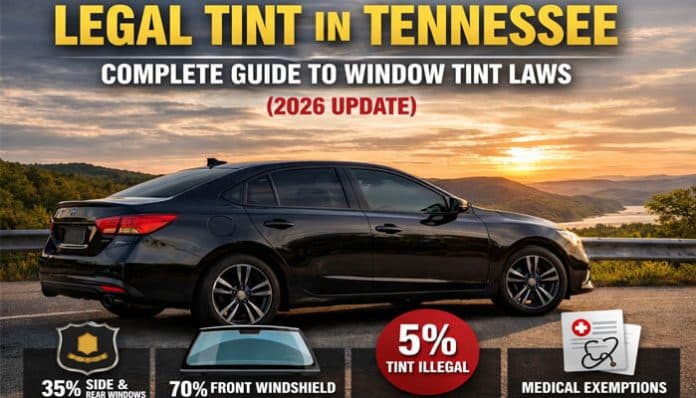

When it comes to tinting your car windows, legal tint in Tennessee is crucial for staying compliant with state laws while maintaining safety. The right amount of window tint can protect you from harmful UV rays, reduce heat inside the vehicle, and offer added privacy. However, it’s important to know the legal limits to avoid fines and complications.
In Tennessee, legal tint in Tennessee is regulated to ensure drivers have enough visibility while allowing for privacy and safety. The laws clearly define the allowed VLT percentages for different windows. Knowing these limits helps you avoid fines and stay compliant.
The legal tint in Tennessee is regulated by visible light transmission (VLT) percentages, and knowing these limits is key to avoiding penalties. This guide will walk you through the specific rules, legal tint percentages, and exemptions that apply in Tennessee, so you can enjoy your tinted windows without worrying about breaking the law.
What Is Legal Tint in Tennessee?
A legal tint in Tennessee refers to a special dark film that can be applied to car windows. The tint must still allow enough light to pass through to be safe and comply with the law. The purpose of these tinting laws is to ensure visibility for both drivers and law enforcement.
In Tennessee, the key number in tint laws is VLT (Visible Light Transmission). VLT measures the amount of light that can pass through the tinted windows. The higher the VLT percentage, the lighter the tint, and the lower the VLT percentage, the darker the tint.
Tennessee Tint Law
Here’s a table to help you understand the legal tint percentages for different parts of your car in Tennessee:
| Part of Car | Legal Tint % (VLT) | Meaning |
| Front Windshield | 70% or more visible light | Only tint on the top strip is allowed |
| Front Side Windows | 35% or more light | No dark limo tints (5%) allowed |
| Rear Side Windows | 35% or more light | Same as front side windows |
| Rear Window | 35% or more light | Same as rear side windows |
What Is the Legal Tint Limit in Tennessee?
Legal tint limit in Tennessee means the minimum amount of light your tinted windows must allow. The law states the following:
- Front Windshield: Must allow at least 70% light to pass through.
- Front Side Windows: Must allow at least 35% light to pass through.
- Rear Side Windows: Must allow at least 35% light to pass through.
- Rear Window: Must allow at least 35% light to pass through.
If your tint is darker than these limits, it’s considered illegal.
Is 5% Tint Legal in Tennessee?
No, 5% tint is NOT legal in Tennessee on most windows. A 5% tint allows only 5% of light to pass through, which is too dark and far below the 35% legal limit for side and rear windows. Police may issue a ticket if they measure your tint and it’s darker than the legal limit.
Is Window Tint a Primary Offense in Tennessee?
Yes, window tint violations in Tennessee are considered a primary offense. This means that police officers can pull you over solely for having illegal tint on your windows, without needing another reason such as speeding or a traffic violation.
If the tint is too dark or does not meet the required VLT percentages, law enforcement can issue a ticket or citation. This is important to note, as it means you could be stopped and fined just for having illegal tint, even if you’re not breaking any other traffic laws.
Special Rules to Know
- Reflectivity Rules:
Tennessee does not allow mirror-like or highly reflective tints on car windows. This type of tint can interfere with visibility and be dangerous on the road.
- Windshield Tinting:
You can add tint to the top of your windshield, but it must not extend below the AS-1 line (usually the top few inches). This tint must also allow at least 70% light to pass through.
- Medical Exemptions:
If you have a medical condition, you can get darker tint with a doctor’s certificate. You’ll need to apply for approval from the Tennessee Department of Safety. This exemption is a great option for those with sensitive eyes or other medical issues requiring a darker tint for protection.
Why These Laws Exist
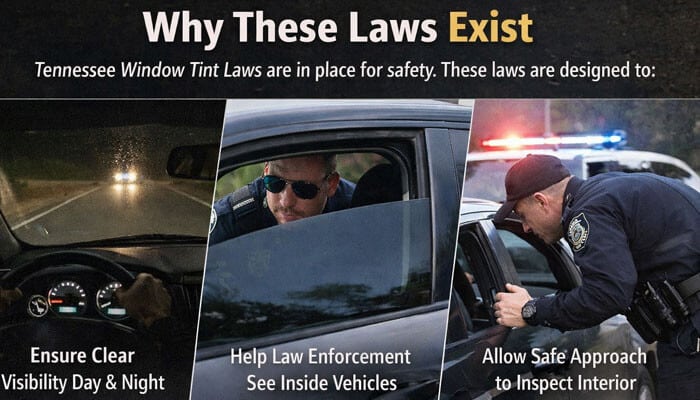
Tennessee window tint laws are in place for safety. These laws are designed to:
- Ensure drivers have enough visibility at night and during the day.
- Help law enforcement and emergency responders clearly see inside vehicles for safety.
- Ensure that police can safely approach a car and inspect its interior when needed.
What Happens If Your Tint Is Illegal?
If your tint is too dark and doesn’t meet the legal tint limits, you could face several consequences:
- Fines or tickets from police officers.
- Ordered removal of the illegal tint.
- Failing a vehicle inspection.
- Potential issues with registration.
Law enforcement officers use special tools to measure the tint darkness and check if it meets the legal limits.
Tips for Legal Tint in Tennessee
To ensure your tint is legal in Tennessee, follow these tips:
- Always check the VLT percentage before getting your tint installed. Ask the installer for the VLT details.
- Hire a professional to install the tint, ensuring it’s within the legal limits.
- Keep the tint certificate or sticker that comes with the tint in your vehicle in case you need to prove it’s legal.
- Review tint laws in other states if you plan on traveling outside of Tennessee since laws can vary from state to state.
Additional Information on Tint Regulations
Window Tint for Commercial Vehicles:
Commercial vehicles, including delivery trucks and vans, may have different tint rules. Some commercial vehicles can have darker tint for privacy reasons but must still comply with the state’s overall safety regulations. Always check with local authorities if you’re tinting a business vehicle.
Penalties for Tint Violations:
If caught with illegal tint, fines could range from $50 to $200. You may also be required to remove the tint at your own expense. For commercial vehicles, the fines could be higher.
How to Measure Window Tint Darkness:
If you’re unsure about whether your tint is too dark, consider having it measured. Many professional tint shops can check it, or you can visit a local inspection station.
UV Protection Benefits:
Though legal tint ensures safety and complies with the law, it can also block harmful UV rays. This is one of the added benefits of window tinting that many people don’t consider. UV protection can help protect your skin and keep your car’s interior from fading.
Window Tint for Other Vehicle Types:
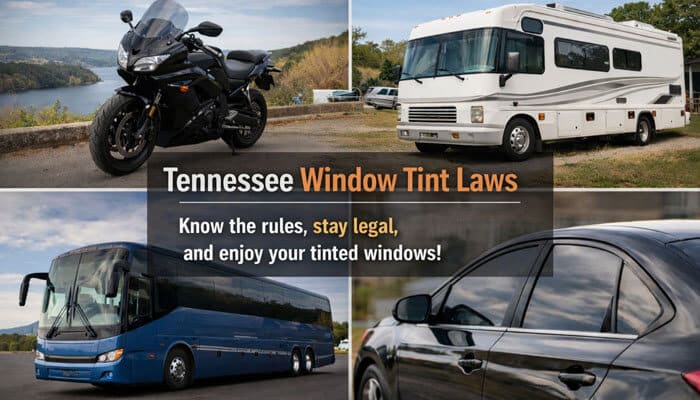
The window tint regulations mentioned above apply primarily to passenger vehicles. However, there are specific rules for motorcycles, RVs, and buses, which may have different requirements. Make sure to review state-specific guidelines for non-passenger vehicles.
Summary (Easy to Remember)
- Legal tint in Tennessee must allow enough light through.
- Front windows: ≥ 35% light in.
- Windshield: ≥ 70% light in (only at the top).
- 5% tint is illegal unless there’s a medical exemption.
- No shiny/mirrored tints allowed.
- Keep certificates for proof of legality.
- Review laws in other states if traveling outside Tennessee.
Stay safe, follow the law, and enjoy your new tinted windows!
Final Thoughts
Understanding legal tint in Tennessee is essential for all drivers. This article covers everything from tint percentages to medical exemptions, providing a complete guide to ensure you make informed choices. Whether it’s for your windshield, side windows, or rear windows, knowing the legal limits will help you avoid penalties and keep you compliant with Tennessee’s laws.
By following the rules for legal tint in Tennessee, you can enjoy the benefits of tinted windows without the worry of fines or inspections. This guide has provided you with the necessary knowledge, whether it’s checking VLT percentages, understanding commercial vehicle rules, or using medical exemptions. Keep these guidelines in mind, and stay safe while ensuring your tint is within the legal limits.
Legal tint in Tennessee FAQs
1. What is the penalty for illegal tint in Tennessee?
Fines for illegal tint in Tennessee range from $50 to $200. You may also need to remove the tint at your own expense.
2. Can I get a ticket for having too dark window tint in Tennessee?
Yes, illegal tint is a primary offense in Tennessee, so police can ticket you even if no other traffic laws are broken.
3. How can I check if my tint is legal in Tennessee?
You can have the VLT percentage measured by a professional tint shop or inspection station to ensure it complies with the legal limits.
4. Can I legally tint my windows at night in Tennessee?
Yes, window tinting laws apply 24/7, as long as the tint meets the legal VLT limits during both day and night.
5. Are there any exceptions to the legal tint limits in Tennessee?
Yes, medical exemptions allow darker tints with a doctor’s certificate approved by the Tennessee Department of Safety.
6. Is 20% tint legal in Tennessee?
No, 20% tint is illegal in Tennessee for side and rear windows, as the limit is 35% light transmission.
Disclaimer:
The information provided in this article is for general guidance only. Window tint laws in Tennessee may change, and local authorities should be consulted for the most up-to-date information. This article does not constitute legal advice. Always verify with legal professionals or state officials before making decisions on window tinting.