


Facing first‑time drug possession charges in texas can be a stressful experience. Whether you’re charged with possession of marijuana, cocaine, or other controlled substances, the legal consequences can have a lasting impact on your life. The severity of the charge depends on factors like the type and amount of the drug in your possession.
This article will guide you through everything you need to know about first‑time drug possession charges in Texas, from penalties and defenses to the long-term effects of a criminal record. We’ll also explore Texas’ penalty groups and the potential for diversion programs that may offer second chances for first-time offenders.
What Is Drug Possession in Texas?
In Texas, drug possession refers to having illegal drugs with you, either on your person or in your home, car, or bag. Even small amounts of drugs like marijuana or prescription medication can lead to criminal charges. You can be charged with drug possession if you knowingly or intentionally have controlled substances, which include marijuana, cocaine, methamphetamine, heroin, and more.
Types of Drug Possession Charges:
- Misdemeanor: Typically applies to smaller amounts of drugs like marijuana or certain prescription medications.
- Felony: Applies to more serious drugs (e.g., cocaine, heroin) or larger amounts of any drug.
The severity of the charge depends on the type of drug and the amount in possession. The more dangerous or addictive the drug is, the harsher the penalties.
Is Marijuana Legal in Texas?
No, marijuana is not legal for recreational use in Texas. While some states have legalized marijuana, Texas still considers it an illegal drug. You can still face criminal charges for possessing marijuana in even small amounts.
Current Marijuana Penalties in Texas:
- Up to 2 ounces: Class B misdemeanor (Up to 180 days in jail)
- 2–4 ounces: Class A misdemeanor (Up to 1 year in jail)
- Over 4 ounces: Felony charges (6 months to 2 years in prison)
Medical marijuana is legal, but only under strict rules involving low‑THC cannabis oil, and even then, it’s tightly regulated.
Penalty Groups: Understanding Texas Drug Laws
Texas law categorizes controlled substances into penalty groups based on their potential for abuse and harm. The penalty group of the drug determines how serious the charge is and what penalties you might face.
Texas Drug Penalty Groups:
- Penalty Group 1: Includes highly addictive and dangerous drugs like cocaine, heroin, methamphetamine, fentanyl, and oxycodone.
- Penalty Group 2: Includes drugs like MDMA (ecstasy) and other similar substances.
- Penalty Group 3 & 4: Includes prescription medications and less dangerous drugs.
Texas Drug Penalty Group Chart
| Substance Group | Amount / Level | Charge Level | Possible Punishment |
|---|---|---|---|
| Penalty Group 1 (e.g., cocaine, heroin) | Less than 1 gram | State jail felony | 180 days–2 yrs jail + fine |
| 1–4 grams | 3rd degree felony | 2–10 yrs prison + fine | |
| 4–200 grams | 2nd degree felony | 2–20 yrs prison | |
| 200–400 grams | 1st degree felony | 5–99 yrs prison | |
| Marijuana | Up to 2 oz | Class B misdemeanor | Up to 180 days jail |
| 2–4 oz | Class A misdemeanor | Up to 1 yr jail | |
| Over 4 oz | Felony | 180 days–2 yrs+ | |
| Penalty Groups 2–4 | Varies by amount | Misdemeanor to felony | 0–99 yrs depending |
Is Possession of Drugs a Felony in Texas?
Yes, drug possession in Texas is a felony in many cases, especially for drugs like cocaine, heroin, meth, and fentanyl, as well as for larger amounts of marijuana.
Felony Charges:
Felonies are serious crimes and can lead to prison sentences of several years, depending on the substance and amount involved. In Texas, most drug possession offenses are felonies, particularly if the drugs are in Penalty Group 1.
First‑Time Drug Possession Charges in Texas: What You Should Know
When you’re facing first‑time drug possession charges in Texas, it can feel overwhelming. Texas law takes drug possession seriously, even for a first offense. However, there are different outcomes depending on the type of drug, the amount in your possession, and whether you’re eligible for diversion programs or other alternatives to traditional sentencing. Understanding your rights and knowing what to expect can make all the difference in navigating the legal process.
What Makes First-Time Charges Different?
First-time drug possession charges can sometimes result in less severe penalties than repeat offenses, but it largely depends on the specifics of the case. For example, while first-time offenders may be eligible for probation or diversion programs, they could still face serious consequences, such as:
- Arrest and booking: The arrest may lead to a criminal record, even if it’s your first offense.
- Fines and jail time: Depending on the type and amount of drugs, a first offense can still lead to fines or even jail time.
- Probation: Some offenders may be granted probation instead of a jail sentence.
- Criminal record: A conviction for drug possession could have long-term consequences, affecting future employment and other opportunities.
What Happens if It’s Your First Time?
A first-time drug possession charge in Texas can result in serious legal consequences, even if it’s for a small amount of a less harmful drug.
Possible Outcomes for First-Time Offenders:
- Arrest and booking: You may be arrested on the spot, and your property may be searched.
- Jail time: Even for a first offense, jail time can be a possibility, especially for felony charges.
- Fines: In addition to jail time, you could face significant fines.
- Probation: Some first-time offenders may be offered probation instead of jail time, depending on the circumstances and the drug involved.
- A criminal record: A conviction could stay on your record, which might affect future employment, housing, and other opportunities.
Defenses Against Drug Possession Charges
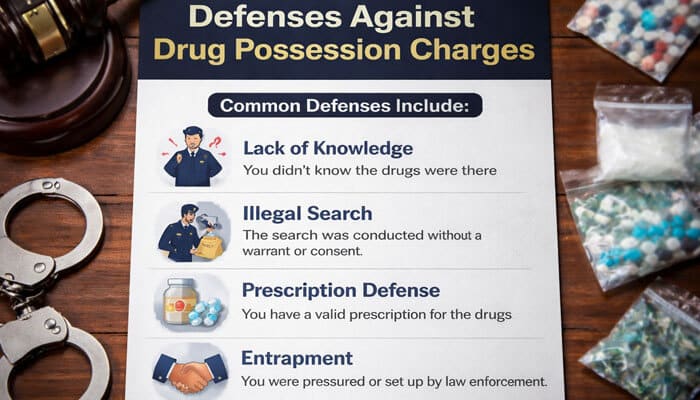
There are several legal defenses that can be used in drug possession cases, even for first-time offenders. Some of these defenses may reduce or dismiss charges.
Common Defenses Include:
- Lack of Knowledge: You didn’t know the drugs were in your possession.
- Illegal Search: The police didn’t follow the proper legal procedures when searching you or your property.
- Prescription Defense: You had a valid prescription for the drugs in your possession.
- Entrapment: You were coerced into committing the crime by law enforcement.
It’s essential to consult a criminal defense lawyer to evaluate your specific situation and determine the best defense.
Consequences of a Criminal Record
Having a criminal record for drug possession can have long-term effects on your life, even if it’s your first offense. A conviction could impact:
- Employment opportunities: Some employers may be reluctant to hire individuals with criminal records.
- Housing: Some landlords perform background checks and may refuse to rent to individuals with drug convictions.
- Travel restrictions: A criminal record could prevent you from traveling to certain countries or affect immigration status.
Diversion Programs and Alternative Sentences
In some cases, Texas offers diversion programs for first-time offenders. These programs allow individuals to avoid a criminal conviction by participating in rehabilitation, counseling, or treatment programs. If successfully completed, the charges may be dropped.
Eligibility for Diversion Programs:
- Generally applies to first-time offenders
- Must meet specific criteria (e.g., type of drug, amount, no history of drug abuse)
- Successful completion may lead to the dismissal of charges
If eligible, these programs offer a second chance for individuals without a criminal conviction on their record.
Special Situations: Distribution vs. Possession
If you’re charged with possession with intent to distribute, or drug distribution, the penalties are much harsher. Distribution charges are typically prosecuted as felonies, and the prison sentences and fines are higher than for simple possession.
Conclusion
Facing first‑time drug possession charges in texas can have serious consequences, even if it’s your first offense. The penalties vary based on the type of drug, the amount in your possession, and other circumstances. However, understanding Texas’ drug laws, penalty groups, and the potential for diversion programs can help you navigate the legal process and possibly reduce the impact on your life.
If you’re arrested, it’s essential to know your rights and explore defenses that could help reduce or dismiss the charges. Additionally, while a criminal conviction can affect your future, programs like probation or rehabilitation may be available, providing a second chance for those eligible.
If you or someone you know is facing first-time drug possession charges, consulting with a qualified criminal defense lawyer is critical to understand your options, defend your case, and possibly secure a more favorable outcome.
First‑Time Drug Possession Charges in Texas FAQs
1. What are the consequences of First‑Time Drug Possession Charges in Texas?
Yes, first-time drug possession charges in Texas may be dismissed if the offender qualifies for diversion programs or rehabilitation, which could result in charges being dropped.
3. How long does a drug possession charge stay on your record in Texas?
A drug possession conviction can stay on your record unless you qualify for expungement or record sealing. Certain conditions must be met to clear your record.
4. What happens if you refuse to take a drug test in Texas?
Refusing a drug test can result in driver’s license suspension and may lead to additional criminal charges, especially if suspected of impaired driving.
5. Can I get a job with a drug possession conviction in Texas?
While a drug conviction may make job hunting harder, some employers may still hire if you’ve completed rehabilitation or have probation. Expungement may also help.
Disclaimer: This article provides general information only and is not legal advice. For advice about specific legal situations, consult a qualified attorney.