


If you’ve ever asked yourself, can i sue my lawyer for ineffective counsel?, you’re not alone. Many individuals face the frustration of realizing that their lawyer’s mistakes or poor advice may have negatively impacted their case. While it can be a tough decision to pursue legal action against a lawyer, it’s important to know that in some situations, you can.
However, suing a lawyer for ineffective counsel isn’t automatic. There are specific conditions, legal standards, and procedures you must follow. You can only pursue a lawsuit if your lawyer’s negligence directly harmed your case, and there are strict rules for proving this.
In this article, we’ll explore the answer to the question, can i sue my lawyer for ineffective counsel? and break down when you have the right to take legal action. We’ll also walk you through the necessary steps to follow if you believe your lawyer’s mistakes have caused harm to your case.
What Does Ineffective Counsel Mean?
Ineffective counsel refers to when your lawyer fails to perform adequately, resulting in harm to your case. If you are wondering, Can I sue my lawyer for ineffective counsel?, this concept often involves:
- Failing to prepare for court
- Not telling you important legal options
- Giving wrong advice that affects your outcome
- Not filing documents on time
In criminal cases, this is tied to a person’s constitutional right to effective representation. However, proving ineffective counsel in these cases is difficult and requires meeting a high legal standard.
Can You Sue a Lawyer?
Yes, in many cases you can sue a lawyer — but only when their work falls short of legal standards and causes real harm. This type of lawsuit is usually called legal malpractice. If you’re asking yourself, can i sue my lawyer for ineffective counsel? it may depend on several factors.
Legal Malpractice Simple Definition
A lawyer commits malpractice if:
- You had a lawyer‑client relationship,
- They owed you a duty of care,
- They breached that duty by acting negligently, and
- Their negligence caused you real damage.
Examples of “Bad Legal Advice” or Legal Malpractice
Here are common times people ask, What if my lawyer gives wrong advice?
Common Bad Lawyer Actions
- Missed deadline that causes loss of rights
- Wrong legal advice that changes your decision
- Failing to file important documents
- Not telling you about plea deals or risks
- Mistakes that lead to a worse outcome
- Breach of trust or contract
These can all be forms of bad legal advice that may justify a lawsuit.
What If My Lawyer Gives Wrong Advice?
Many people panic when their lawyer makes errors. But not all mistakes allow you to sue. If you’re asking, Can I sue my lawyer for ineffective counsel?, not every mistake is enough to warrant legal action.
Mistakes That Usually Don’t Allow a Lawsuit
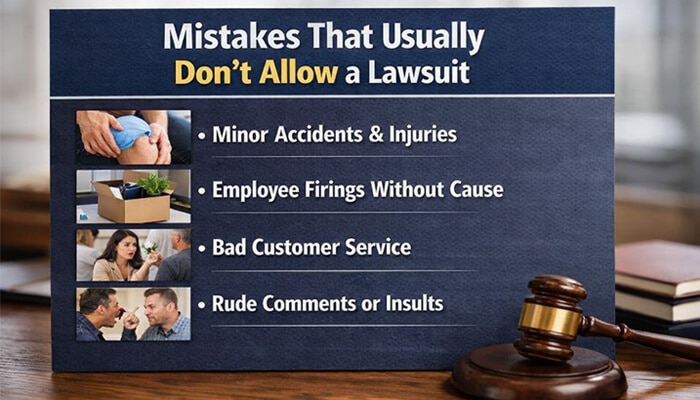
- Small clerical errors
- Bad judgment calls that don’t harm your case
- Honest interpretations that were just different
Mistakes That May Allow a Lawsuit
- Advice that was objectively wrong and caused you loss
- Not using known laws to your advantage
- Failing to explain risks clearly
- Errors that destroy your legal rights
If wrong advice caused you financial loss, loss of rights, or other harm, you may have a case and can consider whether you can sue your lawyer for ineffective counsel. However, this requires proof.
How to Prove You Can Sue a Lawyer
You need to show these main things:
| Element | What It Means |
| Duty of Care | The lawyer had a legal responsibility to you |
| Breach of Duty | They failed to meet proper legal standards |
| Causation | Their conduct was the direct reason you were harmed |
| Damages | You suffered real losses (money, rights, reputation) |
Without all four elements, your lawsuit may not succeed.
When Is Ineffective Counsel a Legal Right?
In criminal cases, defendants are guaranteed the right to effective counsel (in the U.S., by the Sixth Amendment). However:
- To use this in court, you must show serious mistakes that changed the outcome of your case.
- This is a high standard and not the same as a malpractice claim.
In civil cases, you don’t have a constitutional right, but you can still sue for malpractice if the lawyer’s errors caused you harm.
Important Steps If You Think Your Lawyer Failed You
Here is a step‑by‑step guide if you think your lawyer’s failure to provide effective counsel has harmed your case:
1. Collect All Records
Gather:
- Retainer or contract
- Emails/texts
- Court filings
- Billing statements
- Notes from meetings
2. Consult Another Lawyer
Talk with an experienced malpractice attorney. They can evaluate whether your situation meets the legal standard.
3. File a Formal Complaint
If your new lawyer thinks you have a case, they will draft a complaint and file it in civil court.
4. Evidence and Discovery
The court may allow both sides to gather evidence and testimony.
5. Settlement or Trial
Your case may settle or go to trial depending on negotiations.
Statute of Limitations
The time limit to sue a lawyer varies by state and country. In many places, it is calculated from when you discovered the mistake. Waiting too long can prevent you from filing at all. So act quickly if you believe you have legal malpractice.
For example, in California, the statute of limitations for legal malpractice claims is one year from discovering the mistake or four years from the actual incident, whichever is earlier.
Common Pitfalls When Suing a Lawyer
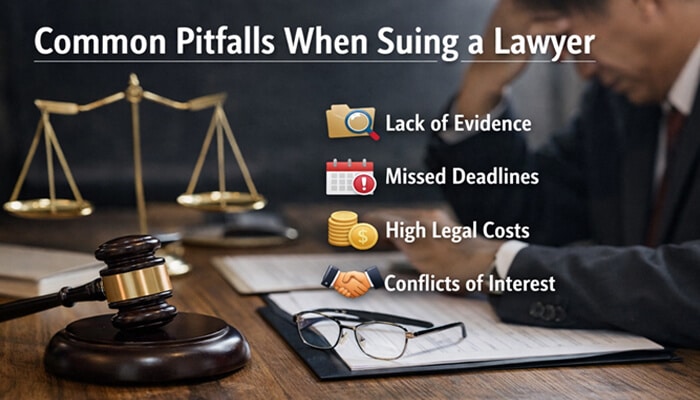
Here are some common challenges people face when suing for legal malpractice:
1. Difficulty Proving Causation: Showing that the lawyer’s mistake directly caused harm is often tough. You must demonstrate how the mistake affected your outcome.
2. High Litigation Costs: Legal malpractice lawsuits can be expensive, and hiring an attorney might be a challenge if you don’t already have one.
3. Time Pressure: You may have a limited time to bring the lawsuit, and delays can make your case weaker.
4. Burden of Proof: You need clear evidence that the lawyer’s negligence directly led to harm — mere dissatisfaction with the lawyer’s work is usually not enough.
How a Lawyer May Be Disciplined
Even if you don’t sue, lawyers can face disciplinary actions:
- Suspension of license
- Reprimand or public discipline
- Fines
This is managed by the local Bar or professional authority. Filing a complaint with your local Bar Association may also help bring attention to unethical behavior.
Resources and Case Law for Legal Malpractice Claims
- State Bar Associations: Most state bar associations provide resources and guidelines for filing legal malpractice complaints.
- Legal Aid: For those who can’t afford a lawyer, some organizations offer legal aid or pro bono assistance to evaluate your case.
- Relevant Case Law: Notable cases like Hicks v. State Bar of California can serve as important references for understanding how courts handle claims of legal malpractice.
Conclusion
Yes, you can i sue my lawyer for ineffective counsel if their mistakes or poor advice caused harm to your case. However, not all errors are grounds for a lawsuit. You must prove that the lawyer’s negligence directly impacted your outcome and act within your state’s statute of limitations.
If you believe your lawyer’s actions have harmed you, gather all relevant documents and seek expert legal advice. Consulting a malpractice attorney will help you understand whether you have a valid claim. Don’t delay, as time limits may affect your ability to pursue damages.
Can I Sue My Lawyer for Ineffective Counsel (FAQs)
1. Can I sue my lawyer for ineffective counsel in a criminal case?
Yes, criminal defendants have a constitutional right to effective counsel. If a lawyer’s ineffectiveness harms the case outcome, you can sue.
2. What is the difference between legal malpractice and ineffective counsel?
Legal malpractice is a breach of duty causing harm, while ineffective counsel in criminal cases refers to inadequate legal representation violating constitutional rights.
3. Can I sue my lawyer for failing to communicate with me?
Yes, if the lack of communication harmed your case, such as missing deadlines or important legal options.
4. How much does it cost to sue a lawyer for malpractice?
Legal malpractice lawsuits can be expensive, but many lawyers work on contingency, taking a fee only if you win.
5. What happens if my lawyer doesn’t respond to my complaint?
You can file a formal complaint with the state bar association or pursue legal action against them.
6. Can I sue my lawyer for emotional distress caused by their mistakes?
Yes, if the lawyer’s negligence caused emotional distress or anxiety, you can sue for damages.
7. How long do I have to file a legal malpractice lawsuit?
The statute of limitations varies, typically ranging from one to four years from discovering the mistake.
Disclaimer
The content of this article is for general information only and does not constitute legal advice. Laws may vary by location and situation. For personalized legal advice, please consult a licensed attorney.