



When facing a MetLife disability claim denial, it’s important to understand your rights and the steps you can take to challenge the decision. Many people feel frustrated or overwhelmed when their disability claim is denied, but a MetLife disability claim denial is not always the final outcome.
In many cases, denied claims can be successfully appealed or even overturned through legal action. This guide explains why MetLife disability claims are denied, what options you have after a denial, and whether hiring a MetLife disability lawyer may help improve your chances of success.
What Is a MetLife Disability Claim Denial?
A MetLife disability claim denial occurs when the insurance company refuses to approve a request for disability benefits under a disability insurance policy.
MetLife reviews medical records, employment information, and policy terms before approving a claim. If the company believes the claim does not meet the policy requirements, they may issue a MetLife disability denial.
This denial usually comes with a written explanation describing why the claim was rejected.
Common Reasons for a MetLife Disability Claim Denial
There are several reasons why MetLife disability claims may be denied. Understanding these reasons can help you prepare a stronger appeal.
1. Lack of Medical Evidence
One of the most common reasons for a MetLife disability claim denial is insufficient medical documentation. If your medical records do not clearly demonstrate the severity of your condition, MetLife may reject the claim.
2. Policy Exclusions
Some disability policies exclude certain medical conditions or circumstances. If your condition falls under an exclusion listed in the policy, MetLife may deny the claim.
3. Missing Deadlines
Failing to submit required forms or medical evidence before the deadline can result in a MetLife disability denial.
4. Not Meeting the Definition of Disability
Every disability policy has a specific definition of what qualifies as “disabled.” If MetLife determines that your condition does not prevent you from working according to their definition, the claim may be denied.
5. Pre-Existing Condition Clauses
Some disability insurance policies contain pre-existing condition clauses. If your disability is related to a medical condition that existed before the policy coverage began, MetLife may deny the claim based on those policy terms.
6. Failure to Follow Medical Treatment
In some cases, insurers may deny claims if they believe the claimant has not followed recommended medical treatments or doctor instructions. If MetLife determines that proper treatment could improve your ability to work, it may use that as a reason to deny benefits.
Independent Medical Exams and DisabilityClaim Denials
In certain cases, MetLife may require claimants to attend an Independent Medical
Examination (IME). This evaluation is typically conducted by a doctor selected by the insurance company.
During the exam, the physician reviews your medical condition and may provide an opinion about whether you are able to work. If the IME doctor disagrees with your treating physician, MetLife may rely on that opinion to justify denying or terminating your disability benefits.
For this reason, it is important to attend the examination and provide accurate information about your condition and limitations.
Can MetLife Use Surveillance to Deny Disability Claims?
Insurance companies sometimes investigate disability claims to verify whether the claimant’s activities match the reported medical limitations.
This investigation may include:
- Video surveillance
- Social media monitoring
- Reviewing public online posts or photos
For example, if a claimant reports severe mobility limitations but is later seen performing physical activities, the insurer may question the validity of the disability claim.
While surveillance does not automatically prove fraud, it may be used as part of the evidence when evaluating a claim.
How Long Does MetLife Take to Review a Disability Claim?
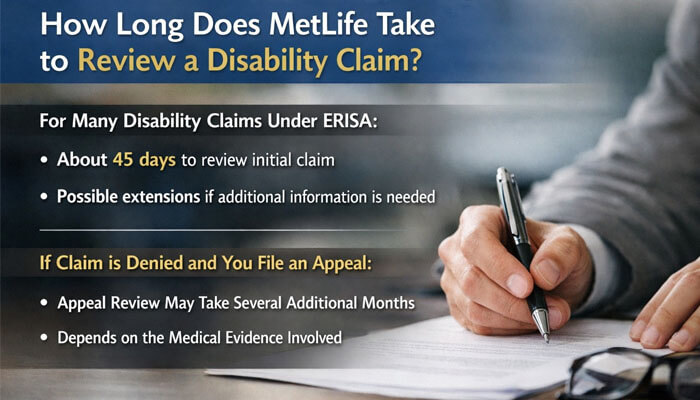
The time it takes for MetLife to review a disability claim depends on the type of policy and the complexity of the case.
For many disability claims governed by federal law under ERISA, insurance companies generally have:
- About 45 days to review the initial claim
- Possible extensions if additional information is needed
If a claim is denied and you file an appeal, the review process may take several additional months depending on the medical evidence involved.
What to Do After a MetLife Disability Claim Denial
Receiving a MetLife disability claim denial can be discouraging, but you still have several options available.
1. Appeal the Denial
Most disability policies allow you to appeal a MetLife disability claim denial. During the appeal process, you can submit additional evidence such as:
- Updated medical records
- Statements from treating physicians
- Functional capacity evaluations
- Expert medical opinions
- Statements from coworkers or employers describing job duties
- Observations from family members about how the condition affects daily life
In many cases, you have 180 days from the date of the denial letter to submit your appeal.
2. Request a Claim Review
You may also request a formal review of the denied claim. This involves providing new supporting documentation that addresses the reasons MetLife gave for denying the claim.
A strong review submission can significantly improve the chances of reversing the denial.
3. File a MetLife Disability Lawsuit
If your appeal is unsuccessful, you may have the option to file a MetLife disability lawsuit.
This typically occurs after all internal appeals have been exhausted. In many disability insurance cases governed by federal law (ERISA), the lawsuit may be filed in federal court.
A court can review whether MetLife properly evaluated your disability claim and medical evidence.
Insurance Company Tactics That May Affect Disability Claims
Some claimants believe that insurance companies automatically approve valid disability claims. However, insurers sometimes use strict review processes when evaluating claims.
Common tactics may include:
- Requesting repeated documentation
- Relying on file reviews rather than in-person medical exams
- Interpreting medical evidence narrowly
- Requesting additional evaluations such as IMEs
Understanding these practices can help claimants prepare stronger documentation and respond effectively to requests during the claim process.
Should You Hire a MetLife Disability Lawyer?
Many people wonder whether hiring a lawyer is necessary after a MetLife disability claim denial. The answer depends on the complexity of your case.
When Hiring a Lawyer May Help
You may benefit from hiring a MetLife disability insurance attorney if:
- The denial reason is complex or unclear
- Your appeal has already been denied
- You need help gathering medical evidence
- You plan to file a MetLife disability lawsuit
A disability lawyer understands insurance policies and can help build a stronger case.
When You Might Handle It Yourself
In some situations, you may be able to handle the appeal process without legal assistance, such as when:
- The denial reason is straightforward
- You simply need to provide missing medical documents
- The claim involves minor documentation issues
However, even in these cases, consulting a lawyer can help ensure your appeal is handled correctly.
Many disability attorneys also work on a contingency fee basis, meaning they only get paid if you win your case.
Understanding MetLife Short-Term Disability Forms and Claim Status
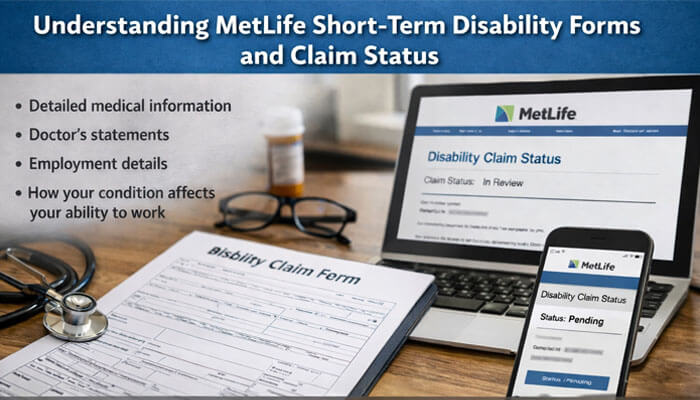
Completing MetLife short-term disability forms accurately is essential when filing a claim or appealing a MetLife disability claim denial.
These forms typically require:
- Detailed medical information
- Doctor’s statements
- Employment details
- Information about how your condition affects your ability to work
You can usually check your MetLife disability claim status by logging into your online account or contacting customer support. Monitoring your claim regularly helps ensure you respond quickly to requests for additional documentation.
Common Misconceptions About MetLife Disability Claims
There are several myths surrounding MetLife disability claims and denials.
Myth #1: You Can’t Win After a Denial
Many people successfully overturn a MetLife disability claim denial through appeals or legal action.
Myth #2: Insurance Companies Never Make Mistakes
Insurance companies sometimes misinterpret medical records or overlook important evidence.
Myth #3: Disability Claims Are Resolved Quickly
The MetLife disability appeal process can take several months, especially if additional medical evaluations are required.
Real-Life Example: Handling a MetLife Disability Denial
Consider the case of Jane Doe, a MetLife policyholder who filed a disability claim due to a chronic illness.
Her initial claim was denied due to insufficient medical evidence. Determined to challenge the decision, she submitted additional documentation during her MetLife disability appeal, including a detailed report from her specialist.
However, MetLife upheld the denial, stating her condition did not meet the policy’s disability definition.
Jane then consulted a MetLife disability lawyer, who discovered that important medical records had been overlooked during the review process. The attorney filed a MetLife disability lawsuit, and after further evaluation, the court ruled in Jane’s favor, awarding her the disability benefits she was entitled to receive.
Conclusion
A MetLife disability claim denial can be stressful, but it does not mean your case is over. Many denied claims are successfully overturned through appeals, additional medical evidence, or legal action.
Understanding the appeal process, keeping detailed documentation, and responding quickly to requests from MetLife can improve your chances of success. If your situation becomes complex, consulting a MetLife disability lawyer may help protect your rights and ensure your claim receives proper consideration.
Frequently Asked Questions (FAQ)
What if my MetLife disability claim is denied?
If your MetLife disability claim is denied, you can appeal the decision by submitting additional evidence. Consulting with a disability lawyer can help strengthen your case during the appeal process.
How long do you have to appeal a MetLife disability claim denial?
Most disability policies give claimants 180 days from the date of the denial letter to file an appeal.
Can you sue MetLife for denying a disability claim?
Yes. If your appeal is denied, you may file a MetLife disability lawsuit, particularly if the policy is governed by ERISA law.
Do you need a lawyer for a MetLife disability appeal?
While it is not always required, hiring a disability attorney can significantly improve your chances of overturning a MetLife disability claim denial.
How long does a MetLife disability appeal take?
A disability appeal review may take several weeks or months depending on the complexity of the medical evidence and documentation involved.
Disclaimer:
This article provides general legal information and should not be considered legal
advice. For guidance regarding your specific situation, consult a licensed attorney.
