



Workplace injuries are not as common as they once were. This is thanks to safety guidelines designed to keep workers safe from occupational dangers. Occasionally, there will be a workplace where safety measures are more of a suggestion than necessity. If workers find themselves working for lax or negligent workplaces, their chances of an avoidable injury rise.
In the unfortunate event where an employee is injured, partnering with a personal injury lawyer in San Gabriel can help them get the legal representation they need to recover compensation for injuries. Firms such as Vaziri Law help workers obtain the compensation they deserve after an injury at work.
Common Workplace Injuries
The following are some of the most common workplace injuries:
- Slips and falls
- Muscle strains
- Cuts and lacerations
- Impact injuries
- Electrocution
- Motor vehicle accidents
- Exposure to harmful substances
- Repetitive strain injuries
Why Do Workplace Injuries Happen?
While people clock in and out of work every day, this doesn’t mean the workplace is always a safe place with no incidents of injuries. Common reasons why accidents happen include:
- Failure to follow safety standards
- Using broken or malfunctioning equipment
- Poor training
- Excessive productivity demands
- Poor maintenance
- Ignoring hazards
- Improper handling of equipment
What Does Your Injury Lawyer Need to Prove?
Personal injury lawyers use evidence to determine negligence. In California, the law recognizes the doctrine of comparative negligence. This means even if someone is partially responsible for their injuries, they can still recover compensation. However, evidence documenting the case shows who holds what percentage of fault in each case.
How to Prove Negligence
In California, everyone must follow a duty of care on the road or at the workplace. A workplace is responsible for its workers and must ensure their safety while on the premises. This means supplying protection such as PPE or safety training. It can also be as simple as advising workers that the floors are wet and dangerous by using the appropriate signage.
If the injury in question was due to the failure to supply protection or inform workers of potential dangers, then it is up to the afflicted party to prove their employer failed in their duty of care.
Comparative Negligence
In California, the law observes comparative negligence. This means all parties involved could share responsibility for an accident, but injured plaintiffs can still recover compensation for their damages, less their percentage of fault. The evidence submitted by the involved parties helps lawyers and insurance companies determine how to split liability.
For example, if an employee was using equipment improperly at the orders of their supervisor, the employee may still be liable for some of the damage. However, most of it would land on the supervisor or the company for ordering the employee to do so.
Even if the employee does have some fault in their actions, it’s best to be honest and report why certain actions were taken.
Important Evidence for a Personal Injury Case
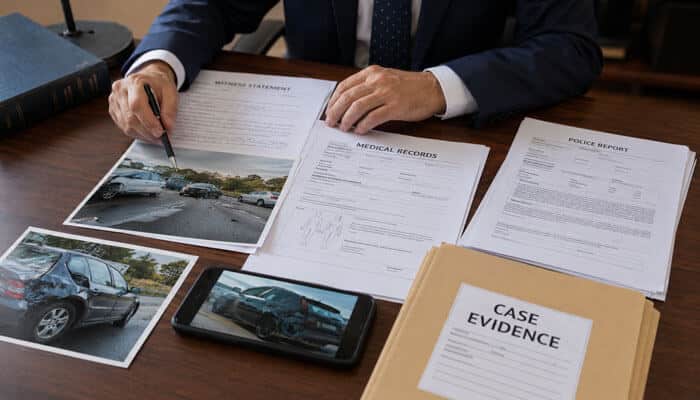
Like any accident, a workplace accident requires evidence to have a solid case. While not every case will have all the evidence available, it’s important to have some vital pieces of evidence. Without any solid evidence, a case becomes nearly impossible to defend.
Accident Report
This is the most important step of any workplace injury suit. If someone is injured at work, they must immediately report it to their employer. Their employer will then file an official accident report. It’s important that this document is filled out as soon as possible so that none of the information is forgotten.
Obtaining a copy of the report proves the employer is aware of the injury. Make sure to receive confirmation of its receipt and a duplicate of it for your records.
Timecard
In addition to submitting an accident report, making sure that you were clocked in during the time of the accident is also highly important. This gives an attorney confirmation that the workplace was responsible for their client’s wellbeing during that time.
If the accident happened during lunch or off the clock, the matter becomes much more complicated. However, follow the steps in reporting an accident to the premises then meet with a personal injury lawyer to see what can be done.
Internal Communication
Presenting an attorney with official memos, emails, or other written notices such as texts, private messages, or notes can also help absolve the employee of responsibility for doing something they weren’t supposed to. If there is anything there that suggests an employee has to ignore safety protocols, then that can be used to prove negligence in a case.
Visual Media
Employers will typically do their own investigation into a workplace accident. However, it’s in an employee’s best interest to take photos and videos of the accident site. They can also try to obtain surveillance videos.
Try to take photos of the entire area from multiple angles. Sometimes crucial information is discovered in the examination process.
Doctor Records
It’s highly recommended to visit the doctor after an accident. Most injuries don’t manifest until some time has passed. To catch them sooner rather than later, it’s a good idea to visit the doctor and let them know the reason for the visit. Ask for a record of the visit and the doctor’s diagnosis of the injuries, if any. The following are potential medical records that an attorney would like to have:
- X-Rays
- MRIs
- Emergency Reports
- Doctor’s Notes
- Prescriptions
If the paramedics were called to the site, obtain a copy of their initial report of the injuries. Submit this alongside the doctor’s report at the hospital alongside other medical records relating to the injury.
Witness Testimony
If there was anyone else around at the time of the injury, ask for their contact information. Witnesses can offer a different perspective on an accident and could help your case. This can be co-workers, supervisors, visitors, or clients.
This depends on the nature of the job and the overall environment. Delivery drivers may have to gamble on pedestrians and people at home to assist in the case of an accident. Office workers may rely on other co-workers or supervisors to relay the events leading to an accident.
What Damages are Compensated?
In a personal injury case, the compensation can be divided into three parts. Economic, non-economic, and punitive damages. It’s more common to receive economic and non-economic compensation in a typical personal injury case.
Economic Damages
Economic damages entail tangible expenses. This includes medical costs, lost wages, medicine, home renovations, and any other cost directly related to recovery from the injury or loss of income due to the injury. Attorneys use receipts and other official documents to determine the total value you’re entitled to.
Non-Economic Damages
Non-economic damages are costs difficult to assign value. Non-economic damages relate to psychological damages such as loss of enjoyment, companionship, and overall depression for a lower quality of life. Depending on the case, non-economic damages can be calculated using two methods: the multiplier method and the per diem method.
How It’s Calculated
Due to the nature of non-economic damages, there are two ways that the monetary value of an injury can be calculated.
- Multiplier Method: This method multiplies damages between the numbers of 1.5 to 5, depending on the severity of the injury.
- Per Diem Method: This method determines a daily rate, and it’s multiplied by the number of days the victim is expected to be in pain and suffering due to the injury. The daily rate is typically the injured person’s daily wage.
Punitive damages
If a workplace is found negligent in its safety operation, they can be punished with a fine. Punitive damages are fines awarded to punish severe negligence and prevent future similar incidents. This fine is an addition to the compensation the injured party will receive.
Before meeting with a personal injury attorney, be prepared. Before showing up for a consultation, it’s highly advised having all your documents and evidence in order. Attorneys can only make your case if you provide them with evidence of the accident, your injuries, and the extent to which they affected your life. If you’re struggling to collect evidence, a lawyer may be able to assist you.
Partnering with an Attorney Can Help
Partnering with a well-versed law firm such as Vaziri Law can help employees navigate the legal system. It makes filing a case simple and allows employees to avoid the fear of accidentally incorrectly filing their suit.
Employers also have their own team of lawyers that may unfairly compensate employees. Trying to negotiate with a team of lawyers by yourself is a losing battle. Hire a professional to fight for you while you focus on recovering from your injuries.
What if the Employer Denies the Claim?
That’s exactly what an attorney is here to fight against. Often times, employers would like to avoid paying maximum compensation to their employee. Insurance companies may sometimes push for an undervalued settlement as well.
Using the evidence provided to them, a personal injury attorney in San Gabriel will make their case and push back on an employer’s refusal. An attorney has the resources to find additional evidence and investigate on their own using the evidence they have as a starting point.
No Fees Until They Win
Despite popular belief, hiring an attorney can be affordable. Most injury attorneys work on a contingency basis, which means that they don’t charge upfront for representation, and instead take a percentage of the earnings after a case is won.
This is designed to help employees have a fair shot at getting the compensation they deserve without being barred from quality representation by financial means. If you find yourself needing a personal injury lawyer in San Gabriel, contact Vaziri Law today!