

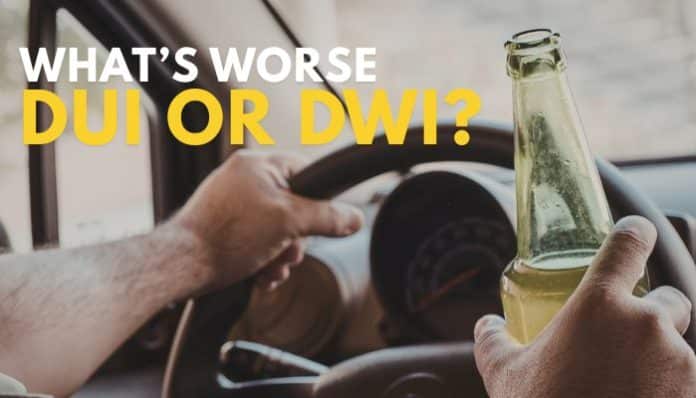

When people search “whats worse dui or dwi”, they’re usually looking for a simple, direct answer. However, the reality is more nuanced, and the differences can significantly impact legal outcomes, penalties, and long-term consequences. Understanding these distinctions can help you make informed decisions and avoid costly mistakes.
This guide breaks down every important factor—from legal definitions to real-world consequences—so you can clearly understand the risks, laws, and practical impact of both DUI and DWI charges.
DWI is usually worse than DUI because it often involves higher levels of intoxication, but the severity depends on state laws, BAC levels, and specific circumstances.
- In some states, DWI = higher BAC → harsher penalties
- In others, DUI and DWI are treated the same legally
- In certain cases, DUI can actually be more serious
This means there is no universal answer to “whats worse dui or dwi”, and outcomes depend heavily on factors like location, prior offenses, and the nature of impairment.
To better understand whats worse dui or dwi, it’s important to look beyond just the terminology and focus on how laws are applied in different jurisdictions. Factors such as repeat offenses, involvement in accidents, or extremely high BAC levels can dramatically change how serious a charge becomes.
In short, asking whats worse dui or dwi is really about understanding the context of the offense rather than just the label. Legal consequences are determined by multiple variables, making each case unique and situation-dependent.
What Is DUI vs DWI?
Understanding the basic difference is essential when answering “whats worse dui or dwi”, because the meaning of each term can vary depending on the state and legal context. While both refer to impaired driving, the way they are defined and enforced can significantly impact penalties and legal outcomes.
Many people assume DUI and DWI are the same, but in reality, subtle differences in definition can determine how serious the charge is. This is why knowing the distinction is important before concluding whats worse dui or dwi in your situation.
1. DUI (Driving Under the Influence)
- Covers alcohol, drugs, or medications
- Focuses on impairment—not just BAC
- Can apply even below legal limits
DUI is broader and includes any substance affecting driving ability
It can be charged even when a driver appears impaired without exceeding the legal alcohol limit.
Additionally, DUI laws are designed to capture a wide range of impairment scenarios, including cases where drugs or prescription medications affect driving ability. This makes DUI a flexible but serious charge that can apply in many different situations.
When analyzing whats worse dui or dwi, DUI may seem less severe in some cases, but drug-related DUIs or repeat offenses can carry equally serious or even harsher consequences.
2. DWI (Driving While Intoxicated)
- Usually refers to alcohol intoxication
- Typically involves BAC ≥ 0.08%
- Often considered more severe in some states
DWI often indicates higher impairment
In many jurisdictions, DWI is associated with stricter penalties due to measurable intoxication levels.
Because DWI often involves clear BAC evidence, it can be easier to prosecute and may result in stricter penalties such as higher fines, longer license suspension, or jail time. This is one of the main reasons why DWI is often considered more serious.
However, when evaluating whats worse dui or dwi, it’s important to remember that severity still depends on state laws, circumstances, and whether aggravating factors are involved.
Key Truth
In many states, DUI and DWI are used interchangeably, which is why confusion exists when asking “whats worse dui or dwi”
The terminology changes by state, but the consequences can be equally serious regardless of the label used.
This overlap in terminology often leads people to assume one is always worse than the other, which is not accurate. In reality, the answer to whats worse dui or dwi depends more on legal definitions and circumstances than on the terms themselves.
Because each state has its own legal framework, understanding local laws becomes essential before drawing conclusions. This is why a clear, context-based approach is necessary when evaluating whats worse dui or dwi.
What’s Worse DUI or DWI? (Detailed Breakdown)
To properly answer whats worse dui or dwi, you need to look at specific situations rather than relying on general assumptions. The severity of each charge depends on factors like BAC level, type of substance, prior offenses, and state law.
Breaking it down into scenarios helps make the comparison clearer and more practical for real-life understanding. Below are the key situations where one may be worse than the other.
1. When DWI Is Worse
- Higher BAC levels (0.08% or 0.15%+)
- Greater impairment
- Harsher penalties
DWI cases often involve clear evidence, making convictions easier and penalties stronger.
In many jurisdictions, a higher BAC automatically leads to enhanced penalties, including longer license suspension and possible jail time. This is why DWI is often perceived as the more serious offense.
When analyzing whats worse dui or dwi, DWI tends to be worse in situations where intoxication levels are clearly measurable and exceed legal limits significantly.
2. When DUI Is Worse
- Drug-related cases
- Underage drivers
- Some states define DUI as more serious
DUI can become more serious when impairment involves drugs, as detection and legal defense can be more complex.
Drug-related DUI cases often rely on officer observations rather than clear numerical evidence, which can make them unpredictable and legally challenging. Additionally, zero-tolerance laws for underage drivers can make DUI charges stricter in certain states.
So when considering whats worse dui or dwi, DUI may be worse in cases involving drugs, minors, or repeat offenses.
3. When They Are Equal
- Many states treat both the same
- Same penalties apply
In such states, the difference is mostly terminology, not legal consequence.
In these jurisdictions, whether you are charged with DUI or DWI does not significantly change the outcome. The penalties, legal process, and long-term impact remain the same.
This reinforces the idea that whats worse dui or dwi cannot be answered without understanding the legal system in your specific state.
DUI vs DWI: Key Differences Comparison Table
| Factor | DUI | DWI (Often Worse) |
|---|---|---|
| Meaning | Under influence (alcohol/drugs) | Intoxicated (usually alcohol) |
| BAC | Can be below 0.08% | Usually 0.08%+ |
| Severity | Moderate to severe | Often higher |
| Penalties | Standard | Often stricter |
This comparison helps simplify the confusion around whats worse dui or dwi and highlights key differences clearly.
By looking at these factors side by side, it becomes easier to understand how DUI and DWI are treated differently in various situations. This structured comparison is especially useful for readers who want a quick and clear answer without going through complex legal explanations.
However, while the table provides a general overview, the real answer to whats worse dui or dwi still depends on state laws, specific case details, and aggravating factors such as repeat offenses or accidents.
DUI vs DWI Statistics (Why It Matters)
Understanding whats worse dui or dwi requires real-world context:
- Alcohol-impaired driving causes ~30% of traffic deaths
- High BAC drivers (0.15%+) are involved in around 67% of fatal crashes
This shows:
- Both DUI and DWI are extremely dangerous and life-threatening
- These statistics also highlight why laws are strict and penalties continue to increase globally
These numbers demonstrate that impaired driving is not just a legal issue but a major public safety concern. Governments enforce strict DUI and DWI laws to reduce accidents, injuries, and fatalities on the road.
When evaluating whats worse dui or dwi, these statistics make it clear that higher intoxication levels significantly increase risk, which is why DWI is often treated more severely in many jurisdictions.
What Affects BAC Levels
BAC plays a major role in determining whats worse dui or dwi.
Key Factors:
- Body weight and metabolism
- Food intake
- Drinking speed
- Medications
- Gender
Two people can drink the same amount and have different BAC levels.
This variability makes DUI and DWI cases highly situational and dependent on individual factors.
For example, someone with lower body weight or faster alcohol absorption may reach a higher BAC more quickly, increasing the likelihood of a DWI charge. Similarly, drinking on an empty stomach can significantly raise BAC levels in a short period.
Understanding these factors is essential when analyzing whats worse dui or dwi, because BAC is one of the most important elements used by law enforcement to determine the severity of an offense.
What Are Per Se DUI DWI Laws
If your BAC is 0.08% or higher, you are legally intoxicated.
Important:
- No need to prove unsafe driving
- BAC alone equals legal violation
This makes many DWI cases automatic convictions.
These laws simplify prosecution and are a key reason why high BAC offenses are treated more severely.
Per se laws are designed to create a clear legal standard, making it easier for law enforcement to charge drivers based purely on measurable BAC levels. This removes the need for subjective judgment about whether a driver appeared impaired.
When analyzing whats worse dui or dwi, these laws often make DWI charges more serious because they rely on concrete evidence, which strengthens the prosecution’s case and increases the likelihood of conviction.
What Happens If You Refuse a Breath Test
Under implied consent laws:
- You automatically agree to testing when driving
Refusal can lead to:
- Immediate license suspension
- Fines and penalties
- Use as evidence in court
Sometimes refusal is worse than failing.
Refusing a test can also weaken your legal defense and increase long-term consequences.
In many states, refusing a breath test triggers automatic penalties that may be stricter than those for failing the test itself. This is because refusal is often interpreted as an attempt to avoid evidence.
When considering whats worse dui or dwi, refusing a test can complicate your case and lead to additional legal consequences beyond the original charge.
Criminal vs Administrative Penalties
Understanding the difference between these penalties is essential when evaluating whats worse dui or dwi, as both can affect your life in different ways.
Criminal Penalties
- Jail time
- Fines
- Probation
These penalties are imposed by the court after conviction.
Criminal penalties are the direct legal consequences of being found guilty in court and can vary depending on the severity of the offense. Repeat offenses or high BAC levels can significantly increase these penalties.
Administrative Penalties
- License suspension
- DMV restrictions
- Ignition interlock device
These can happen even before conviction.
Administrative actions are handled separately and can begin immediately after arrest.
Administrative penalties are enforced by state agencies and often take effect quickly, sometimes even before your court case is resolved. This means you can face serious consequences regardless of the final verdict.
When analyzing whats worse dui or dwi, it is important to consider both types of penalties, as they collectively determine the full impact of the offense.
Can You Get a DUI Below 0.08%
Yes.
You can still be charged if:
- You show signs of impairment
- You drive dangerously
- Drugs are involved
This is critical when understanding whats worse dui or dwi is not just about BAC.
Behavior and driving condition can be enough for legal action.
In many jurisdictions, law enforcement officers can rely on observed behavior such as swerving, delayed reactions, or failed sobriety tests to justify a DUI charge. This means that even if your BAC is below the legal limit, you can still face serious legal consequences.
When evaluating whats worse dui or dwi, this highlights that impairment—not just numbers—plays a key role in determining severity. A low BAC DUI with dangerous driving can sometimes be treated more seriously than a borderline DWI case.
DUI vs DWI for Drug Use
DUI and DWI do not only involve alcohol.
Applies to:
- Prescription drugs
- Marijuana
- Illegal substances
- Over-the-counter medications
Drug-related DUIs can be complex and serious.
These cases often rely on officer observations rather than clear BAC levels.
Unlike alcohol-related cases, drug impairment does not always have a standardized measurement like BAC, making these cases harder to evaluate and defend. Law enforcement may use field sobriety tests and expert testimony to determine impairment.
When analyzing whats worse dui or dwi, drug-related DUI cases can sometimes carry equal or greater consequences due to their complexity and unpredictability in court.
State-by-State Differences
Laws vary widely:
- Texas → DWI for adults, DUI for minors
- New York → DWI serious, DWAI less severe
- California and Florida → Only DUI
There is no universal answer to whats worse dui or dwi.
Always check your local laws for accurate legal understanding.
Each state has its own legal definitions, penalty structures, and enforcement methods, which can significantly change how DUI and DWI cases are handled. What may be considered a minor offense in one state could carry severe penalties in another.
When evaluating whats worse dui or dwi, understanding your state’s specific laws is essential.
Penalties DUI vs DWI
Common penalties include:
- Fines from $500 to $5000 or more
- Jail time
- License suspension
- Alcohol education programs
- Ignition interlock device
- Criminal record
Repeat offenses can lead to felony charges.
Penalties increase significantly with higher BAC and repeat violations.
In addition to these penalties, courts may impose community service, mandatory rehabilitation programs, or extended probation periods. The severity of punishment often depends on factors like prior offenses, accidents, or extremely high BAC levels.
Financial Impact
- Insurance premiums increase drastically
- Costs can exceed $6500 or more
- Some insurers cancel coverage
Financial consequences often last longer than legal penalties.
Many drivers face years of increased insurance costs.
Beyond insurance, there are additional expenses such as legal fees, court costs, and mandatory program fees, which can significantly increase the total financial burden.
Long Term Consequences
Both DUI and DWI can:
- Affect jobs
- Limit travel
- Increase insurance costs
- Stay on record for years
These consequences can impact personal and professional life significantly.
Even a single offense can create long term challenges.
Common Legal Defenses
Possible defenses:
- Faulty breathalyzer
- Illegal traffic stop
- Incorrect sobriety tests
- Medical conditions
A strong defense can reduce or dismiss charges.
Legal representation plays a crucial role in case outcomes.
DUI Laws Around the World
- USA → 0.08% BAC
- Europe → 0.05%
- Some countries → zero tolerance
The US is less strict than many countries.
This global comparison shows how seriously impaired driving is treated worldwide.
Real Life Scenarios
Scenario 1
- BAC 0.10% → DWI → more severe
Higher BAC leads to stricter penalties and stronger legal cases.
Scenario 2
- Drug impairment → DUI → serious
Drug cases can be harder to detect but equally dangerous.
Scenario 3
- Repeat DUI → worse than first DWI
Repeat offenses dramatically increase penalties and legal consequences.
Common Misconceptions
- DWI is always worse
- DUI means only alcohol
- First offense is minor
Misunderstanding these can lead to serious legal mistakes.
Always rely on accurate legal information.
Final Thought:
DWI is often worse than DUI but not always.
What really matters:
- State laws
- BAC level
- Circumstances
Understanding these factors is key to answering whats worse dui or dwi accurately.
In many cases, people try to find a simple answer, but the reality is that both DUI and DWI can carry serious legal and financial consequences.
Ultimately, when evaluating whats worse dui or dwi, it is not about the label but the situation surrounding the offense.
Frequently Asked Questions
1. What’s worse DUI or DWI in most states?
In most states, DWI is considered worse than DUI because it usually involves higher levels of intoxication and stricter penalties. However, the answer to whats worse dui or dwi still depends on state laws and specific circumstances.
2. Is DUI less serious than DWI?
Not always. While DWI often involves higher BAC levels, DUI can be just as serious, especially in drug-related cases or repeat offenses. So when asking whats worse dui or dwi, it’s important to consider the situation rather than just the label.
3. Can DUI and DWI mean the same thing?
Yes, in many states DUI and DWI are used interchangeably and carry similar penalties. This is one of the main reasons why there is confusion around whats worse dui or dwi.
4. Can you get a DUI without exceeding the legal BAC limit?
Yes, you can still be charged with DUI even if your BAC is below 0.08% if you show signs of impairment. This is a key factor when understanding whats worse dui or dwi, as BAC is not the only consideration.
5. Does a DUI or DWI stay on your record longer?
Both DUI and DWI can stay on your record for several years, depending on state laws. When evaluating whats worse dui or dwi, long-term consequences like criminal records and insurance impact should also be considered.