

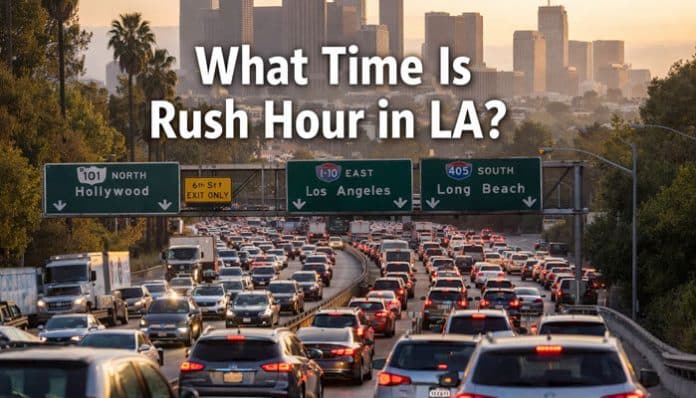

Los Angeles is known for having some of the busiest roads in the world, making it important to understand what time is rush hour in LA before planning your travel. Whether you’re commuting to work, heading to the airport, or exploring the city, timing can make a huge difference in how long your journey takes.
Rush hour in Los Angeles is not just a short window—it can stretch across several hours due to the city’s large population and heavy freeway use. By knowing peak traffic times and patterns, you can avoid delays, reduce stress, and save valuable time.
What Is Rush Hour?
Rush hour refers to the time periods during the day when traffic volume is at its highest. These periods typically occur when people travel to and from work, school, or daily activities.
Key Points:
- Happens twice daily (morning and evening)
- Involves maximum road congestion
- Lasts longer in large cities like LA
- Impacts commute time significantly
LA Rush Hour Summary
| Time Period | Traffic Level | Notes |
| 7 AM – 10 AM | High | Morning commute |
| 4 PM – 7 PM | Very High | Evening peak |
| Friday Evening | Extreme | Worst congestion |
| Before 6 AM | Low | Best travel time |
What Time Is Rush Hour in LA?
Rush hour in Los Angeles typically runs from 7:00 AM to 10:00 AM and 4:00 PM to 7:00 PM. However, traffic can begin as early as 6:30 AM and extend into the evening depending on the day, location, and road conditions.
Rush hour in Los Angeles typically occurs during:
- Morning: 7:00 AM – 10:00 AM
- Evening: 4:00 PM – 7:00 PM
LA Rush Hour Breakdown
Morning Rush Hour (6:30 AM – 10:00 AM)
Morning traffic begins early as commuters head to work and school. The busiest period is usually between 7:00 AM and 9:00 AM, when freeways like I-405 and US-101 become heavily congested.
👉 Key characteristics:
- Heavy inbound traffic toward downtown LA
- Frequent stop-and-go conditions
- Higher accident risk due to congestion
Key Points:
- Peak between 7 AM and 9 AM
- Heavy inbound traffic toward downtown
- High congestion on freeways like I-405
- Increased accident risk
Evening Rush Hour (3:30 PM – 7:30 PM)
Evening rush hour is typically more severe and longer-lasting than morning traffic. It includes work commuters and people running errands.
Key Points:
- Peak between 4:30 PM – 6:30 PM
- Traffic spreads across all directions
- Slower average speeds
- Long delays on highways
Rush Hour by Day of the Week
Traffic varies depending on the day, which can affect your planning.
| Day | Traffic Pattern |
| Monday | Moderate morning, heavy evening |
| Tuesday–Thursday | Consistent heavy traffic |
| Friday | Worst traffic (starts early) |
| Saturday–Sunday | Tourist traffic peaks |
Key Points:
- Friday evenings are the worst
- Midweek is consistently busy
- Weekends are unpredictable
Traffic by Area in Los Angeles
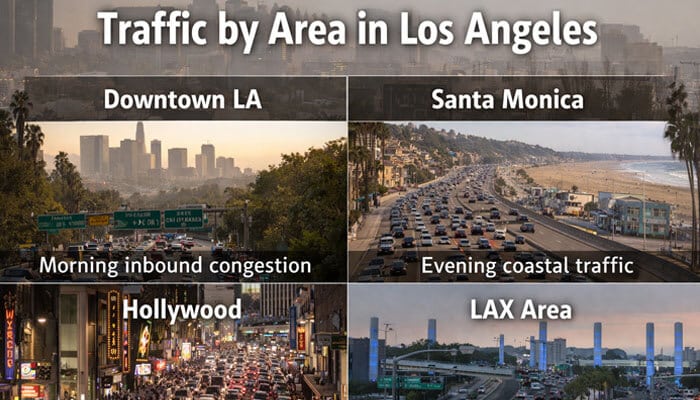
Different parts of LA experience different traffic patterns.
| Area | Traffic Type |
| Downtown LA | Morning inbound congestion |
| Santa Monica | Evening coastal traffic |
| Hollywood | Tourist and event traffic |
| LAX Area | Airport-related congestion |
Key Points:
- Business areas = morning traffic
- Tourist areas = evening traffic
- Airport zones = all-day congestion
️Real Travel Time Examples
Rush hour can significantly increase travel time.
| Distance | Rush Hour Time | Off-Peak Time |
| 10 miles | 45–90 minutes | 15–25 minutes |
| 20 miles | 90–120 minutes | 30–40 minutes |
Key Points:
- Travel time can double or triple
- Short distances take longer during peak hours
Seasonal Traffic Trends in LA
Traffic patterns in Los Angeles change throughout the year due to tourism, school schedules, and holidays. These seasonal shifts can significantly affect congestion levels and travel time.
Traffic patterns change throughout the year.
Key Points:
- Summer → Increased tourism
- Holidays → Unpredictable congestion
- School season → Heavy morning traffic
Direction Matters (Commute Insights)
Traffic flow in LA depends heavily on the direction of travel. Commuters typically move toward business areas in the morning and away in the evening, creating directional congestion.
Traffic flow depends on the direction you travel.
Key Points:
- Morning → Toward city (inbound)
- Evening → Away from the city (outbound)
- Reverse routes may be less congested
Why LA Traffic Is So Heavy
Los Angeles experiences heavy traffic due to a combination of population size, infrastructure, and commuting habits. These factors make congestion a daily challenge.
Several factors contribute to LA’s congestion.
Key Points:
- High population density
- Heavy reliance on cars
- Large freeway system
- Long commuting distances
Drivers spend over 80 hours per year stuck in traffic.
Los Angeles Rush Hour Traffic Map Patterns
| Time Period | Peak Areas | Traffic Characteristics |
| Morning Rush (7:00 AM – 10:00 AM) | I-405, I-10, US-101 (inbound to downtown) | Stop-and-go, serious accident risk, peak between 7-9 AM. |
| Evening Rush (4:00 PM – 7:00 PM) | I-405, I-10, US-101 (outbound from downtown) | Widespread congestion, long delays, peak 4:30-6:30 PM. |
| Worst Traffic Times | Friday Evenings (4:00 PM – 7:00 PM), Holiday Weekends | Extreme congestion in tourist areas like Santa Monica. |
| Traffic Zones | Downtown LA, Santa Monica, Hollywood, LAX Area | Morning inbound, evening outbound, tourist traffic. |
| Best Tips to Avoid Rush Hour | N/A | Use Google Maps/Waze, carpool, or use HOV lanes. |
Alternatives to Driving
Using alternative transportation options can help reduce travel time and avoid traffic stress. These options are especially useful during peak hours.
Using alternative transport can reduce travel time.
Options:
- Metro Rail system
- Public buses
- Carpool (HOV) lanes
Benefits:
- Avoid congestion
- Lower travel stress
- Cost-effective
Worst Traffic Times in Los Angeles
Traffic in LA is not limited to traditional rush hours. Certain times during the day and week also experience high congestion.
Traffic can occur outside traditional rush hours.
High Traffic Periods:
- Midday (11 AM – 2 PM)
- Evening (6 PM – 9 PM)
- Weekends (tourist areas)
Best Times to Avoid Traffic
Choosing the right time to travel can significantly reduce delays. Even small adjustments in timing can make a big difference.
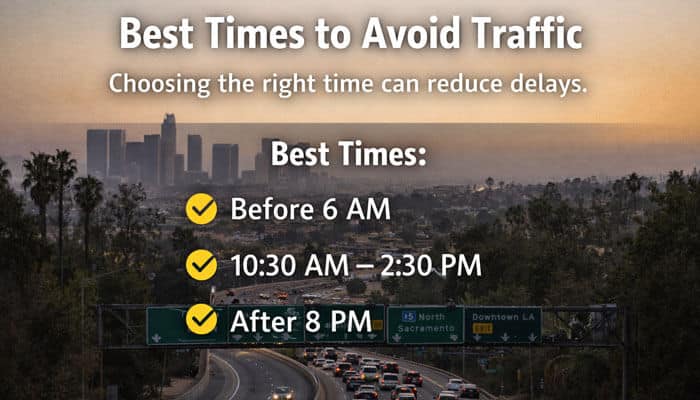
Choosing the right time can reduce delays.
Best Times:
- Before 6 AM
- 10:30 AM – 2:30 PM
- After 8 PM
Key Points:
- Small time shifts make a big difference
- Avoid peak commuting hours
Most Congested Roads
Traffic flow in LA depends heavily on the direction of travel. Commuters typically move toward business areas in the morning and away in the evening, creating directional congestion.
Some roads are known for heavy congestion.
Major Roads:
- I-405
- I-10
- US-101
Key Points:
- Daily heavy traffic
- Longer delays during peak hours
Tips to Avoid LA Rush Hour
Some highways in Los Angeles are consistently congested due to heavy traffic flow and daily commuting patterns.
Planning ahead can save time and reduce stress.
Tips:
- Use Google Maps or Waze
- Travel outside peak hours
- Take alternate routes
- Plan trips early
Traffic conditions in Los Angeles have shown slight improvement in recent years, mainly due to remote work and flexible schedules. Fewer daily commuters have reduced peak congestion compared to previous years.
- Remote work has reduced some rush hour pressure
- Traffic is still heavy during peak hours
- LA remains one of the most congested U.S. cities
- Population growth continues to impact road usage
Overall, while conditions are slightly better, rush hour traffic is still a major challenge in Los Angeles.
LA Traffic Times to Avoid for Business Efficiency
| Time Period | Traffic Level | Recommendation |
| Morning Rush (7:00 AM – 10:00 AM) | High | Avoid 7-9 AM on I-405, I-10, US-101 |
| Evening Rush (4:00 PM – 7:00 PM) | Very High | Avoid 4:30-6:30 PM |
| Friday Evenings (4:00 PM – 7:00 PM) | Extreme | Avoid due to the worst traffic |
| Midday (11:00 AM – 2:00 PM) | Moderate | Avoid busy commercial areas |
| Weekends (Tourist Areas) | High | Avoid Santa Monica and Hollywood due to heavy tourist traffic |
Is LA Traffic Worse Than Other Cities?
Los Angeles is known for having some of the busiest roads in the world, making it important to understand what time is rush hour in LA before planning your travel. Whether you’re commuting to work, heading to the airport, or exploring the city, timing can make a huge difference in how long your journey takes.
Rush hour in Los Angeles is not just a short window—it can stretch across several hours due to the city’s large population and heavy freeway use. By knowing peak traffic times and patterns, you can avoid delays, reduce stress, and save valuable time.
Understanding what time is rush hour in LA is essential for anyone traveling through Los Angeles, whether for daily commuting or occasional trips. Rush hour typically occurs between 7 AM and 10 AM and 4 PM – 7 PM, but traffic patterns can vary depending on the day, location, and season. Being aware of these variations helps you make smarter travel decisions and avoid unnecessary delays.
By considering factors like peak hours, traffic hotspots, travel direction, and alternative routes, you can significantly reduce travel time and stress. Using real-time navigation tools and adjusting your schedule—even by a small margin—can make a noticeable difference. Ultimately, better planning leads to a smoother and more efficient driving experience in one of the busiest cities in the world.
What time is rush hour in LA? FAQs
1. What time is rush hour in LA today?
Rush hour in Los Angeles usually occurs between 7 AM – 10 AM and 4 PM – 7 PM. However, traffic can start earlier and extend later depending on the day, location, and road conditions.
2. What time does traffic start in Los Angeles in the morning?
Traffic typically begins around 6:30 AM as commuters start their day. It quickly builds and reaches peak congestion between 7 AM and 9 AM on most weekdays.
3. What is the worst traffic time in Los Angeles?
The worst traffic usually occurs between 4:30 PM and 6:30 PM, especially on Fridays. During this time, congestion is widespread and travel delays are at their highest.
4. How long does rush hour last in LA?
Rush hour in LA generally lasts 3 to 4 hours, but it can extend longer depending on traffic conditions. In busy areas, congestion may continue into the evening.
5. What are the best times to avoid traffic in LA?
The best times to avoid traffic are before 6 AM, mid-morning (10:30 AM – 2:30 PM), and after 8 PM. Traveling during these periods can significantly reduce delays.
Disclaimer: Traffic conditions in Los Angeles can fluctuate due to various factors such as accidents, road closures, and seasonal events. The information provided here serves as a general guide, but real-time traffic updates should be consulted for accurate travel times.
