


Winter falls often start with a spot that looks manageable. It is not a snowbank or a sheet of ice. It is a thin, steady wet patch that keeps coming back, a classic drip line problem and many people only connect the dots after talking with a Queens personal injury lawyer.
This article focuses on one specific culprit behind meltwater injuries: roof runoff that lands in the same place all day. When an entrance sits under a roof edge, overhang, or gutter line, the ground below can stay wet even when everything else looks fine.
Why “Drip Line” Matters More
Rising temperatures do not always create meltwater. Sometimes it is created by a slow leak of runoff that never stops. A roof edge can shed water for hours after sunlight hits packed snow above. That water drops onto a small target zone. The same square of pavement gets rewet repeatedly, which means it can switch from damp to slick to icy without warning.
Runoff And Repeat Hazards
Roof runoff concentrates water instead of spreading it out. You get a narrow band of wet pavement right where people naturally walk. It is the opposite of a puddle that forms in a low spot and then drains.
When the surface temperature dips, that damp band can glaze over. The next person steps onto what looks like darkened concrete and finds out it is a thin layer of ice.
The Most Telling Sign: A Wet Stripe That Never Moves
If meltwater danger had a signature, it would be a stripe. It usually starts near the edge of a roof line, then runs in a straight path toward the most direct slope. You see it as a darker track that does not match the rest of the walkway. The track shows up again and again. It can even look freshly wet on a cold day, which tricks people into thinking it is only water and not a freeze risk.
Why Entrances Become the Highest Risk Zone
People change their pace at entrances. They slow down, turn, pull doors, and step over thresholds. Those little movements are where slips happen, especially when the surface is already compromised. An entrance also hides hazards with clutter. Mats, salt residue, shadows, and reflected light can keep someone from noticing a slick strip until their foot is already sliding.
Gutters and Downspouts: The Little Things That Create a Slip Zone
Most runoff problems are not caused by a huge break or obvious damage. It is usually something small that nobody thinks to check. A gutter fills up with leaves and starts spilling over the same corner every time the snow on the roof melts. A downspout points the wrong way or ends right beside the walkway, so the water hits the pavement and spreads out where people step.
That is what makes these spots so frustrating. They are not random. They show up in the same place, day after day. Once water is consistently landing in a high-traffic area, the risk is no longer a surprise. It is a repeat problem waiting for the right temperature drop.
Why Boots Still Fail on Drip Line Ice

People trust winter boots because they feel sturdy. The problem is that drip line ice is thin and smooth. Traction fails when the surface becomes a glossy film with almost no texture. Some soles also stiffen in colder conditions. That makes the tread less flexible, which reduces how well it grips when the ground is wet and beginning to freeze.
The Freeze and Refreeze Pattern
Drip line meltwater often creates a cycle within a single day. Sunlight melts snow on the roof. Runoff drips down, spreads, and then refreezes when the light fades or the air cools. That pattern can repeat several times. Each round lays down a smoother layer, and the slickness gets worse even if the patch looks the same.
How to Spot a Drip Line Before You Step
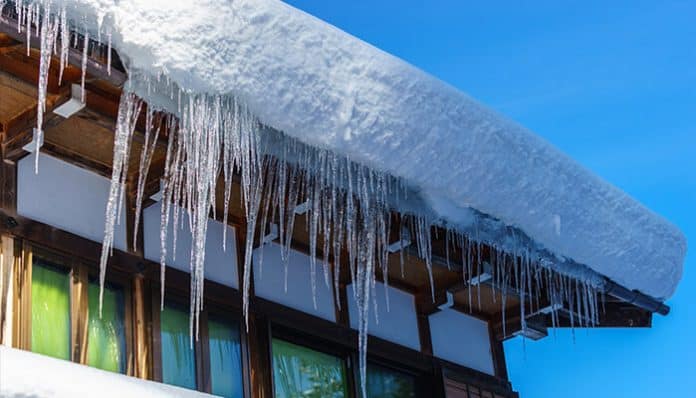
Look up before you look down. Roof edges with hanging icicles or dark, wet gutters are a clue that water is moving. If you see a wet band directly beneath that line, assume it can freeze.
Watch for a shine that looks different from the surrounding pavement. If the surface reflects light in a sharp way, treat it like ice, even if it appears to be only damp.
What Property Maintenance Should Address
The fix is often straightforward. Redirect water away from the walking path using downspout extensions or drainage changes. Keep gutters clear so they do not overflow in a concentrated stream. A recurring drip line should be treated as a known hazard. When the same spot stays wet daily, it should be monitored and managed as part of routine winter upkeep.
The Details That Prove It Was a Repeat Condition
Drip line incidents are not just about a slippery moment. They are about a pattern. Photos that show the roof edge above the wet zone can be more persuasive than a close-up of the ground alone. Take wide shots and tight shots if it is safe. Capture the overhead source, the wet stripe, and any visible overflow or dripping.
Injuries Common to Drip Line Falls
Drip line slips tend to be sudden. People do not brace in time because they do not expect the surface to give out. That leads to hard impacts.
Wrist fractures happen when someone tries to catch themselves. Knee and ankle injuries happen when the foot slides but the body twists, and head impacts can occur when the fall is backward and fast.
Final Thoughts
Meltwater is not always a general winter issue. In many cases, the real problem is a drip line that keeps a single patch of pavement wet, then turns it slick when temperatures shift. A Queens personal injury lawyer can help evaluate whether that kind of repeat runoff condition played a role in a preventable fall.