


In today’s security-focused world, surveillance cameras are widely used to protect homes, businesses, and public spaces. However, improper use can lead to serious legal consequences. Understanding Texas surveillance camera laws is essential to ensure compliance while respecting individual privacy rights.
Texas law allows surveillance systems, but strict rules govern where cameras can be installed, how they record, and when consent is required. These laws aim to balance security needs with personal privacy protections.
This guide explains everything you need to know about Texas surveillance camera laws, including legal rules, penalties, workplace policies, landlord laws, and best practices for 2026.
What are Texas surveillance camera laws?
Texas surveillance camera laws are rules that control where and how cameras can be used. In Texas, cameras are generally legal for security, but recording in private places (like bathrooms or bedrooms) or capturing audio without proper consent can be illegal and lead to penalties.
Texas surveillance camera laws are the rules that explain when surveillance cameras are legal, where they can be installed, and when recording crosses the line into an invasion of privacy. In Texas, cameras are generally allowed for security purposes, but hidden recording in private spaces and unlawful audio interception can lead to serious criminal penalties.
Key Texas Surveillance Laws You Must Know
Texas surveillance rules are mainly based on the Penal Code, which defines what is legal and illegal when recording people. Knowing these laws helps prevent criminal charges and legal disputes.
- Texas Penal Code §21.15 – Invasive visual recording
- Texas Penal Code §21.16 – Unlawful sharing of intimate images
- Texas Penal Code §21.17 – Voyeurism
- Texas Penal Code §16.02 – Illegal audio recording (wiretapping)
These laws form the legal foundation of privacy and surveillance regulations in Texas.
Are Surveillance Cameras Legal in Texas?
Surveillance cameras are generally legal in Texas when used for security and property protection. However, their legality depends on proper placement and compliance with privacy laws. Misuse, especially in private areas, can lead to legal consequences.
- Legal for property protection
- Restricted in private spaces
- Must follow privacy rules
Reasonable Expectation of Privacy
This is a key legal concept in Texas surveillance laws that determines whether recording is allowed. It means you cannot record someone in places where they reasonably expect privacy, as doing so may be considered a legal violation.
- Bathrooms
- Bedrooms
- Dressing rooms
- Private spaces
Camera Placement Rules
Where you place a camera determines whether it is legal or illegal. Texas law clearly separates public and private spaces.
Camera Placement Table
| Area Type | Legal Status |
| Front yard/driveway | ✅ Legal |
| Public street view | ✅ Legal |
| Bathroom/bedroom | ❌ Illegal |
| Neighbor’s private window | ❌ Illegal |
Camera placement is one of the most important legal factors. Texas law clearly distinguishes between public and private areas.
Where You CAN Place Cameras
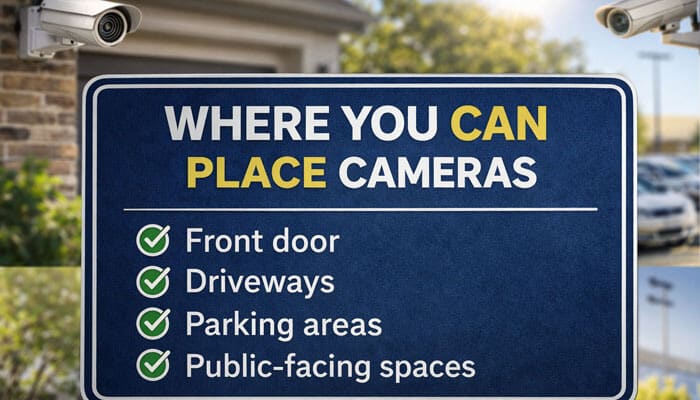
Cameras can be legally installed in areas where there is no reasonable expectation of privacy. These locations are typically open, visible, and used for general security monitoring. Proper placement helps ensure compliance with Texas surveillance laws.
- Front door
- Driveways
- Parking areas
- Public-facing spaces
Where You CANNOT Place Cameras
Cameras cannot be installed in areas where individuals have a reasonable expectation of privacy. Recording in such locations is strictly illegal in Texas and can result in serious criminal charges and legal consequences.
- Bathrooms
- Bedrooms
- Locker rooms
- Neighbor’s private areas
Audio Recording Laws
Texas follows a one-party consent rule, meaning at least one person involved in the conversation must agree to the recording. This makes audio recording more restricted than video, especially when you are not part of the conversation. Violating these rules can lead to legal consequences.
- Legal if you are part of the conversation
- Illegal if recording others secretly
- Applies to phone and in-person conversations
Video vs Audio Recording
Many people confuse video and audio laws. Video is often allowed, but adding an audio recording can make it illegal.
| Recording Type | Legal Status |
| Video only | ✅ Usually legal |
| Audio only | ⚠️ Consent required |
| Video + Audio | ⚠️ High legal risk |
What Is Illegal Surveillance?
Illegal surveillance occurs when someone records another person in a way that violates their privacy rights. Such actions are taken seriously under Texas law and can result in criminal charges and legal penalties.
- Hidden cameras in private spaces
- Recording intimate body parts
- Recording without consent
- Sharing private recordings
What Is NOT Illegal
Not all surveillance activities are illegal in Texas. Recording is allowed when it is done in public or non-private areas and follows legal guidelines. Using cameras responsibly helps ensure compliance with privacy laws.
- Recording your own property
- Doorbell cameras facing public areas
- Cameras in business areas
- Visible security cameras
Doorbell Camera Laws in Texas
Doorbell cameras are legal in Texas and widely used for home security, but they must follow privacy and recording laws. Issues can arise if they capture private areas or record audio without proper consent.
- Allowed if facing public areas
- Cannot invade the neighbor’s privacy
- Must follow audio consent laws
Home Surveillance Laws
Homeowners in Texas can use surveillance cameras to protect their property and enhance security. However, they must respect the privacy of others and avoid recording in restricted or private areas. Misuse of home surveillance systems can lead to legal consequences.
Home Surveillance Rules
| Action | Legal Status |
| Recording one’s own property | ✅ Legal |
| Recording a public street | ✅ Legal |
| Recording the neighbor’s home | ❌ Illegal |
| Audio recording without consent | ❌ Illegal |
Workplace Surveillance Laws
Employers in Texas can use surveillance cameras to monitor workplaces for security and operational purposes. However, they must respect employee privacy and follow strict rules, especially in areas where privacy is expected.
✅ Allowed
- Monitoring workspaces
- Recording entrances
- Security cameras
❌ Not Allowed
- Bathrooms
- Locker rooms
- Private conversations
Landlord & Tenant Laws
Texas law provides strong protection for tenant privacy in rental properties. Landlords must avoid installing surveillance that intrudes into a tenant’s private living space. Violations can lead to legal action and liability.
- No cameras inside rental units
- Allowed in common areas
- Tenant consent may be required
Drone Surveillance Laws
Drones are increasingly used for surveillance, but Texas law restricts their use to prevent privacy violations. Unauthorized recording of private property can result in fines or criminal penalties.
- Legal for approved purposes
- Illegal for spying on private property
- May require permission
Police & Surveillance Footage
Law enforcement can access surveillance footage under specific legal conditions. This helps support investigations while maintaining privacy protections.
- Access with a warrant
- Voluntary sharing possible
- Businesses often cooperate
Can You Sue for Illegal Surveillance?
Victims of illegal surveillance have the right to take legal action. A lawsuit can help recover damages for privacy violations and emotional harm.
- Emotional distress claims
- Privacy violation lawsuits
- Financial damages
Civil vs Criminal Violations
Surveillance violations can fall under civil or criminal law depending on the situation. Each has different consequences.
Comparison Table
| Type | Meaning | Outcome |
| Civil | Private lawsuit | Compensation |
| Criminal | State prosecution | Jail / fines |
Penalties for Violations
Breaking surveillance laws in Texas can lead to serious legal consequences, depending on the nature and severity of the violation. Both civil and criminal penalties may apply, especially in cases involving privacy invasion or illegal recording.
- Fines up to $10,000
- Jail time
- Criminal record
- Possible sex offender registration
2025–2026 Legal Updates
Texas has strengthened its surveillance and privacy laws to address modern digital risks. These updates focus on protecting individuals from misuse of recording technologies and increasing accountability.
- Expanded definition of private spaces
- Stronger enforcement
- Increased penalties
Real-Life Examples
Real-life cases help illustrate how surveillance laws are applied in practical situations. Many violations occur due to a lack of awareness about legal boundaries.
- Hidden Airbnb cameras
- Employee surveillance cases
- Neighbor privacy disputes
Business Compliance & Best Practices
Businesses using surveillance systems must follow strict compliance standards to avoid legal risks. Proper use of cameras ensures both security and respect for privacy rights.
- Use clear signage
- Avoid private areas
- Secure recorded data
- Limit access to footage
Data Storage & Privacy
Managing and storing surveillance footage responsibly is essential for legal compliance. Improper data handling can lead to privacy violations and legal consequences.
- Store data securely
- Limit retention time
- Prevent unauthorized access
Conclusion
Understanding Texas surveillance camera laws is essential if you want to protect your property without violating someone’s privacy. While surveillance is generally legal, strict rules apply to camera placement, audio recording, and areas where people have a reasonable expectation of privacy. Even small mistakes—like recording audio without consent or placing cameras in private spaces—can lead to serious legal consequences.
To stay compliant, always follow key principles: use cameras only in appropriate areas, avoid recording private spaces, respect consent laws, and handle recorded data responsibly. Whether you are a homeowner, landlord, or business owner, staying informed and cautious is the best way to balance security needs with legal and ethical responsibilities.
By applying these best practices and keeping up with legal updates, you can confidently use surveillance systems while avoiding fines, lawsuits, or criminal charges.
Texas Surveillance Camera Laws FAQs
1. What are Texas Surveillance Camera Laws?
Texas Surveillance Camera Laws regulate how and where cameras can be used to record people. These laws protect privacy by restricting recording in private areas and setting rules for audio and video surveillance.
2. Can you record audio on security cameras in Texas?
Texas is a one-party consent state, meaning you can record audio only if you are part of the conversation. Recording others secretly without consent is illegal.
3. Where can you legally install surveillance cameras in Texas?
You can install cameras in public or visible areas such as driveways, entrances, and business spaces. Recording private areas like neighbors’ homes or interiors is not allowed.
4. Are hidden cameras illegal in Texas?
Hidden cameras are illegal if used in private spaces or to record people without consent. This includes bathrooms, bedrooms, and other sensitive areas.
5. What are the penalties for illegal surveillance in Texas?
Penalties can include fines, jail time, a criminal record, and, in serious cases, sex offender registration, depending on the violation.
Disclaimer: This article is for informational purposes only and does not constitute legal advice. Laws may change, and individual situations vary. Always consult a licensed Texas attorney.
