



You beat cancer. That alone is a miracle. But somewhere along the way, something went wrong, and it was not your fault. If you were treated with the chemotherapy drug Taxotere (docetaxel) and you never got your hair back, or your eyes started tearing uncontrollably, you are not imagining things. Thousands of patients just like you are standing in the same place right now, asking the same question: Can I do something about this? This is exactly when speaking to a Taxotere Lawsuit Lawyer becomes important.
Yes, and that is exactly where a Taxotere lawsuit lawyer comes in. A qualified attorney who specializes in pharmaceutical litigation can review your case for free, explain your legal options honestly, and fight to get you the financial compensation you deserve from the company that put you at risk, Sanofi-Aventis, one of the world’s largest pharmaceutical corporations with billions in annual revenue. An experienced Taxotere Lawsuit Lawyer understands how these cases work and what it takes to hold large companies accountable.
This guide breaks everything down in clear, simple terms so you can understand exactly what happened, what your legal rights are, and what steps you can take next if you were harmed by Taxotere chemotherapy.
What Is Taxotere?
Taxotere is a brand name for a chemotherapy drug called docetaxel. It was approved by the U.S. Food and Drug Administration (FDA) back in 1996 and is made by a large drug company called Sanofi-Aventis. Doctors use it to treat several types of cancer, including the ones listed in the table below.
| Cancer Type | Notes |
| Breast Cancer | Most common use; majority of lawsuits involve this group |
| Non-Small Cell Lung Cancer | Also widely treated with Taxotere |
| Prostate Cancer | Advanced/metastatic cases |
| Stomach Cancer | Locally advanced treatment |
| Head and Neck Cancer | Combination chemotherapy regimens |
For years, doctors and patients were told that hair loss from Taxotere was temporary that it would grow back after treatment ended. The label even said “hair generally grows back” after chemotherapy. That turned out to be dangerously misleading.
Here is the shocking part: Sanofi-Aventis knew about the risk of permanent hair loss as early as 2005. Their own study, called the GEICAM 9805 study, revealed that around 9.2% of patients suffered permanent hair loss lasting more than a decade. The company warned patients in Europe. They warned patients in Canada in 2012. But U.S. patients were kept in the dark until December 2015, nearly 20 years after the drug was approved.
That is not an accident. That is a failure to warn, and it is the core of every Taxotere lawsuit filed today.
Taxotere vs. Taxol: Why Were You Given the Riskier Drug?
This is one of the most important and painful questions at the heart of every Taxotere lawsuit. Taxotere was not the only option available to your doctor. There was and still is a competing chemotherapy drug called Taxol (paclitaxel). Both drugs belong to the same family (taxanes) and treat the same cancers. Understanding these differences is critical, and a Taxotere Lawsuit Lawyer can help evaluate whether safer alternatives should have been considered in your case.
So what is the difference? Here is what the lawsuits allege:
| Factor | Taxotere (Docetaxel) Sanofi | Taxol (Paclitaxel) Competitor |
| Risk of Permanent Hair Loss | Yes, in up to 9.2% of patients | No documented permanent hair loss risk |
| Risk of Permanent Eye Damage | Yes, tear duct scarring, vision loss | Not linked to canalicular stenosis |
| Clinical Effectiveness | Similar outcomes to Taxol | Similar outcomes to Taxotere |
| Cost | More expensive | Less expensive (also available as generic) |
| Survival Rate (Breast Cancer) | Lower in some studies | Over 89% higher survival rate in one study |
| Warning to US Patients | Delayed until December 2015 | No similar failure to warn documented |
Plaintiffs argue that Sanofi actively marketed Taxotere as superior to Taxol even when the evidence did not support that claim, all while hiding a permanent side effect that would have caused many patients to choose Taxol instead. That is not just bad medicine. That is a deliberate business decision that put profit over people.
One lawsuit alleged that over 89% of women who received the less expensive drug Taxol had a higher survival rate than women treated with Taxotere, and yet Sanofi continued pushing its more expensive, riskier product without disclosing the danger. A skilled Taxotere Lawsuit Lawyer can analyze these claims and determine whether this failure to warn may entitle you to compensation.
What Did Sanofi Know And When Did They Know It?
The timeline of what Sanofi knew and when is the backbone of every Taxotere lawsuit. Here is the truth, backed by research and legal filings:
| Year | Key Event |
| 1996 | FDA approves Taxotere for breast cancer treatment in the United States |
| 2003 | Additional FDA approval, Taxotere cleared for more cancer types |
| 2005 | Sanofi’s own GEICAM 9805 study shows 9.2% of patients suffer permanent hair loss lasting over a decade. Sanofi does NOT warn U.S. patients |
| 2005 | Sanofi warns European patients about the permanent hair loss risk, not Americans |
| 2006 | Rocky Mountain Cancer Centers study: 6.3% of breast cancer patients regrew less than 50% of hair after Taxotere |
| 2010 | Canadian media reports women contacting Sanofi about undisclosed hair loss risk |
| 2012 | Sanofi updates Taxotere label in Canada to warn of permanent alopecia. Still no warning in the U.S. |
| 2012 | Annals of Oncology study: 19 out of 20 female Taxotere patients developed permanent hair loss |
| Dec 2015 | FDA finally requires Sanofi to add a permanent alopecia warning to the U.S. label nearly 20 years after approval |
| 2016 | Taxotere hair loss lawsuits consolidated into MDL 2740 in Louisiana federal court |
| 2019 | First bellwether trial plaintiff loses. Sanofi wins. |
| 2021 | Second bellwether trial plaintiff loses again. The fight continues in appeals. |
| 2022 | Taxotere eye injury lawsuits consolidated into MDL 3023 in Louisiana federal court |
| 2023 | JAMA Ophthalmology study finds Taxotere linked to a 7x increase in excessive tearing vs. other chemo drugs |
| 2024 | 5th Circuit Court of Appeals rules plaintiff deserves a new eye injury trial Sanofi used inadmissible expert testimony |
| Dec 2025 | Judge denies Sanofi’s motion for summary judgment in eye injury MDL major win for patients |
| Apr 2026 | Summary judgment granted to 4 generic manufacturers. Brand-name Sanofi cases remain very active |
Sanofi knew about permanent hair loss risks in 2005. They warned other countries. American patients waited 10 more years for a warning. That gap is the foundation of every Taxotere lawsuit.
Two Types of Taxotere Lawsuits You Should Know About
There are currently two separate legal actions called MDLs (Multi-District Litigations) happening in federal court, both in the Eastern District of Louisiana. If you took Taxotere, you might qualify for one or both. Understanding these cases is essential, and a Taxotere Lawsuit Lawyer can help determine which claim applies to your situation.
1. Taxotere Hair Loss Lawsuit (MDL 2740)
This is the older and larger case. Over 14,000 lawsuits have been filed, mostly by breast cancer survivors who experienced permanent hair loss (permanent alopecia) after taking Taxotere. Plaintiffs say Sanofi-Aventis:
- Knew about the risk of permanent baldness but hid it from patients
- Falsely marketed Taxotere as more effective than other chemo drugs that did NOT cause permanent hair loss
- Delayed the U.S. label warning by nearly a decade
In May 2025, the judge granted summary judgment to the defendants in the hair loss MDL, which was a setback for those claims. However, the eye injury litigation is still very much active and moving forward.
2. Taxotere Eye Injury Lawsuit (MDL 3023)
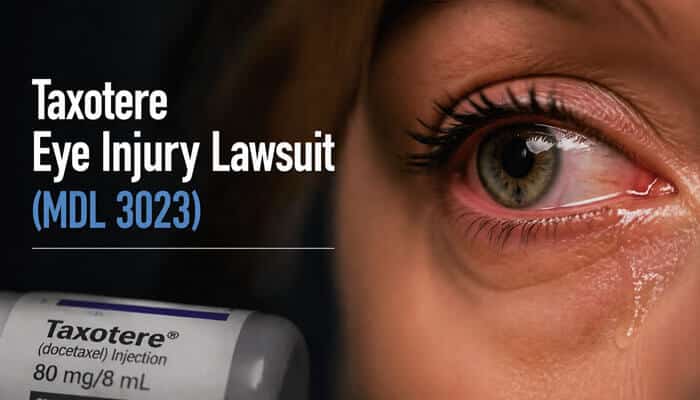
This is the newer and currently most active litigation. Patients who suffered serious eye damage after taking Taxotere are filing these claims. As of April 2026, lawsuits involving Sanofi remain active after the judge denied Sanofi’s motion for summary judgment in December 2025, a major win for patients.
Eye injuries linked to Taxotere include:
- Epiphora: Chronic, uncontrollable watery eyes
- Canalicular stenosis: Scarring and blocking of tear ducts
- Nasolacrimal duct obstruction: Blocked tear drainage
- Vision loss: Permanent in some cases
- Chronic eye infections and inflammation
These conditions are not minor. Many patients need invasive surgery just to partially correct the damage. Patients working with a Taxotere Lawsuit Lawyer can better understand how to prove these injuries and pursue compensation, especially since Sanofi never warned patients or doctors that these outcomes were possible.
Who Qualifies to File a Taxotere Lawsuit?
You may be eligible to work with a Taxotere lawsuit lawyer if any of the following apply to you:
For Hair Loss Cases:
- You were treated with brand-name Taxotere (not just a generic) before December 2015
- You experienced permanent or long-lasting hair loss that did not fully grow back
- Your baldness affected your scalp, eyebrows, eyelashes, or other body hair
For Eye Injury Cases:
- You received Taxotere as part of cancer chemotherapy treatment at any time
- You developed excessive tearing, blocked tear ducts, vision loss, or chronic eye infections
- Your symptoms have required or may require medical treatment or surgery
| Qualifying Factor | Hair Loss Cases | Eye Injury Cases |
| Used brand-name Taxotere | Required | Required |
| Treatment before Dec 2015 | Generally required | Not required |
| Permanent hair loss | Required | Not applicable |
| Eye injuries / vision problems | Not applicable | Required |
| Free case evaluation available | Yes | Yes |
| No upfront legal fees | Yes | Yes |
What Can You Be Compensated For?
When you file a Taxotere lawsuit with the help of an attorney, you may be able to recover money for:
- Medical expenses: Past and future costs of treating side effects
- Cost of wigs and hair prosthetics: These can cost thousands of dollars
- Lost wages: If permanent side effects prevented you from working
- Pain and suffering: The emotional and physical toll of permanent hair loss or vision damage
- Loss of quality of life: Depression, anxiety, self-image issues
- Punitive damages: In cases where Sanofi’s conduct was especially reckless
Legal analysts estimate that Taxotere lawsuit settlement amounts may range from $20,000 to over $400,000 depending on the severity of your injuries, your medical costs, and how the litigation develops. No settlements have been officially finalized yet, but the litigation is actively moving forward.
The Research Behind the Lawsuits: Real Science, Not Just Claims
These lawsuits are not built on feelings. They are built on peer-reviewed science, Sanofi’s own internal research, and independent medical studies. Here is the key evidence:
| Study / Source | Year | Key Finding |
| GEICAM 9805 Sanofi’s own internal study | 2005 | 9.2% of patients suffered permanent alopecia lasting over a decade. Sanofi did not disclose this to U.S. patients. |
| Dr. Scot Sedlacek, Rocky Mountain Cancer Centers | 2006 | 6.3% of breast cancer patients who took Taxotere regrew less than 50% of their hair |
| Annals of Oncology | 2012 | 19 out of 20 female patients treated with Taxotere developed permanent hair loss |
| Journal of Clinical Oncology | 2012 | Taxotere linked to 52% higher risk of severe side effects compared to older, established chemotherapy drugs |
| JAMA Ophthalmology (independent) | 2023 | Taxotere associated with a sevenfold (7x) increase in excessive tearing compared to other chemotherapy drugs powerful support for eye injury plaintiffs |
The pattern across all of this research is clear: Sanofi had or should have had knowledge of these risks long before most patients were warned. That gap between what the company knew and what patients were told is what drives the legal argument of “failure to warn.”
Why You Need a Taxotere Lawsuit Lawyer, Not Just Any Lawyer
This is not a regular personal injury case. Taxotere lawsuits are complex mass tort cases handled in federal court. They involve medical expert testimony, FDA labeling law, pharmaceutical regulations, and multi-district litigation rules with large corporate legal teams on the other side.
You need an attorney who has handled defective drug and pharmaceutical liability cases before. Here is what to look for:
Tips for Choosing the Right Taxotere Lawyer
- Experience in mass tort/MDL litigation: Make sure your lawyer has handled pharmaceutical cases, not just car accidents
- Free case evaluation: All reputable Taxotere lawyers offer a free, no-obligation consultation
- Contingency fee basis: You pay nothing upfront. Your lawyer only gets paid if you win or settle
- Track record: Look for firms with a history of results in drug liability cases
- Clear communication: A good lawyer keeps you updated and explains things in plain language
- National reach: Taxotere cases are filed across all 50 states
How to File a Taxotere Lawsuit: Step by Step
Filing a lawsuit sounds scary. It does not have to be. Here is how the process works:
Step 1: Free Case Review
Contact a Taxotere lawsuit lawyer for a free consultation. They will ask about your treatment history, side effects, and medical records. There is no cost and no obligation.
Step 2: Gather Your Documents
Before your call, try to gather: medical records from your oncologist, records from your eye doctor (for vision claims), proof of Taxotere treatment, receipts for wigs or surgeries, and notes documenting your symptoms.
Step 3: Your Lawyer Files Your Claim
If you qualify, your attorney handles all the paperwork. Your case may be added to the existing MDL in Louisiana or filed in a state court, depending on your situation.
Step 4: Discovery and Negotiation
Both sides gather evidence. Your lawyer may negotiate a settlement or prepare for trial. You stay informed every step of the way.
Step 5: Resolution
Most cases are resolved through settlement. If a fair settlement is not offered, your case may go to trial. Your lawyer handles all court proceedings.
Statute of Limitations: Do Not Wait Too Long

One of the most critical things your Taxotere lawsuit lawyer will tell you is: time matters. Every state has a statute of limitations, a legal deadline for filing a lawsuit. In most states, you have 2 to 3 years from the date you discovered that Taxotere caused your injuries to file your claim.
If you miss this deadline, you may lose your right to compensation forever, no matter how strong your case is. If you used Taxotere and experienced permanent hair loss or eye problems, do not wait. The sooner you speak with a lawyer, the better.
Real Science That Supports These Lawsuits
The research behind Taxotere lawsuits is solid. Here is a quick look at the key studies used as evidence in court:
| Study / Source | Year | Key Finding |
| GEICAM 9805 (Sanofi’s own study) | 2005 | 9.2% of patients suffered permanent hair loss lasting over a decade |
| Rocky Mountain Cancer Centers (Dr. Sedlacek) | 2006 | 6.3% of breast cancer patients regrew less than 50% of their hair |
| Annals of Oncology | 2012 | 19 out of 20 female patients developed permanent hair loss after Taxotere |
| Journal of Clinical Oncology | 2012 | Taxotere linked to 52% higher risk of severe side effects vs. older drugs |
This is why plaintiffs argue that Sanofi knew the risks and chose profit over patient safety, a claim that forms the backbone of both MDL cases.
Take the First Step Today
You fought cancer. You deserve to know the truth about what happened to your body, and you deserve to be made whole for what you lost.
If you or someone you love took Taxotere and suffered permanent hair loss, vision problems, or other serious side effects, do not wait another day. A qualified Taxotere lawsuit lawyer can review your case for free, explain your options honestly, and fight for the compensation you deserve.
Here Is What To Do Right Now:
- Call or contact a law firm that specializes in Taxotere lawsuits
- Request a free, no-obligation case evaluation
- Have your medical records ready if possible
- Remember: you pay nothing unless you win
You have already been through enough. Let an experienced legal team carry this fight for you.
Legal References, Court Rulings, and Expert Opinions
Key Court Rulings
- MDL 2740 (2016–present): 14,000+ hair loss claims consolidated; summary judgment granted to Sanofi, May 2025.
- MDL 3023 (2022–present): Eye injury claims ongoing; Sanofi’s dismissal denied December 2025; generic manufacturers dismissed April 2026.
- 5th Circuit, 2024: New trial ordered after Sanofi used inadmissible expert testimony.
Regulatory Milestones
- 2005 – EU warned of permanent hair loss; U.S. label silent.
- 2012 – Canada added warning; U.S. still silent.
- 2015 – FDA finally updated U.S. label; now the key statute of limitations trigger.
Legal Theories
Failure to warn · Negligence · Strict liability · Fraudulent misrepresentation · Breach of warranty
Expert Witnesses
Cases rely on oncologists, dermatologists, ophthalmologists, FDA regulatory consultants, and damages economists to establish causation, labeling failures, and harm.
What This Means for You
- Eye injury claims are active and moving toward trial.
- Generic docetaxel users face limited options due to federal preemption.
- Most states allow 2–3 years from injury discovery to file.
- Consult a Taxotere attorney to confirm your specific deadline.
Conclusion
If you or a loved one experienced permanent hair loss, vision problems, or other serious side effects after taking Taxotere, speaking with a Taxotere lawsuit lawyer can help you understand your rights and options. These cases are built on strong medical research and allegations that Sanofi-Aventis failed to properly warn patients in the United States despite knowing the risks. With ongoing litigation, especially in eye injury cases, there is still a real opportunity to pursue compensation for the physical, emotional, and financial impact you have endured.
Taking action now is critical. Laws like the statute of limitations can limit how long you have to file a claim, and waiting too long could mean losing your chance entirely. A qualified attorney can review your case for free, handle the legal process on your behalf, and fight for the compensation you deserve, all with no upfront cost. After everything you have been through, holding the responsible parties accountable is not just possible; it is your right.
Taxotere Lawsuit Lawyer FAQs
1. What does a Taxotere Lawsuit Lawyer do?
A Taxotere Lawsuit Lawyer reviews your medical history, evaluates your eligibility, and files claims against manufacturers like Sanofi-Aventis. They handle all legal steps and fight to secure compensation for your injuries.
2. Who should contact a Taxotere Lawsuit Lawyer?
Anyone who experienced permanent hair loss or eye injuries after Taxotere treatment should consult a Taxotere Lawsuit Lawyer. Early consultation helps determine eligibility and protects your legal rights.
3. How much does a Taxotere Lawsuit Lawyer cost?
Most Taxotere Lawsuit Lawyers work on a contingency fee basis, meaning you pay nothing upfront. They only get paid if you win or settle your case.
4. What compensation can a Taxotere Lawsuit Lawyer help recover?
A Taxotere Lawsuit Lawyer may help you recover medical expenses, lost wages, and pain and suffering damages. In some cases, punitive damages may also be awarded for corporate misconduct.
5. How long do I have to hire a Taxotere Lawsuit Lawyer?
The statute of limitations typically gives you 2-3 years from when you discovered the injury. A Taxotere Lawsuit Lawyer can confirm your exact deadline based on your state laws.
6. Can a Taxotere Lawsuit Lawyer help with eye injury claims?
Yes, a Taxotere Lawsuit Lawyer can handle claims involving tear duct damage, vision loss, and chronic eye conditions. These cases are part of ongoing federal litigation and remain active.
7. What evidence does a Taxotere Lawsuit Lawyer need?
A Taxotere Lawsuit Lawyer will require medical records, proof of Taxotere treatment, and documentation of side effects. Additional evidence like receipts or specialist reports can strengthen your claim.
8. Is it too late to contact a Taxotere Lawsuit Lawyer in 2026?
It may not be too late, especially for newer eye injury cases still progressing in court. A Taxotere Lawsuit Lawyer can quickly assess if you still qualify to file a claim.
Disclaimer
This article is for informational purposes only and does not constitute legal or medical advice. Reading this content does not create an attorney-client relationship. Always consult a qualified lawyer or healthcare professional regarding your specific situation.