

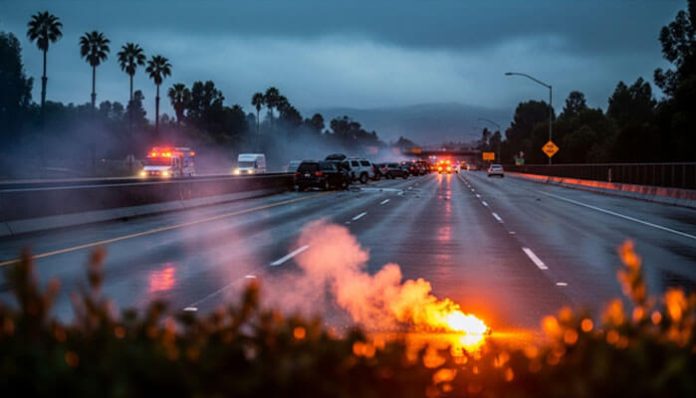

For Southern California Auto Accidents drivers accustomed to sun-drenched, dry roads, the recent surge of intense winter storms has been a jarring shift. These sudden downpours are turning familiar freeways into hazardous zones, demanding a level of caution many are unprepared for. The change in conditions has led to a predictable, yet tragic, outcome: a significant increase in vehicle collisions across the region.
Recent news reports confirm a spike in hydroplaning incidents, multi-vehicle pile-ups, and heartbreaking fatalities during periods of heavy rainfall. For instance, a fast-moving storm caused widespread hazardous conditions, while another crash on the 405 Freeway during rainfall resulted in two deaths. While navigating slick roads is one challenge, understanding your legal rights and responsibilities in these situations is another. This article breaks down the rules of liability for weather-related accidents in California and offers critical advice to keep you safe and legally protected.
Why Do Car Accidents Spike During Southern California Storms?
Driving in the rain presents challenges everywhere, but several unique factors make it particularly dangerous in Southern California. The combination of environmental conditions, road characteristics, and driver habits creates a dangerous combination for collisions when the skies open up.
One of the most significant dangers is the “first flush” effect. After long dry spells, oil, grease, and other automotive fluids accumulate on the asphalt. When the first rains of the season arrive, this residue mixes with the water to create an exceptionally slick, greasy film on the road surface, dramatically reducing tire grip before it can be washed away.
This slickness directly contributes to hydroplaning, a primary cause of loss of control. Hydroplaning occurs when a layer of water builds up between a vehicle’s tires and the road surface, causing the tires to lose contact with the asphalt. At this point, the driver can no longer steer, brake, or accelerate effectively, and the car essentially becomes an uncontrolled sled.
Heavy downpours also severely limit driver visibility, making it difficult to see other vehicles, lane markings, and potential hazards. This danger is compounded by infrastructure issues that are exposed and worsened by storms.
These elevated risks are especially concerning in communities that already face high collision rates. Areas within the Antelope Valley, such as Lancaster and Palmdale, become even more dangerous during storms. According to 2022 data, Lancaster ranked 2nd out of 61 similar-sized California cities for fatal and injury crashes. That same year, a staggering 1,753 victims were killed or injured in collisions within the city, underscoring the serious risks when severe weather strikes.
Who Is Legally at Fault in a Weather-Related Accident?
A common misconception among drivers is that “bad weather” can be blamed for an accident, as if a storm is an unforeseeable event that negates responsibility. Legally, this is false. In California, drivers have a strict duty of care to adjust their driving to match the conditions. Rain, fog, or slick roads do not absolve a driver of liability for a collision they cause.
This principle is anchored in California’s “basic speed law.” This law makes it illegal to drive faster than is safe for the current conditions, regardless of the posted speed limit. When it is raining, the safe speed is almost always lower than the posted limit. A driver traveling at 65 mph on a wet freeway may be adhering to the speed limit but could still be found negligent for violating the basic speed law if their speed was unsafe for the rainy conditions. In 2022, speed was a factor in 163 fatal and injury collisions in Lancaster alone, highlighting how excessive speed for conditions contributes to crashes.
California also follows a “pure comparative negligence” rule, which means that fault can be shared among multiple parties. In a weather-related accident, a jury or insurance adjuster might assign a percentage of fault to each driver involved. For example, a driver who was speeding on a wet road and rear-ended another car might be found 80% at fault. However, if the car that was hit had malfunctioning brake lights, that driver might be assigned 20% of the fault for contributing to the collision.
Several common behaviors can establish a driver’s negligence in a rain-related accident. These factors demonstrate a failure to exercise reasonable care while operating a vehicle in hazardous weather.
1. Excessive Speed for Conditions: This is the most common factor. It involves driving at or even below the speed limit when the slick roads and poor visibility demand a much slower, more cautious speed.
2. Following Too Closely: Wet roads significantly increase a vehicle’s stopping distance. Failing to leave several car lengths between your vehicle and the one ahead is a clear sign of negligence.
3. Improper Vehicle Maintenance: Driving with bald tires that lack sufficient tread to channel water, or using broken windshield wipers or malfunctioning headlights, demonstrates a failure to maintain the vehicle in a safe operating condition for foreseeable weather.
4. Failure to Use Headlights: California law requires drivers to turn on their headlights when using their windshield wipers. This is not just to help the driver see, but to make the vehicle more visible to others in low-light, rainy conditions.
5. Distracted Driving: Using a cell phone, adjusting the radio, or engaging in other distractions is dangerous in any condition. In the rain, it severely compromises a driver’s ability to react to sudden hazards like a hydroplaning vehicle or standing water.
What to Do After a Collision in the Rain
Being in an accident is jarring and stressful, and poor weather can make the immediate aftermath even more chaotic and dangerous. If you are involved in a collision during a storm, it is crucial to take specific steps to protect your safety and preserve evidence for any future insurance claim or legal action.
Your priority must always be safety. If it is safe and your vehicle is operable, move it out of active traffic lanes to the shoulder or a nearby side street to prevent a secondary collision. Turn on your hazard lights immediately. Once in a safe location, call 911 to report the accident and request police and medical assistance. It is vital to seek a medical evaluation even if you feel fine, as some serious injuries, like whiplash or internal bleeding, may not present symptoms until hours or days later.
While waiting for help to arrive, and only if it is safe to do so, begin documenting the scene. Capture plenty of photos and videos using your smartphone. Photograph the damage on every vehicle involved, making sure to take pictures from several different angles. Crucially, also document the surrounding conditions. Take pictures of standing water on the road, the intensity of the rainfall, any visible potholes or road hazards, and the general visibility. This evidence can be invaluable in proving that the conditions required a higher degree of caution from the at-fault driver.
| What to DO After a Crash in the Rain |
What to AVOID After a Crash in the Rain
|
| Prioritize Safety: Move to a safe location and turn on hazard lights. | Admitting Fault: Never say “it was my fault,” even if you think it was. |
| Call 911: Request police and medical assistance immediately. | Minimizing Injuries: Don’t say “I’m fine.” You may have delayed symptoms. |
| Document Everything: Take photos of damage, road conditions, and landmarks. | Making Side Deals: Avoid informal agreements to handle repairs without insurance. |
| Exchange Information: Get names, insurance, and contact info from all drivers. | Leaving the Scene: It’s illegal and will create significant legal problems. |
| Notify Your Insurer: Inform your insurance provider as soon as possible by reporting the accident without delay. | Posting on Social Media: Do not discuss the accident or your condition online. |
Why Consulting an Antelope Valley Car Accident Law Firm Is Crucial

Navigating a weather-related claim is complex. Insurance companies may try to lowball a settlement by arguing the crash was an “act of God” or an unavoidable accident due to the storm. An experienced Antelope Valley car accident law firm understands how to counter these tactics. They work to prove that it was driver negligence, not the rain, that was the primary cause of the collision.
Firms like Kuzyk Personal Injury & Car Accidents Lawyers specialize in sophisticated accident reconstruction. They work with experts to analyze evidence from the scene and prove how factors like excessive speed or unsafe following distance caused the crash. These specialists can analyze tire tread depth, vehicle maintenance records, and road design to build a powerful case that holds the negligent driver accountable.
With a long history of representing drivers in the Antelope Valley, Kuzyk Law is intimately familiar with dangerous local roads. This deep local knowledge is critical for effectively representing victims and securing the compensation they deserve for medical bills, lost wages, and vehicle damage.
How to Drive Safely and Reduce Your Risk in Wet Conditions
You may not be able to change the weather, but you can choose how you respond to it. Taking proactive and defensive measures is the best way to avoid being involved in a collision. Empowering yourself with safe driving habits can dramatically reduce your risk of a collision during a Southern California storm.
- Reduce Your Speed Dramatically. The single most important adjustment is to slow down significantly below the posted speed limit. This is non-negotiable. A slower speed reduces the risk of hydroplaning by giving the tire treads more time to channel water away and allows for the much longer stopping distances required on slick pavement.
- Increase Your Following Distance. On dry roads, a three-second following distance is recommended. In the rain, you should double or even triple that to six seconds or more. This buffer gives you more time and space to react if the vehicle ahead of you brakes suddenly or begins to skid.
- Check Your Equipment. Before the rainy season begins, perform a simple safety check. Ensure your tires have adequate tread depth by using the “penny test.” Replace worn-out windshield wiper blades that streak or chatter. Finally, confirm that all of your headlights, taillights, and turn signals are clean and functioning correctly.
- Avoid Cruise Control. Using cruise control in rainy or wet conditions is extremely dangerous. If your car begins to hydroplane, the cruise control system will want to maintain speed, which can cause the vehicle to accelerate unexpectedly when the tires regain traction, leading to a spin-out. You need to be in full manual control of your speed at all times.
- Know How to Handle a Skid. If you feel your vehicle begin to hydroplane or skid, do not panic and do not slam on the brakes, as this will likely make the skid worse. Instead, ease your foot off the accelerator. Gently steer the car in the direction you want the front of the vehicle to go until you feel the tires regain traction with the road surface.
Navigating the Aftermath of a Weather-Related Collision
The central theme to remember is that weather doesn’t cause accidents; unsafe driving does. Every driver in Southern California has a legal duty to adapt their actions to hazardous road conditions. Failing to do so is negligence, and the law holds negligent drivers responsible for the harm they cause, regardless of the weather.
While the recent storms have undeniably made our roads more dangerous, being prepared can make all the difference. By driving cautiously, maintaining your vehicle, and understanding your legal rights, you can better protect yourself. If a collision does occur, knowing the right steps to take in the moments that follow can safeguard both your physical and financial well-being.
Drive safely, stay vigilant, and never hesitate to seek expert legal guidance to help you navigate the complexities of an accident claim. Your safety and your rights are too important to leave to chance when the roads are treacherous.
FAQs
Q: Can I be found at fault if someone rear-ends me in the rain?
A: Generally, the driver who rear-ends another is at fault. In the rain, this is often because they were following too closely or driving too fast for the wet conditions, preventing them from stopping in time. However, if your brake lights were not working, you could share a percentage of the fault under California’s comparative negligence rules.
Q: Does my car insurance cover damage from hydroplaning?
A: Yes. If you have collision coverage as part of your auto insurance policy, it will typically cover damage to your vehicle from a hydroplaning accident, regardless of who is at fault. If another driver is deemed at fault for the crash, their liability insurance should cover your damages.
Q: What is the most important piece of evidence after a crash in the rain?
A: A police report and photographic evidence are critical. Photos of the vehicles’ damage, the wet road surface, any visible hazards like puddles or potholes, and even a short video showing the intensity of the rain can be incredibly valuable for proving the conditions at the time of the crash and supporting your claim.