

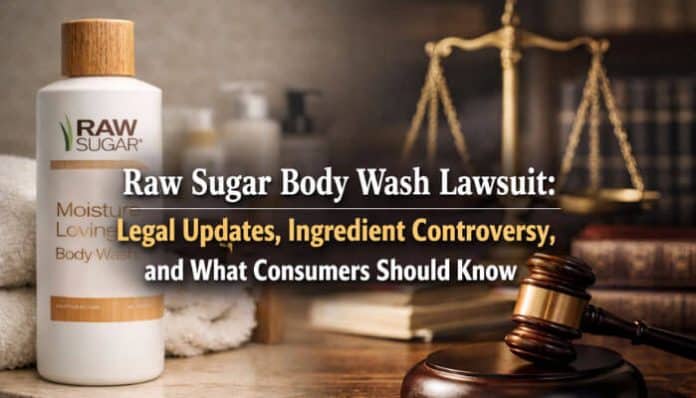
The Raw Sugar body wash lawsuit has drawn national attention within the clean beauty industry. At the center of the legal dispute is a familiar question in modern cosmetics marketing:
Did “natural” and “plant-based” claims create a misleading impression for consumers?
As shoppers increasingly seek safer, eco-conscious products, brands like Raw Sugar Living built their reputation on transparency, sustainability, and ingredient-forward messaging. But as regulatory scrutiny grows, marketing language across the beauty industry is facing closer examination.
Here’s a full breakdown of the allegations, legal context, ingredient debate, and what this case could mean for the future of clean beauty.
What Is Raw Sugar Body Wash?
Raw Sugar body wash is marketed as a plant-inspired personal care product featuring claims such as:
- Sulfate-free
- Paraben-free
- Cruelty-free
- Plant-based
- Naturally derived
The brand emphasizes:
- Cold-pressed extracts
- Sustainable packaging
- Social impact initiatives
- Ingredient transparency
Its colorful packaging and “clean beauty” positioning helped it expand rapidly in major retail chains.
For many consumers, the product represented a safer alternative to traditional chemical-heavy cleansers.
What Sparked the Lawsuit?
The legal dispute reportedly centers on whether marketing language may have overstated the natural composition of the product.
Core Allegations Include:
- The presence of synthetic or lab-processed ingredients despite “natural” branding
- Marketing that allegedly implied products were entirely plant-based
- Consumers paying premium prices based on those representations
Importantly, the case does not primarily allege that the product is unsafe. Instead, it focuses on consumer protection and advertising interpretation.
Timeline of the Legal Dispute
While court proceedings are ongoing and subject to change, public filings indicate:
- A complaint was filed alleging misleading marketing claims
- The case focuses on advertising transparency rather than health risks
- No recall or regulatory enforcement action has been announced
As of now, no confirmed final judgment or settlement has been publicly disclosed.
Legal cases involving consumer marketing claims can take months or even years to resolve.
The Legal Standard: What Is a “Reasonable Consumer”?
In consumer protection law, courts often apply the “reasonable consumer” test.
Would an average shopper interpret “natural” to mean:
- 100% plant-derived?
- Free from synthetic preservatives?
- Minimally processed?
- Completely chemical-free?
If marketing language creates expectations that differ from the ingredient list, courts evaluate whether that difference could be considered materially misleading.
This case essentially examines whether branding aligned with ingredient reality.
Why “Natural” Is a Legally Gray Area

One of the most important aspects of this dispute is that the word “natural” has no strict regulatory definition in cosmetics.
Unlike pharmaceuticals, cosmetic labeling allows flexibility as long as ingredients are properly disclosed.
Oversight of cosmetic labeling and advertising in the United States involves agencies such as:
- U.S. Food and Drug Administration (ingredient safety and labeling compliance)
- Federal Trade Commission (advertising practices and deceptive marketing enforcement)
Because “natural” is not tightly defined, brands may use the term even if certain ingredients are synthesized or highly processed.
This regulatory gray zone is central to many modern clean beauty lawsuits.
Ingredient Controversy: What’s Being Questioned?
The lawsuit reportedly highlights ingredients that some consumers may not expect in a “natural” body wash.
These may include:
- Phenoxyethanol (preservative)
- Sodium benzoate
- Fragrance blends
- PEG compounds
- Stabilizers
It’s important to clarify:
These ingredients are widely used in cosmetic formulations and are generally considered safe within approved limits.
The legal question is not necessarily about toxicity — it’s about expectation versus interpretation.
A shopper who sees “plant-based body wash” may assume minimal synthetic processing, even though modern cosmetic formulation typically requires preservatives for stability and safety.
Why Even Natural Brands Use Synthetic Preservatives
Body washes must:
- Prevent bacterial contamination
- Maintain shelf stability
- Survive temperature fluctuations
- Preserve fragrance integrity
- Maintain consistent texture
Pure plant extracts without stabilizers can spoil quickly.
Even brands committed to natural sourcing often use safe synthetic preservatives to ensure product safety.
The controversy arises when marketing language may not clearly communicate that balance.
The Clean Beauty Boom and Increased Legal Scrutiny
Over the past decade, the clean beauty movement has surged.
Consumers increasingly avoid:
- Parabens
- Sulfates
- Phthalates
- Synthetic dyes
- Artificial fragrances
Brands responded with terms such as:
- Clean
- Green
- Non-toxic
- Naturally inspired
- Plant-powered
However, without standardized definitions, these phrases often rely on consumer perception rather than legal precision.
This case reflects growing legal scrutiny of that marketing strategy.
Is Raw Sugar Body Wash Unsafe?
At this time:
- No recall has been issued
- No confirmed regulatory warning has been announced
- The lawsuit focuses on advertising interpretation, not confirmed health risks
There is no public finding that the product poses a safety hazard.
Potential Outcomes of the Case
If courts determine that marketing materially misled consumers, potential outcomes could include:
- Revised packaging language
- Label clarification
- Financial settlement
- Consumer reimbursement (if class certification occurs)
However, no confirmed class action settlement or payout has been finalized.
Could This Set a Precedent?
Possibly.
If courts begin tightening standards around “natural” claims, beauty brands may:
- Use more specific language
- Define marketing terms more clearly
- Increase formulation transparency
- Avoid broad emotional terminology
This could significantly reshape clean beauty marketing practices over the next decade.
What Consumers Should Do
Whether or not you’ve used Raw Sugar products, this case highlights important consumer lessons.
1. Read Beyond Front Labels
Front packaging is marketing. Always review the full ingredient list.
2. Understand INCI Names
Some ingredients sound synthetic but are plant-derived. Research unfamiliar terms.
3. Look for Third-Party Certifications
Certifications may carry stricter definitions than brand-created claims.
4. Separate “Natural” from “Safe”
Not all synthetic ingredients are harmful.
Not all natural ingredients are automatically safe.
Ingredient literacy reduces confusion.
The Bigger Shift Toward Transparency
The beauty industry is evolving rapidly.
Modern consumers expect:
- Clear sourcing disclosures
- Science-backed claims
- Transparent ingredient breakdowns
- Honest labeling practices
Brands that fail to align messaging with formulation risk reputational damage — even when technically compliant.
This lawsuit reflects a broader accountability trend across the clean beauty sector.
Frequently Asked Questions
1. What is the Raw Sugar body wash lawsuit about?
The lawsuit alleges that marketing claims about “natural” and “plant-based” ingredients may have created a misleading impression. The case focuses on advertising transparency rather than product safety.
2. Is Raw Sugar body wash safe to use?
There is no official recall or regulatory warning. The legal dispute centers on labeling interpretation, not confirmed health risks.
3. Has there been a settlement?
As of now, no confirmed final settlement has been publicly announced.
4. Can consumers receive compensation?
If the case becomes certified as a class action and results in a settlement, eligible consumers may qualify. Currently, there is no confirmed reimbursement program.
5. Why is “natural” controversial in cosmetics?
Because it lacks a strict regulatory definition, brands may use the term even when products contain synthetic or highly processed ingredients.
Final Takeaway
The Raw Sugar body wash lawsuit is not simply about one product. It reflects a larger shift in how courts, regulators, and consumers evaluate “clean” and “natural” marketing claims.
For consumers, it reinforces the importance of reading ingredient lists carefully.
For beauty brands, it signals that clarity and precision in marketing are becoming essential — not optional.
As the case develops, it may influence how natural cosmetic products are labeled and advertised industry-wide.