

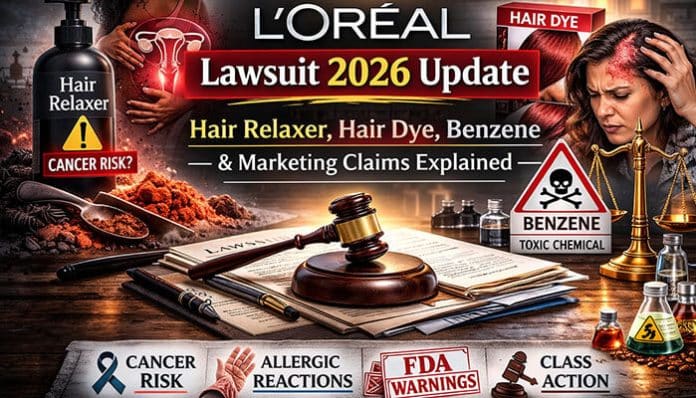

The term “L’Oréal lawsuit” refers to multiple ongoing legal claims involving products manufactured or marketed by L’Oréal. These claims involve hair relaxers, hair dyes, acne treatments, and certain marketing practices.
Plaintiffs allege risks including cancer, chemical burns, allergic reactions, contamination, and deceptive advertising. L’Oréal denies wrongdoing, and most cases — including the L’Oréal hair relaxer lawsuit — remain in active pretrial proceedings as of 2026.
If you are researching a L’Oréal lawsuit, you are likely seeing different types of legal claims — from hair relaxer cancer allegations to deceptive marketing lawsuits and benzene contamination concerns.
This guide explains:
1. What the current L’Oréal lawsuits involve
2. The status of the L’Oréal hair relaxer litigation
3. Whether there is a L’Oréal hair dye or hair color lawsuit
4. What consumers should know about potential settlements
5. How product liability lawsuits typically work
What Is the L’Oréal Lawsuit About?
The term “L’Oréal lawsuit” does not refer to one single case. Instead, it includes several different legal claims involving products manufactured or marketed by L’Oréal.
The primary categories include:
1. Hair relaxer cancer litigation
2. Hair dye and hair color injury claims
3. Deceptive marketing class actions
4. Benzene contamination allegations in acne treatments
Each category involves different legal theories, scientific evidence, and procedural timelines.
L’Oréal Hair Relaxer Lawsuit
The L’Oréal hair relaxer litigation is part of broader federal cases involving chemical hair straightening products.
What Are the Allegations?
Plaintiffs allege that certain chemical hair relaxers may increase the risk of:
- Uterine cancer
- Endometrial cancer
- Ovarian cancer
These claims gained attention after research published by the National Institutes of Health examined potential associations between frequent chemical hair straightener use and increased uterine cancer risk.
Important clarification:
The study identified an association, not proof of direct causation.
Litigation often centers on failure-to-warn allegations rather than claiming a product definitively “causes” cancer.
Current Legal Status (2026)
Many hair relaxer cases across multiple brands have been consolidated in federal multidistrict litigation (MDL).
An MDL allows similar lawsuits to move through pretrial proceedings together for efficiency, while each case remains an individual lawsuit.
As of early 2026:
- No global settlement specific to L’Oréal hair relaxers has been finalized.
- No standardized payout structure has been announced.
- Cases remain in pretrial phases in federal court.
L’Oréal has denied wrongdoing and maintains that its products meet applicable safety standards.
L’Oréal Hair Dye & Hair Color Lawsuits
Searches for “L’Oréal hair dye lawsuit” or “L’Oréal hair color lawsuit” typically relate to claims involving:
- Allergic reactions
- Scalp burns
- Hair loss
- Chemical sensitivity injuries
What Is Typically Alleged?
Hair dye lawsuits generally argue:
• Inadequate warnings about allergic reactions
• Failure to properly test for safety
• Defective formulation
Hair dye products typically include patch-test instructions and allergy warnings on packaging, which can affect how courts evaluate these claims.
At this time, there is no nationwide class action settlement resolving all L’Oréal hair dye or hair color claims. Most cases are individual product liability lawsuits.
Benzene Contamination Allegations
In separate litigation, L’Oréal has faced lawsuits alleging benzene contamination in certain acne treatment products.
Benzene is classified as a carcinogen, and lawsuits typically allege:
- Product contamination during manufacturing
- Failure to adequately test for impurities
- Failure to warn consumers
L’Oréal has publicly disputed liability in response to certain allegations.
These cases are distinct from the hair relaxer litigation and follow different legal paths.
Marketing & Deceptive Email Lawsuits
Some lawsuits have involved allegations of deceptive marketing practices, including promotional emails and “free gift” representations.
These cases differ significantly from personal injury lawsuits because they typically involve:
- Consumer protection statutes
- False advertising laws
- Email marketing compliance regulations
Settlement amounts in marketing cases are generally modest compared to personal injury litigation.
How Product Liability Lawsuits Against L’Oréal Work
Most L’Oréal-related injury claims fall under product liability law, which may involve:
- Design defect
- Manufacturing defect
- Failure to warn
- Breach of warranty
To succeed, plaintiffs generally must prove:
1. The product was defective or unreasonably dangerous
2. The defect caused their injury
3. They suffered measurable damages
Medical records, product use history, pathology reports, and expert testimony are typically required.
Is There a L’Oréal Hair Relaxer Settlement?
As of early 2026:
- There is no confirmed global settlement resolving all L’Oréal hair relaxer claims.
- No court has announced a standardized payout structure.
- No finalized nationwide resolution has been reached.
If settlements occur in the future, values would depend on:
- Injury severity
- Medical documentation
- Proof of product use
- Individual damages
Be cautious of websites advertising “average payouts” without verified court documentation.
How Much Could a L’Oréal Lawsuit Be Worth?
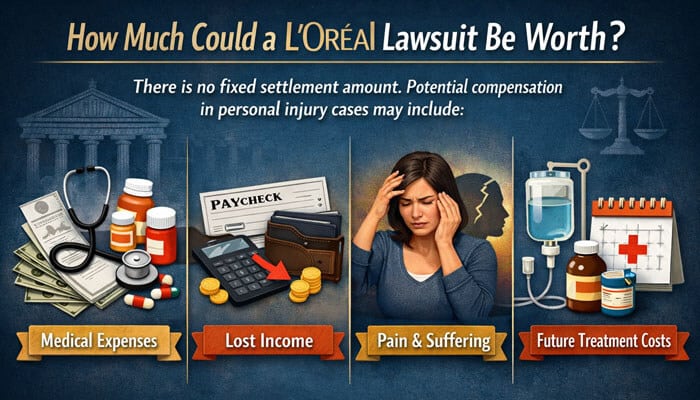
There is no fixed settlement amount.
Potential compensation in personal injury cases may include:
- Medical expenses
- Lost income
- Pain and suffering
- Future treatment costs
Marketing class action cases, by contrast, typically result in smaller per-consumer payments.
Each claim depends heavily on individual facts and evidence.
Should You File a L’Oréal Lawsuit?
You may consider consulting a product liability attorney if:
- You have a diagnosed injury (such as uterine or ovarian cancer)
- You used specific L’Oréal relaxer products regularly
- You have documentation showing product use prior to diagnosis
However, not every adverse reaction leads to a viable claim. An attorney will evaluate:
- Statute of limitations
- Causation evidence
- Product identification proof
Deadlines vary by state and may range from one to four years in many jurisdictions.
Frequently Asked Questions (FAQs)
1. Are these lawsuits part of a class action?
Some marketing cases are structured as class actions. Most injury claims are individual lawsuits or part of MDL proceedings.
2. What is the L’Oréal lawsuit about?
The term refers to multiple legal claims involving hair relaxers, hair dye injuries, benzene contamination allegations, and marketing practices.
3. What is the L’Oréal hair relaxer lawsuit?
It is litigation alleging that long-term use of certain chemical hair straighteners may increase the risk of uterine or related cancers.
4. Is there a L’Oréal hair dye lawsuit?
Yes. Some lawsuits claim allergic reactions, burns, or scalp injuries from certain hair dye products.
5. Has there been a L’Oréal settlement?
As of early 2026, no global settlement has been announced in the hair relaxer cancer litigation.
6. How long do you have to file a L’Oréal lawsuit?
Deadlines depend on your state’s statute of limitations.
Final Thoughts
The term “L’Oréal lawsuit” covers several different legal issues — from cancer allegations involving relaxers to allergic reactions from hair dye and consumer marketing claims.
If you believe you may be affected:
- Preserve medical records
- Save product packaging or receipts
- Consult a qualified product liability attorney
- Act before your state’s deadline expires
Product liability cases are complex and science-driven. Understanding the difference between preliminary research findings and courtroom evidence is essential before making legal decisions.
Disclaimer: This article is for informational purposes only and does not constitute legal advice. Legal outcomes depend on specific facts, jurisdiction, and evolving litigation developments.