

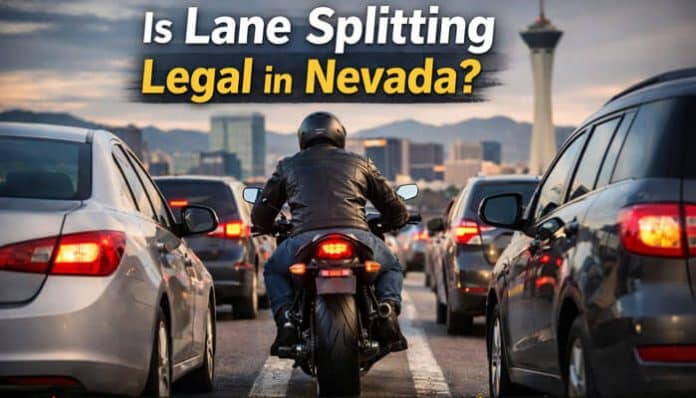

Motorcycle riders in Nevada may have wondered, Is lane splitting legal in Nevada? The act of lane splitting, where motorcyclists ride between lanes of traffic, is often seen as a way to bypass congestion. However, it’s crucial to understand that lane splitting is illegal in Nevada, and engaging in this practice could result in significant legal and financial consequences.
If you’re asking, Is Lane Splitting Legal in Nevada?, the answer is no. Lane splitting is prohibited under Nevada law. This comprehensive guide explains the law surrounding lane splitting, why it is prohibited, and the legal repercussions riders may face. Understanding these laws is important for every motorcyclist, whether you’re a seasoned rider or a newcomer, to ensure your safety and compliance on Nevada’s roads.
What Is Lane Splitting?
Lane splitting is when a motorcycle rides between two lanes of vehicles that are going in the same direction — usually when traffic is slow or stopped. Instead of staying behind a car in a lane, the motorcycle moves between lanes to go ahead. This is different from normal riding inside one marked lane.
Is Lane Splitting Legal in Nevada?
No. Lane splitting is illegal in Nevada under state law. According to Nevada Revised Statutes (NRS 486.351):
- Motorcycles are entitled to full use of a lane.
- Riders cannot pass or overtake another vehicle within the same lane.
- Riding between lanes of traffic is prohibited.
In simple terms: Motorcyclists must operate within a designated lane, just like other motor vehicles.
Lane Filtering vs. Lane Splitting vs. Lane Sharing
These concepts are often confused but have important differences:
| Concept | Description | Legality |
|---|---|---|
| Lane Splitting | Riding between lanes of traffic, either moving or stopped | Illegal in Nevada |
| Lane Filtering | Riding forward between stopped vehicles (e.g., at lights) | Illegal in Nevada |
| Lane Sharing | Two motorcycles riding side-by-side in the same lane | Legal with mutual agreement from both riders |
Lane splitting and lane filtering are both illegal, but lane sharing — where two motorcycles share the same lane together — is allowed with agreement from both riders.
Nevada Law and Motorcycle Lane Usage
Under Nevada law:
- A motorcycle must remain within a single lane
- It cannot pass another vehicle within that same lane
- It is entitled to full use of the lane
These rules are designed to ensure predictable traffic flow and reduce collision risks caused by unexpected motorcycle movements.
Why Lane Splitting Is Illegal in Nevada
Nevada prohibits lane splitting primarily due to safety concerns:
- Low visibility: Motorcycles are harder to see between vehicles
- Sudden lane changes: Drivers may not anticipate a motorcycle passing between lanes
- Reduced reaction time: Limited space increases crash risk
- Driver confusion: Unpredictable behavior disrupts traffic patterns
While some argue lane splitting reduces congestion or rear-end collisions, Nevada prioritizes uniform lane discipline for all road users.
Penalties and Legal Consequences
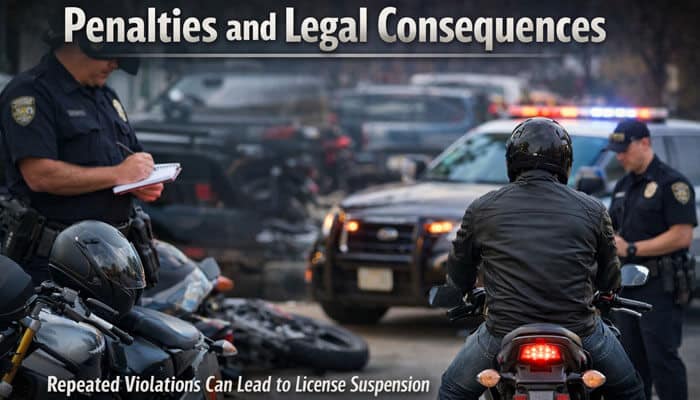
Since lane splitting is illegal in Nevada, riders caught doing it can face:
- Traffic citations (fines)
- Points on motorcycle license
- Higher insurance premiums
- Liability for accidents and injuries
Repeated violations may result in license suspension and other consequences. If lane splitting contributes to a crash, the rider may be found at fault because they were breaking the law at the time of the incident.
Lane Splitting and Motorcycle Accident Liability
If a crash happens when a rider is lane splitting:
- The rider may be deemed at fault because lane splitting is illegal.
- Fault may be shared if the car driver also acted dangerously.
- Nevada uses a modified comparative negligence system — meaning you can still recover some damages unless you’re more than half responsible.
This makes accidents involving lane splitting both legally and financially tricky.
Insurance and Claims After a Lane Splitting Crash
Insurance companies often treat lane splitting as a risky and unlawful maneuver. That means:
- They may reduce or deny compensation if the rider was lane splitting.
- Riders found fully at fault may pay medical bills, property damage, and legal costs themselves.
- Documentation (photos, witness statements, police reports) is critical if a claim goes to trial.
What States Allow Lane Splitting or Filtering?
As of 2025–2026, lane splitting and lane filtering laws vary significantly across the United States. Here’s a more comprehensive look at where these practices are legal, the conditions under which they are allowed, and any state-specific requirements.
States That Allow Lane Splitting:
California: Lane splitting is legal in California under specific conditions. Riders can split lanes when traffic is moving at speeds of 30 mph or less, and they must do so safely. The California Highway Patrol (CHP) has established guidelines to help motorcyclists and drivers navigate this practice. However, lane splitting is not permitted at speeds greater than 30 mph, and it must be done cautiously to avoid accidents.
States with Lane Filtering Laws:
- Utah: Lane filtering is legal in Utah, but it is only permitted when the traffic is stopped. Motorcycles can filter to the front of a red light at a safe and reasonable speed (under 15 mph). This practice helps reduce traffic congestion, especially in urban areas.
- Arizona: Lane filtering is also allowed in Arizona under certain circumstances, including when traffic is moving slower than 15 mph. Riders must also maintain a safe speed while filtering to the front of a stoplight.
- Oregon: Oregon allows lane filtering at stoplights only when traffic is at a standstill. Riders must be cautious, and it is illegal to filter between lanes when traffic is moving.
- Montana: Lane filtering was legalized in Montana in 2023, and it applies under similar rules as other states: filtering can occur only when traffic is stopped, and riders must ensure safe execution.
States That Do Not Allow Lane Splitting or Filtering:
- Nevada: As you’ve noted, Nevada does not allow either lane splitting or filtering, and violators may face fines, points on their license, and increased insurance premiums.
- Florida: Florida explicitly prohibits lane splitting and filtering. Motorcyclists are expected to stay within their designated lanes, just like other drivers on the road.
- Texas: Lane splitting is illegal in Texas, though there have been discussions regarding its potential legalization. However, lane filtering is prohibited as well.
Other States with Proposals for Lane Splitting/Filtering:
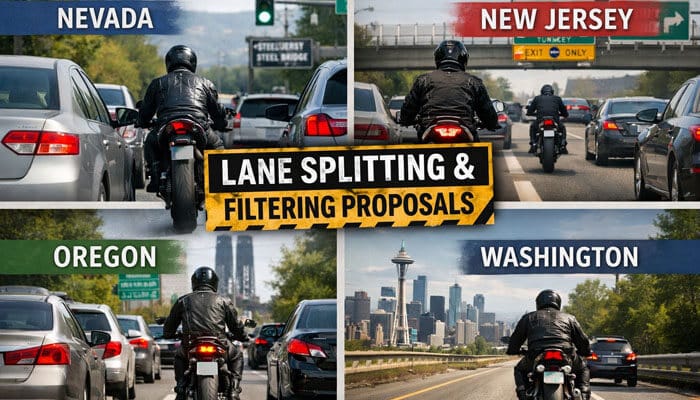
Several other states have proposed bills for lane splitting and filtering but have yet to legalize them. These include:
- Nevada (recent proposals failed to gain traction)
- Oregon (debates about filtering in certain traffic conditions)
- New Jersey (proposals introduced but not passed yet)
- Washington (ongoing discussions about the potential benefits and risks)
Motorcycle Safety and Best Practices
Even though you can’t lane split in Nevada, you can still:
- Stay in your lane
- Keep safe spacing from other vehicles
- Always wear proper protective gear
- Use signals for lane changes
- Ride defensively — watch for cars turning or changing lanes
These habits reduce crash risk and help you obey Nevada traffic laws.
Legislative History & Future Possibilities
In recent years, Nevada lawmakers discussed bills aimed at legalizing filtering or lane splitting under certain conditions. However:
- Most proposals failed or stalled due to safety concerns.
- No new formal regulations have been adopted.
- Bills to align Nevada with California’s law were rejected.
This means lane splitting remains illegal — but discussions about future changes continue.
Conclusion
In summary, Is Lane Splitting Legal in Nevada? The answer is no. Lane splitting is illegal in Nevada and can lead to serious legal and financial consequences. Motorcycle riders must adhere to the state’s traffic laws, which require them to stay in their designated lane, just like other vehicles on the road. The risks associated with lane splitting, including accidents, insurance disputes, and penalties, underscore the importance of following Nevada’s motorcycle laws.
For motorcyclists wondering, Is Lane Splitting Legal in Nevada?, it’s crucial to understand that lane splitting is prohibited in the state. The safest course of action is to stay within traffic lanes, maintain a safe distance from other vehicles, and avoid risky maneuvers like lane splitting. By doing so, you can ensure your safety and minimize potential legal troubles while enjoying your ride on Nevada’s roads.
Is Lane Splitting Legal in Nevada FAQs
1. Is lane splitting legal in Nevada?
No, lane splitting is illegal in Nevada. Motorcyclists are required to stay within a single lane at all times.
2. What is the difference between lane splitting and lane filtering?
Lane splitting involves riding between moving or stopped vehicles, while lane filtering is only allowed between stopped vehicles, typically at stoplights.
3. What are the exceptions for lane splitting in Nevada?
There are no exceptions for lane splitting in Nevada; it is strictly prohibited under state law.
4. Are there any specific roads or conditions where lane splitting might be more dangerous in Nevada?
While lane splitting is illegal everywhere, congested areas like highways near Las Vegas may increase the danger due to heavy traffic and limited visibility.
5. How can I report someone lane splitting in Nevada?
You can report lane splitting by contacting local law enforcement with the vehicle description, time, and location of the incident.
6. Could lane splitting be legalized in Nevada in the future?
Although previous bills have failed, there are still ongoing discussions, and lane splitting could be legalized in the future with new proposals.
