



Losing a family member because of someone else’s negligence creates emotional and financial challenges at a time when a family is trying to grieve. Bills still have to be paid. Income may disappear overnight. The person who handled the mortgage, school pickups, or everyday decisions is suddenly gone, leaving loved ones to face financial uncertainty alongside their grief. In such situations, a Florida wrongful death lawsuit may help eligible surviving family members seek compensation for their losses and hold the responsible party accountable.
Jesse Davidson, managing partner of JD Injury Law in Boynton Beach, has worked with families in that position. One of the first questions is usually a practical one: what can the family actually recover through a wrongful death claim?
Florida law separates those losses into different categories, depending on whether they belong to the deceased person’s estate or to the surviving family members.
Florida’s Wrongful Death Act Determines Who Can Bring the Claim
A wrongful death lawsuit in Florida is filed by the personal representative of the deceased person’s estate. That representative brings the claim on behalf of the estate and the survivors who may be entitled to compensation under Florida law.
Those survivors can include a spouse, children, parents, and, in certain circumstances, blood relatives or adoptive siblings who depended on the deceased for support.
For families, this can be one of the more confusing parts of the process. The person filing the lawsuit is not necessarily the only person who may receive compensation. Part of Jesse Davidson’s work with wrongful death clients involves identifying who qualifies as a survivor and which losses each person can claim.
What the Estate May Be Able to Recover
Some damages belong to the estate itself.
These can include funeral and burial expenses, medical bills related to the final injury or illness, and certain lost earnings and benefits. Florida law may also allow recovery for lost prospective net accumulations, which generally refers to the amount the deceased would likely have added to the estate over the remainder of their expected working life.
Putting a number on those losses requires more than looking at a recent paycheck.
Attorneys may review tax returns, employment records, benefits information, and other financial documents to build a picture of the person’s earning history. In some cases, a financial or economic expert may also be involved.
Calculating prospective net accumulations can become especially complicated because the analysis looks years into the future. The deceased person’s age, health, career path, earning history, and likely personal expenses can all affect the estimate.
A younger person early in a career may present a very different financial picture from someone nearing retirement, even if their current incomes are similar. Detailed records help ground those calculations in the person’s actual life and work history.
What Surviving Family Members May Recover
Surviving family members may also have claims based on what they personally lost.
A surviving spouse may be able to seek compensation for lost companionship and protection, along with the loss of support and services the deceased provided. Children may have claims involving lost parental companionship, instruction, and guidance, depending on the circumstances of the case and the family structure.
Parents of a deceased minor child may also be able to seek damages for mental pain and suffering.
These losses are much harder to reduce to numbers.
A spouse may be trying to describe the loss of a marriage that lasted decades. A child may be asked to explain the role a parent played in their daily life. Those relationships do not come with a price tag, but a wrongful death case still has to communicate their significance clearly.
Family testimony, records, photographs, and other evidence can help show what the deceased person contributed to the household and how the family’s life changed after the loss. In some cases, expert testimony may also help explain the effects of that loss.
How an Injury Case Becomes a Wrongful Death Claim
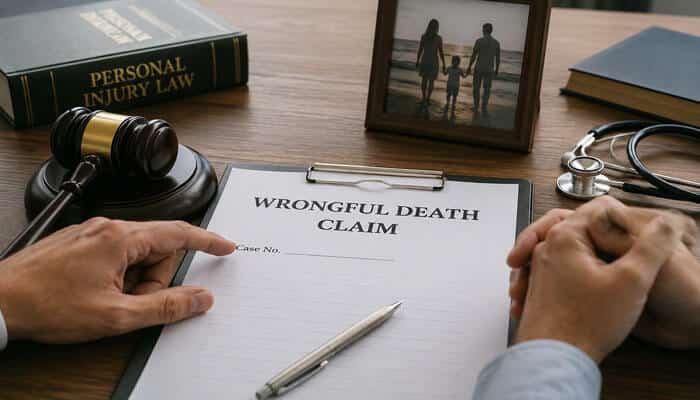
Many wrongful death cases begin with the same kinds of negligence that appear in personal injury claims.
A serious car crash may become a wrongful death case if the victim dies from the injuries. The same can happen after an unsafe property condition, a workplace incident involving a third party, or another event where someone else’s negligence caused fatal harm.
At JD Injury Law, the firm handles motor vehicle crashes, premises liability, and workplace injuries, among other types of personal injury cases.
Investigations often rely on familiar forms of evidence: accident reports, medical records, photographs, witness statements, video, and, when necessary, expert analysis. In a wrongful death case, those materials have to establish not only what happened but how the death was connected to the negligent conduct.
Why Documentation Matters in a Wrongful Death Case
Insurance companies evaluate these claims based on the evidence they have.
A clear timeline, well-supported liability evidence, complete medical records, and careful documentation of the family’s financial losses can make it easier to present the claim accurately. Missing records or poorly supported calculations can give the insurer room to challenge parts of the case.
Families working with a Boynton Beach personal injury attorney may also need help gathering information they would not know to look for on their own, especially while they are dealing with the immediate aftermath of a death.
Families may need to collect financial records from employers or accountants. Medical documentation may come from several providers. Evidence from the accident itself can disappear if it is not preserved early.
The legal work often begins with putting those pieces together.
Free Consultations and Contingency Fees
Wrongful death cases are commonly handled on a contingency-fee basis, which means the attorney’s fee is tied to a successful recovery.
For families dealing with Florida wrongful death claims, that structure can be especially important when the death has also created an immediate loss of household income.
An initial consultation can give a family a clearer understanding of who may be eligible to bring a claim, what damages may be available, and what information is needed to evaluate the case.
No lawsuit can replace the person who died. A wrongful death claim can address some of the financial consequences of the loss and hold the responsible party accountable when negligence caused it.
For Jesse Davidson and the team at JD Injury Law, the process starts with helping families understand what Florida law allows them to pursue and what they’ll need to support the claim from the beginning.