

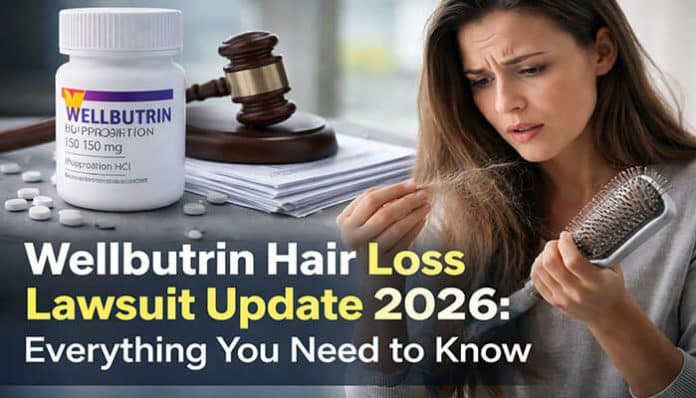

If you’ve been searching for the latest Wellbutrin hair loss lawsuit update, you’re not alone. Thousands of patients across the United States have reported experiencing significant hair loss after taking Wellbutrin (bupropion). This antidepressant, commonly prescribed for conditions like Major Depressive Disorder and Seasonal Affective Disorder, has raised concerns about its potential side effects, particularly hair loss.
Many individuals affected by this side effect are now exploring their legal rights. If you’re one of them, you’re likely wondering what your options are. Fortunately, this guide will help you understand the full picture of the Wellbutrin hair loss issue, including the scientific evidence behind it and the ongoing lawsuits related to these claims.
In this article, we’ll cover the key medical findings on Wellbutrin and hair loss, provide a detailed Wellbutrin hair loss lawsuit update, and review the legal landscape surrounding these ongoing lawsuits.
What Is Wellbutrin (Bupropion)?
Wellbutrin is the brand name for bupropion hydrochloride, a prescription antidepressant manufactured originally by GlaxoSmithKline. First approved by the FDA in December 1985, it is primarily prescribed for:
- Major Depressive Disorder (MDD)
- Seasonal Affective Disorder (SAD)
- Smoking cessation (sold under the brand name Zyban)
- Off-label uses include ADHD and weight management
Unlike most antidepressants — which target serotonin — Wellbutrin works as a Norepinephrine-Dopamine Reuptake Inhibitor (NDRI), giving it a unique side-effect profile. By 2007, bupropion had become the fourth most prescribed antidepressant in the United States, with over 20 million prescriptions issued annually.
Does Wellbutrin Cause Hair Loss? The Medical Evidence
Before diving into the Wellbutrin hair loss lawsuit update, it’s important to understand the underlying medical science — because courts look to this evidence when evaluating claims.
What the FDA Says
The U.S. Food and Drug Administration (FDA) classifies hair loss (alopecia) as an “infrequent” adverse effect of Wellbutrin. In FDA terminology, “infrequent” means it occurs in 1 out of every 100 to 1,000 patients taking the medication.
Key Research Findings
1. A landmark 2018 study published in International Clinical Psychopharmacology (Etminan et al.) analyzed a health claims database of over 1 million new antidepressant users from 2006 to 2014. The finding was striking: bupropion users were 46% more likely to experience hair loss compared to those on fluoxetine (Prozac) — with a hazard ratio of 1.46 (95% CI: 1.35–1.58).
2. Among all antidepressants studied, bupropion had the highest risk of alopecia. Fluoxetine and paroxetine showed the lowest relative risk.
3. Post-marketing surveillance data suggest that roughly 1–4% of Wellbutrin users may experience telogen effluvium within the first three months of treatment.
4. FDA pharmacovigilance reports document hair loss in approximately 13 out of every 1,000 new Wellbutrin prescriptions.
5. The Netherlands Pharmacovigilance Centre Lareb received 13 documented reports of bupropion-associated alopecia between February 2003 and July 2019 alone.
The Type of Hair Loss: Telogen Effluvium
The specific hair loss mechanism linked to Wellbutrin is called telogen effluvium, a non-scarring, temporary form of diffuse hair shedding where follicles are prematurely pushed from the growth (anagen) phase into the resting (telogen) phase.
Key characteristics include:
- Onset: Typically begins 2 to 4 months after starting Wellbutrin
- Pattern: Diffuse all-over thinning (not in patches or a receding pattern)
- Reversibility: Most cases reverse within 3 to 9 months of stopping the medication
- Who’s most affected: Women appear to experience this side effect more frequently than men
- Dose relationship: Higher doses of bupropion appear to intensify the occurrence of telogen effluvium
Important Note: Wellbutrin hair loss can also worsen existing androgenic alopecia (hereditary pattern baldness), potentially accelerating the progression of hair loss in those already predisposed to it.
Wellbutrin Hair Loss Lawsuit Update: A Complete Legal Timeline

Understanding the Wellbutrin hair loss lawsuit update requires context about the broader history of Wellbutrin-related litigation.
1985 – 1986: FDA Approval and First Recall
Wellbutrin was first approved by the FDA in December 1985 but was withdrawn from the market in 1986 after reports of a high rate of seizures among users. It was reintroduced in 1989 after studies established that seizures were dose-dependent, and the daily dosage was lowered.
2006: Generic Versions Hit the Market and Controversy Begins
In 2006, generic manufacturers including Teva Pharmaceuticals (Budeprion XL) and Impax Laboratories began selling generic versions of Wellbutrin XL. Patients who switched from the brand-name drug to the generic started reporting:
- Return of depression symptoms
- New side effects, including increased hair loss
- The drug appears to “pass through” without dissolving
The FDA would eventually confirm that the generic version did not release bupropion into the bloodstream at the same rate as the brand-name Wellbutrin XL.
The Generic Wellbutrin Class Action Settlement
A class action lawsuit is one of the most significant actions tied to the Wellbutrin hair loss lawsuit update landscape was filed against the manufacturers of generic bupropion (Budeprion XL / Bupropion XL), claiming that these generic formulations:
- Were less effective than brand-name Wellbutrin XL
- Caused additional side effects not experienced with the original drug
- Misrepresented their products as therapeutically equivalent
The settlement covered up to 2.24 million Americans who took Budeprion XL or Bupropion Hydrochloride XL between 2006 and the settlement date. U.S. District Court Judge Berle M. Schiller of Philadelphia presided over the case. Notably, the settlement did not provide direct cash payments to class members, but instead required defendants to:
- Change how they market and label the drugs
- Revise prescribing information
- Implement new safety and efficacy protocols
The Antitrust Price-Fixing Lawsuit (GlaxoSmithKline & Valeant)
In a separate but related legal action, GlaxoSmithKline (GSK) and Valeant Pharmaceuticals faced a federal antitrust class action lawsuit. The plaintiffs – including a union health plan – alleged that:
1. GSK filed meritless patent infringement claims against four generic drug manufacturers to delay competition
2. These delays blocked cheaper generic Wellbutrin from reaching the market as early as November 2005
3. A congressional investigation found that the defendants’ delaying tactics cost consumers an estimated $37 million per month
4. Annual brand-name Wellbutrin XL sales during the class period reached $1.8 billion
However, U.S. District Judge Lawrence F. Stengel declined to certify the case as a class action, ruling that it would be impossible for plaintiffs to prove that class members were each financially injured by the company’s actions.
The $11.75 Million Proposed Settlement
One of the most discussed figures in the Wellbutrin hair loss lawsuit update involves a proposed $11.75 million settlement linked to Wellbutrin-related claims. This settlement aimed to resolve claims from over 20,000 people, including health care plans and insurers, who purchased Wellbutrin XL or its generic equivalents.
Eligible participants were concentrated in states including:
- California
- Florida
- Nevada
- New York
- Tennessee
- Wisconsin
Current Wellbutrin Hair Loss Lawsuit Update: Where Things Stand in 2026
As of April 2026, the Wellbutrin hair loss lawsuit update reflects a complex legal landscape with multiple active and recently settled matters:
Active Areas of Litigation
- Product liability claims continue to be filed by individuals who experienced severe hair loss, particularly when plaintiffs can demonstrate inadequate warnings or a dose-dependent relationship
- Birth defect lawsuits remain active, with lawyers reviewing cases involving children born with congenital heart defects after mothers took Wellbutrin during the first trimester of pregnancy
- Failure-to-warn claims are being pursued by patients who were not adequately informed of the hair loss risk before starting the medication
What Plaintiffs Must Establish
If you are looking to be part of the Wellbutrin hair loss lawsuit update and pursue compensation, attorneys generally advise that you demonstrate:
- Documented prescription records showing you were prescribed and took Wellbutrin or a generic equivalent
- Medical records confirming hair loss diagnosis – ideally a diagnosis of telogen effluvium or alopecia
- A clear timeline showing hair loss began after starting the medication (typically within 2–4 months)
- Evidence that you were not adequately warned of this risk
- Ruling out other causes of hair loss (thyroid issues, iron deficiency, other medications)
Types of Defective Drug Claims You Can Pursue
If you’ve experienced hair loss linked to Wellbutrin, three categories of claims may apply:
1. Defective Manufacturing Claims: Asserting that side effects stem from defects during the manufacturing process (relevant primarily to the generic Budeprion XL cases)
2. Defective Design Claims: Arguing that the drug’s formulation itself is inherently dangerous and that a safer alternative design existed
3. Failure to Warn Claims: Claiming the pharmaceutical company did not adequately disclose the hair loss risk on labels or to prescribers — the most common avenue in the current Wellbutrin hair loss lawsuit update
Who Is Most at Risk for Wellbutrin-related hair loss?
Not every Wellbutrin user will experience hair loss. Research suggests a higher risk among:
- Women: Particularly those with pre-existing hormonal sensitivities
- Users on higher doses: A dose-dependent relationship has been noted
- People with a family history of androgenic alopecia: Wellbutrin can accelerate existing pattern baldness
- Those who recently switched from brand-name to generic: The differing release profiles may trigger additional shedding
- Patients in the first 3 months of treatment: This is when telogen effluvium most commonly appears
What Should You Do If Wellbutrin Is Causing Your Hair Loss?

If you’re experiencing hair loss and believe it may be related to Wellbutrin, here’s what medical and legal experts recommend:
Medical Steps
- Do not stop Wellbutrin suddenly: Abrupt discontinuation can cause withdrawal symptoms and worsen your mental health condition
- Consult your prescribing doctor: They can assess whether the hair loss is drug-related and discuss dose adjustments or alternative medications
- Get blood tests: Rule out thyroid conditions (TSH, free T4), iron deficiency (ferritin), and vitamin D levels, which account for 70% of non-drug factors behind telogen effluvium
- Consider switching antidepressants: SSRIs like fluoxetine and sertraline show significantly lower rates of hair loss in pharmacovigilance databases (under 0.5%)
- Explore hair regrowth treatments: FDA-approved topical minoxidil (5% foam applied twice daily) has shown results for approximately 60% of Wellbutrin users who added it to their regimen
Legal Steps
- Document everything: Keep a journal with dates when hair loss began, photographs, and all prescription records
- Consult a pharmaceutical liability attorney: Many offer free initial consultations and work on contingency (no fee unless you win)
- Report your side effect: File a report with the FDA MedWatch program at 1-800-FDA-1088 or FDA.gov/medwatch to create an official record
- Check your eligibility for existing settlements: If you purchased Wellbutrin XL or its generics, you may qualify for compensation under existing class action frameworks
Wellbutrin Hair Loss vs. Other Antidepressants: A Comparison
| Antidepressant Type | Brand Name | Relative Hair Loss Risk |
|---|---|---|
| NDRI | Bupropion (Wellbutrin) | Highest (HR 1.46 vs. fluoxetine) |
| SSRI | Fluoxetine (Prozac) | Moderate (reference point) |
| SSRI | Sertraline (Zoloft) | Low |
| SSRI | Paroxetine (Paxil) | Lowest (HR 0.99 vs. fluoxetine) |
| SNRI | Venlafaxine (Effexor) | Low-Moderate |
| SNRI | Duloxetine (Cymbalta) | Low-Moderate |
Key Takeaways: Wellbutrin Hair Loss Lawsuit Update Summary
1. The science is clear: Bupropion (Wellbutrin) carries the highest hair loss risk among commonly prescribed antidepressants, confirmed by a large peer-reviewed study of over 1 million users
2. The FDA has documented this as an “infrequent” but real adverse effect, listed in official prescribing information
3. Significant lawsuits have already been filed, settled, and litigated — including a proposed $11.75 million settlement covering 20,000+ claimants and an antitrust action over $37 million/month in alleged consumer harm
4. Active litigation continues on product liability and failure-to-warn grounds
5. Hair loss is typically reversible, with most patients seeing regrowth within 3–9 months of discontinuation
6. Your legal options remain open. Document your experience, consult an attorney, and report your side effects to the FDA
Conclusion
In conclusion, the Wellbutrin Hair Loss Lawsuit Update reveals that Wellbutrin (bupropion) has been linked to a significant risk of hair loss, particularly in the form of telogen effluvium, a temporary shedding of hair. While the FDA classifies this side effect as “infrequent,” the evidence from medical studies and patient reports shows that it can impact users, especially those on higher doses. Legal action, including product liability and failure-to-warn claims, is ongoing, giving patients the opportunity to seek compensation for hair loss caused by Wellbutrin.
If you’re dealing with Wellbutrin hair loss, it is important to consult both your healthcare provider and a pharmaceutical liability attorney to explore your legal options. Document your experience, seek medical evaluation, and report any side effects to the FDA to help strengthen the case for others facing similar issues. Keep an eye on the Wellbutrin Hair Loss Lawsuit Update for new developments and potential settlements.
Wellbutrin Hair Loss Lawsuit Update FAQs
1. What is the Wellbutrin hair loss lawsuit update?
As of 2026, individual product liability lawsuits are ongoing for Wellbutrin-related hair loss, with no active class action specifically for hair loss claims.
2. How can I join the Wellbutrin hair loss lawsuit?
To join the Wellbutrin hair loss lawsuit, you must provide evidence that Wellbutrin caused your hair loss and that you were not adequately warned about the risk.
3. Is there a settlement for Wellbutrin hair loss lawsuits?
Yes, a prior $11.75 million settlement was reached for over 20,000 claimants, but new settlements will depend on individual cases and jurisdiction.
4. How long does Wellbutrin hair loss last?
Wellbutrin hair loss is typically temporary, with most patients experiencing regrowth within 3–9 months after discontinuing the medication.
5. Can I get compensation for Wellbutrin-caused hair loss?
Yes, compensation may be available through product liability claims, especially if you can show you experienced hair loss due to Wellbutrin and suffered damages.
6. Are there specific states involved in the Wellbutrin hair loss lawsuit settlement?
Yes, states like California, Florida, and New York have been part of previous settlements, but eligibility may vary depending on new filings.
Disclaimer: This article is for informational purposes only and does not constitute legal or medical advice. If you believe Wellbutrin has caused you harm, consult a licensed healthcare provider and a qualified pharmaceutical liability attorney. Laws and settlement availability vary by jurisdiction.
