



In 2025, millions of Capital One customers faced a major system outage, leaving them unable to access their accounts, make transactions, or manage their finances. This widespread disruption caused significant inconvenience, financial loss, and frustration for many users, especially those who rely on Capital One for everyday banking. As a result, affected customers have taken legal action by filing a Capital One outage class action lawsuit, seeking compensation for the damages incurred during the outage.
This article will provide an in-depth look into the Capital One class action lawsuit, covering the legal claims made by plaintiffs, the eligibility requirements for joining the case, and the potential outcomes.
Additionally, we will explore the steps to participate in the class action and provide updates on the status of the lawsuit, helping affected customers understand their options for seeking compensation and justice.
What Happened in the Capital One Outage?
In July 2025, Capital One faced a system failure that affected millions of users. Customers were unable to access their accounts through mobile apps and online banking services for hours, leading to significant frustration and disruption. Key services that were impacted included the following:
- Online banking access
- Credit card transactions
- Mobile app functionality
- Customer support accessibility
Many customers reported that they could not access their funds during this outage, leading to missed payments, fees, and other financial consequences. For businesses relying on Capital One for transactions, this outage caused severe disruptions to their operations.
What is a Class Action Lawsuit?
A class action lawsuit allows a group of people who have suffered similar harm to sue the same defendant. In this case, Capital One is the defendant, and the plaintiffs are customers who were affected by the system outage. Rather than filing individual lawsuits, the customers have joined together to pursue a single legal case for compensation.
Why File a Class Action Against Capital One?
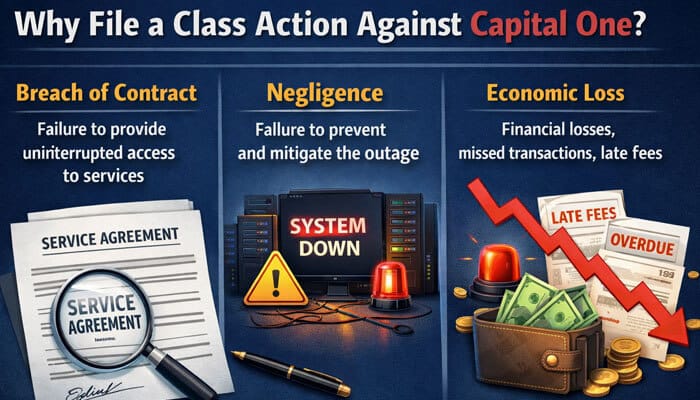
The Capital One outage class action lawsuit was filed to hold the bank accountable for failing to provide uninterrupted services. Affected consumers are seeking compensation for various forms of harm, including missed payments, lost time, and economic damages. Additionally, the lawsuit focuses on whether Capital One met the contractual obligations it made to its customers regarding service availability.
Legal Claims in the Lawsuit
The primary legal claims include:
- Breach of Contract: Customers argue that Capital One’s failure to provide uninterrupted access to services violates their service agreements.
- Negligence: Plaintiffs claim that Capital One should have taken greater precautions to avoid such an outage and failed to mitigate the risks.
- Economic Loss: Many plaintiffs seek damages for financial loss, including missed transactions, late fees, and other costs related to the outage.
Key Claims in the Capital One Outage Class Action Lawsuit
1. Breach of Contract
Capital One customers argue that the bank’s failure to provide reliable access to banking services constitutes a breach of contract. The service agreements between Capital One and its customers stipulate continuous access to online banking and credit card management, and the outage disrupted these essential services.
2. Negligence and Damages
Customers also allege negligence on the part of Capital One for failing to take proactive measures to prevent the outage. Many feel that the bank’s technological infrastructure was insufficient to handle unexpected issues, leading to unnecessary disruptions and financial damages.
3. Economic Loss Compensation
Plaintiffs are seeking compensation for the financial impact caused by the outage, including:
- Late Payment Fees: Customers who were unable to make payments due to the outage are seeking reimbursement for penalties incurred.
- Lost Time: Some claim that the outage caused them to spend hours on the phone with customer service or trying to resolve the issue.
- Business Losses: Small businesses that rely on Capital One for transactions and services are seeking compensation for financial losses incurred during the outage.
Who Is Eligible to Join the Lawsuit?
To qualify for joining the Capital One Outage Class Action, customers must meet the following criteria:
| Eligibility Criteria | Description |
| Account holders | Individuals or businesses with Capital One accounts during the outage period. |
| Financial loss | Proof of financial loss or significant disruption caused by the outage. |
| Proof of impact | Documentation such as account statements, transaction records, or outage screenshots. |
If you meet these criteria, you can join the class action by contacting the law firms handling the case.
How to Join the Capital One Outage Class Action
- Find Legal Representation: Reach out to a law firm handling the class action.
- Confirm Eligibility: Ensure you meet the criteria to join the lawsuit.
- Collect Documentation: Gather proof of your Capital One account and impact from the outage.
- Submit Your Claim: Provide the required documentation to the law firm.
- Meet Deadlines: Ensure all paperwork is submitted before the cutoff date.
Status Update: Latest News on the Lawsuit
As of 2026, the Capital One outage class action lawsuit is still ongoing. Here are the latest updates:
| Stage | Details |
| Court Motions | Discussions on whether the case should proceed to trial. |
| Settlement Discussions | Negotiations for a settlement are ongoing, but no final agreement has been made. |
| Capital One’s Efforts | Capital One has pledged to upgrade its infrastructure to prevent further outages. |
Capital One’s Response
Capital One has expressed regret for the outage and is working to address the underlying issues with its system. The bank has offered to compensate affected customers through direct reimbursement for late fees and other charges but is still in discussions about the total settlement for the class action.
Potential Outcomes and Compensation
Several potential outcomes exist for the lawsuit:
- Dismissal: If the court rules that Capital One is not liable, the lawsuit may be dismissed.
- Settlement: There could be a settlement where Capital One agrees to compensate affected customers without going to trial.
- Trial Verdict: If the case goes to trial, the court will decide whether Capital One is responsible for the outage and how much compensation plaintiffs should receive.
If the case results in a settlement, customers may receive compensation for lost time, late fees, and any other damages incurred due to the outage.
Regulatory Impact and Compliance Concerns
The Capital One outage may have regulatory implications. Regulatory bodies such as the Consumer Financial Protection Bureau (CFPB) and state regulators may examine the bank’s preparedness and its response to the outage. There could be fines or sanctions imposed if the bank is found to be in violation of consumer protection laws.
Examples from Similar Lawsuits
| Company | Settlement Amount | Reason for Lawsuit |
| Equifax | $700 million | Data breach affecting millions of users. |
| Robinhood | $10 million+ | Service outage impacting trading accounts. |
Customer Testimonials and Experiences
Numerous customers shared their frustration on social media and review sites:
-
“I couldn’t access my account, and it cost me late fees. I’m part of the lawsuit to get compensation.”
-
“As a small business owner, this outage impacted my operations. I had to delay payments to suppliers.”
These personal experiences emphasize the real-world consequences of the outage and support the legal claims.
Conclusion
The Capital One outage class action lawsuit is a significant legal case for customers who were affected by the 2025 system failure. The outage disrupted essential banking services, leading to missed payments, late fees, and financial losses for millions of users. This class action provides an opportunity for affected customers to seek compensation for the damages they incurred.
If you were impacted by the outage, it’s essential to understand the legal steps required to participate and ensure you meet any deadlines for joining the lawsuit. As the case continues to evolve, it’s important to stay updated on any settlement offers or court rulings that may impact the outcome.
Whether the case results in a settlement or proceeds to trial, customers affected by the outage may receive compensation for lost time, late fees, and other financial damages. By joining the lawsuit, affected individuals can hold Capital One accountable and take a step toward securing justice for the disruption they faced.
Capital One Outage Class Action Lawsuit FAQs
1. What is the Capital One outage class action lawsuit?
The lawsuit was filed by Capital One customers impacted by the 2025 outage, seeking compensation for financial losses and disruptions. It targets damages from the service failure, including missed payments.
2. Who can join the Capital One outage lawsuit?
Any Capital One account holder affected by the outage can join the class action. Eligibility includes financial losses or significant disruption due to the outage.
3. How do I submit a claim for the Capital One outage lawsuit?
To join the lawsuit, contact the law firms handling the case and provide required documentation, such as account statements and transaction records. Be sure to meet the filing deadline.
4. How much compensation can I expect from the Capital One class action?
The settlement amount is not finalized yet, but affected customers are seeking reimbursement for late fees, lost time, and business losses caused by the outage.
5. What are the potential outcomes of the lawsuit?
The case could result in dismissal, a settlement, or a trial verdict, where the court determines Capital One’s responsibility and the compensation amount.
Disclaimer: This article is for informational purposes only and does not constitute legal advice. Please consult with a qualified attorney for personalized guidance on joining the Capital One outage class action lawsuit.