


The legal industry is evolving rapidly as technology transforms how attorneys research cases, analyze court decisions, and prepare litigation strategies. Traditional legal research often requires reviewing thousands of documents, court filings, and legal opinions across different systems. This process can be slow, fragmented, and difficult to manage. Trellis Law is changing this dynamic by offering a more efficient, streamlined approach to legal research.
Modern legal technology platforms are solving these challenges by organizing court data into accessible, searchable systems. One platform helping drive this transformation is Trellis Law, a legal research and litigation analytics platform designed to provide structured access to state trial court records.
Trellis Law allows legal professionals to analyze case filings, understand judicial patterns, and identify litigation trends using advanced data tools. Instead of manually searching multiple court systems, attorneys can access court records, filings, and legal insights in one centralized platform.
This guide explains what Trellis Law is, how it works, its key features, benefits, pricing overview, and how it is transforming modern legal research.
What Is Trellis Law?
Trellis Law is a legal research platform focused on state trial court data and litigation analytics. It aggregates court records, legal filings, judicial rulings, and case histories from trial courts and organizes them into a structured, searchable database.
Most traditional legal research platforms focus heavily on appellate and federal court decisions. However, the majority of legal disputes occur in trial courts, where detailed litigation activity takes place. Trellis Law helps bridge this gap by making trial court data easier to access and analyze.
Key Information About Trellis Law
| Feature | Description |
| Platform Type | Legal research and litigation analytics |
| Main Focus | State trial court records |
| Users | Lawyers, law firms, corporate legal teams |
| Core Technology | Data analytics and AI-driven search |
| Primary Purpose | Improve legal research and litigation strategy |
By centralizing trial court records, Trellis Law allows legal professionals to analyze past cases and better understand how courts handle specific legal issues.
Why Trellis Law Is Important for Legal Research
Legal research is a critical part of preparing legal arguments and predicting potential case outcomes. However, accessing trial court records can be difficult because many court systems store records separately.
Trellis Law improves accessibility by organizing court data into a single searchable platform.
Challenges in Traditional Legal Research
- Court data is spread across different jurisdictions
- Trial court records are often difficult to locate
- Legal professionals spend hours reviewing documents
- Research tools may lack litigation analytics
How Trellis Law Solves These Problems
- Centralizes trial court data
- Provides structured legal search tools
- Offers judge analytics and case insights
- Reduces time spent on manual research
These capabilities help attorneys make more informed legal decisions.
How Trellis Law Works
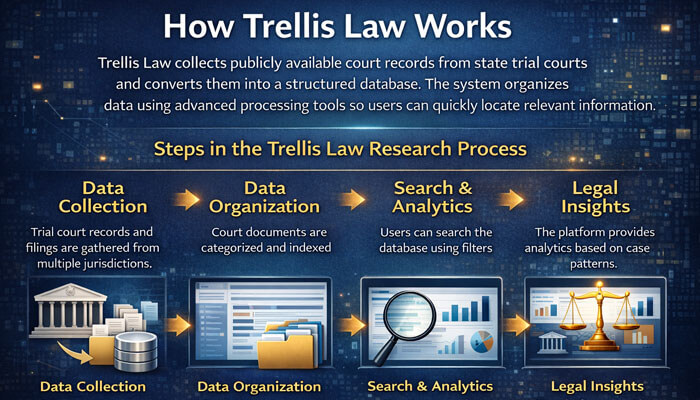
Trellis Law collects publicly available court records from state trial courts and converts them into a structured database.
The system organizes data using advanced processing tools so users can quickly locate relevant information.
Steps in the Trellis Law Research Process
- Data Collection – Trial court records and filings are gathered from multiple jurisdictions.
- Data Organization – Court documents are categorized and indexed.
- Search & Analytics – Users can search the database using filters.
- Legal Insights – The platform provides analytics based on case patterns.
Search Filters Available in Trellis Law
- Judge name
- Case type
- Filing date
- Court jurisdiction
- Legal issue
- Attorney name
These filters allow lawyers to quickly identify relevant cases and analyze similar legal disputes.
Key Features of Trellis Law
Extensive Trial Court Database
Trellis Law aggregates millions of legal filings, motions, and court documents from state trial courts.
Examples of Available Records
- Case filings
- Complaints and motions
- Judicial rulings
- Case schedules
- Litigation outcomes
This database provides lawyers with real examples of how courts have handled legal disputes.
Judge Analytics
Judge analytics is one of the most powerful features of Trellis Law. The platform examines historical rulings to reveal patterns in judicial decision-making.
Judge Analytics Insights
- Motion approval rates
- Judicial decision trends
- Historical case rulings
- Court behavior patterns
These insights help attorneys understand how judges may respond to specific legal arguments.
Advanced Legal Search
Trellis Law provides a powerful legal search engine designed for complex research.
Search Capabilities
- Case name search
- Party name search
- Attorney search
- Judge search
- Motion type search
This feature helps lawyers locate relevant legal information quickly.
Litigation Analytics
Litigation analytics tools analyze large datasets of court cases to identify patterns in legal outcomes.
Litigation Insights May Include
- Success rates of certain motions
- Case resolution trends
- Historical litigation strategies
- Court activity patterns
These analytics help attorneys evaluate risks and potential outcomes.
Case Monitoring and Tracking
Trellis Law also allows legal professionals to monitor active cases.
Monitoring Features
- Case alerts
- Filing notifications
- Court activity tracking
- Document updates
This functionality helps attorneys stay informed about ongoing litigation.
Benefits of Using Trellis Law
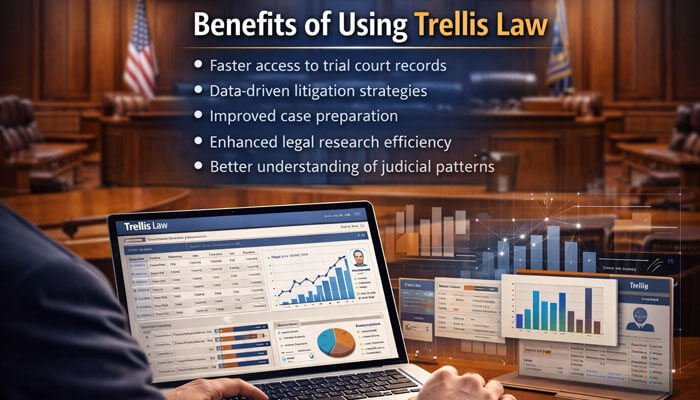
Legal technology platforms like Trellis Law provide several benefits for legal professionals.
Key Advantages
- Faster access to trial court records
- Data-driven litigation strategies
- Improved case preparation
- Enhanced legal research efficiency
- Better understanding of judicial patterns
Impact on Legal Workflows
| Traditional Research | Trellis Law Approach |
| Manual document review | Automated legal search |
| Limited court data | Extensive trial court database |
| Slow research process | Faster research tools |
| Limited analytics | Advanced litigation insights |
By simplifying legal research, Trellis Law helps legal teams work more efficiently.
Pros and Cons of Trellis Law
Pros
- Large database of trial court records
- Advanced search capabilities
- Judge analytics tools
- Litigation analytics insights
- Faster legal research workflow
Cons
- Coverage varies by jurisdiction
- Subscription pricing may be expensive for small firms
- Some court records may not be publicly available
Trellis Law Pricing Overview
Trellis Law operates using a subscription-based pricing model designed primarily for legal professionals, law firms, and corporate legal teams.
Pricing typically depends on factors such as:
- Number of users
- Level of data access
- Jurisdictions included
- Analytics features
Large law firms and organizations often select enterprise plans that provide deeper data access and more advanced litigation analytics tools.
Trellis Law vs Traditional Legal Research
Traditional legal research platforms mainly focus on appellate court decisions. Trellis Law emphasizes trial court litigation data, which offers deeper insight into how cases are handled in everyday litigation.
Comparison Table
| Feature | Trellis Law | Traditional Legal Databases |
| Trial Court Data | Extensive coverage | Limited |
| Legal Analytics | Advanced analytics | Minimal |
| Judge Insights | Available | Rare |
| Research Speed | Fast searchable database | Often manual |
| Litigation Trends | Data-driven insights | Limited |
This difference makes Trellis Law especially valuable for litigation-focused legal research.
Who Uses Trellis Law?
Trellis Law is used by professionals across the legal industry.
- Attorneys and Lawyers
Lawyers use the platform to research cases, analyze judicial behavior, and prepare litigation strategies.
- Law Firms
Law firms rely on Trellis Law for case research, litigation insights, and strategic planning.
- Corporate Legal Teams
Companies use litigation analytics tools to monitor disputes and assess legal risk.
- Legal Researchers and Students
Researchers and law students use the platform to study legal trends and court decisions.
The Future of Legal Technology and Trellis Law
The legal profession is increasingly adopting technologies such as artificial intelligence, machine learning, and data analytics. These technologies help automate research and organize large volumes of legal information.
Emerging Trends in Legal Technology
- AI-powered legal research
- Predictive litigation analytics
- Automated legal summaries
- Integrated case management systems
Platforms like Trellis Law represent an important step toward a more data-driven legal industry.
Final Thoughts
Trellis Law represents a significant advancement in modern legal research. Organizing trial court records into a searchable analytics platform, it enables legal professionals to conduct research more efficiently and develop stronger litigation strategies.
Instead of relying solely on traditional research methods, attorneys can now analyze litigation patterns, evaluate judicial behavior, and prepare cases using real data insights.
As legal technology continues to evolve, platforms like Trellis Law are expected to play an increasingly important role in shaping the future of legal research and litigation intelligence.
Frequently Asked Questions (FAQs)
1. What is Trellis Law used for?
Trellis Law is a legal research and litigation analytics platform that provides access to state trial court records, case filings, and judicial data to help lawyers analyze legal trends and prepare cases.
2. Who can use Trellis Law?
Trellis Law is primarily used by attorneys, law firms, corporate legal teams, and legal researchers who need access to trial court records and litigation analytics.
3. How does Trellis Law help lawyers?
The platform helps lawyers conduct faster legal research, analyze judge behavior, review case outcomes, and develop data-driven litigation strategies.
4. Is Trellis Law a legal database?
Yes, Trellis Law functions as a legal database that organizes trial court records, filings, and judicial decisions into a searchable platform.
5. Why is trial court data important in legal research?
Trial court data is important because most legal disputes are resolved at the trial court level. Access to this data helps legal professionals understand litigation patterns, judicial decisions, and legal trends.
Disclaimer: This article is for informational purposes only and does not constitute legal advice. Information may change over time, so readers should verify details and consult a qualified legal professional before making legal decisions.