



If you are asking “why is my lawyer taking so long to settle my case,” you are not alone. Many clients become frustrated when a legal claim takes months or even years to resolve. Waiting for a settlement can feel stressful, especially if you are dealing with medical bills, lost income, or financial pressure.
The reality is that most legal cases take time because the settlement process involves multiple steps. Lawyers must gather evidence, review medical records, negotiate with insurance companies, evaluate damages, and sometimes wait for court schedules or mediation dates.
In many situations, the delay is not caused by the lawyer alone. Insurance companies, medical providers, and court procedures can all affect how quickly a case moves forward.
Understanding the real reasons behind settlement delays can help you see where your case stands and whether the timeline is normal.
Why Is My Lawyer Taking So Long to Settle My Case?
In most situations, a lawyer takes longer to settle a case because they must gather evidence, review medical records, calculate damages, and negotiate with insurance companies. Settlement delays can also occur due to disputed liability, ongoing medical treatment, court schedules, or insurance company review processes.
Key Takeaways
- Legal settlements can take months or years depending on the complexity of the case.
- Insurance companies and evidence collection are common causes of delays.
- Lawyers often wait for maximum medical improvement before negotiating settlement.
- Communication with your lawyer can help you understand the current stage of your case.
The Short Answer: Why Is My Lawyer Taking So Long to Settle My Case and Why Settlements Take Time
Legal settlements often take longer than people expect because cases must be fully prepared before negotiations can produce fair results. Many clients wonder why settlement takes so long, but the process involves gathering evidence, calculating damages, and negotiating with insurance companies.
A lawyer may delay settlement intentionally for strategic reasons. Settling too early can reduce the compensation you receive because the full value of the claim may not yet be clear.
For example, in personal injury cases, lawyers frequently wait until medical treatment is finished or until doctors determine maximum medical improvement (MMI). This helps ensure that future medical expenses and long-term impacts are properly calculated.
Additionally, settlement negotiations involve two parties. Even if your lawyer is ready to settle, the opposing side may move slowly or dispute liability, damages, or evidence.
Typical Timeline of a Settlement Case
Most legal settlements follow several stages. Delays often occur because each stage must be completed before the next one begins.
A typical settlement case may follow this timeline:
- Accident or incident occurs
- Medical treatment begins
- Evidence and documentation are collected
- Medical records and bills are reviewed
- A demand letter is sent to the insurance company
- The insurance company evaluates the claim
- Settlement negotiations begin
- Mediation or settlement conferences may occur
- A settlement agreement is reached
- Release forms are signed
- Settlement funds are distributed
Understanding these stages helps explain why some cases take longer than expected.
11 Real Reasons Why Is My Lawyer Taking So Long to Settle My Case
1. Your Medical Treatment Is Still Ongoing
In injury cases, settlement negotiations often begin only after the injured person completes treatment or reaches a stable medical condition.
If you settle too early, you may lose the ability to claim compensation for future treatment. Lawyers therefore wait until the full impact of the injury is known before negotiating seriously.
2. Your Lawyer Is Waiting for Maximum Medical Improvement (MMI)
Maximum medical improvement means your condition has stabilized and doctors can estimate long-term recovery or permanent limitations.
Reaching MMI allows lawyers to calculate damages such as:
- future medical expenses
- lost earning capacity
- long-term disability
- rehabilitation costs
Without this information, settlement negotiations may undervalue your case.
3. Medical Records and Bills Must Be Collected

Medical documentation is essential for proving damages. Lawyers must gather records from hospitals, clinics, specialists, and therapists.
This process can take time because:
- hospitals may respond slowly
- multiple providers may be involved
- records must be reviewed carefully
Even a single missing document can delay settlement negotiations.
4. The Insurance Company May Be Delaying
Insurance companies often move slowly during settlement negotiations.
Some insurers intentionally delay negotiations to pressure claimants into accepting lower settlement offers. Others require extensive internal reviews before approving payment.
Insurance adjusters may:
- question medical treatments
- dispute liability
- request additional evidence
- delay responding to settlement demands
These tactics can significantly extend the timeline.
5. Liability Is Being Disputed
If the other party denies responsibility, settlement negotiations become more complicated.
Your lawyer may need to collect additional evidence such as:
- accident reports
- surveillance footage
- witness statements
- expert testimony
Until liability is clearly established, the opposing side may refuse to offer a fair settlement.
6. The Case Is in the Discovery Phase
If a lawsuit has been filed, both sides must exchange information during a legal process called discovery.
Discovery can include:
- written questions (interrogatories)
- document requests
- depositions
- expert witness reports
This phase can take several months because each side must analyze evidence before discussing settlement.
7. Expert Witnesses May Be Needed
Some cases require expert opinions to establish damages or liability.
Experts may include:
- medical specialists
- accident reconstruction professionals
- economic loss analysts
- vocational experts
Preparing expert reports takes time, but their testimony can significantly increase the value of a case.
8. Multiple Parties Are Involved
Cases involving several defendants often take longer to settle.
For example, a car accident might involve:
- multiple drivers
- several insurance companies
- vehicle manufacturers
- employers of drivers
Each party may negotiate separately, which slows the overall process.
9. Settlement Conferences or Mediation Must Be Scheduled
Courts often encourage or require mediation before a case goes to trial.
Mediation involves a neutral third party who helps both sides negotiate a settlement.
However, mediation scheduling depends on:
- court calendars
- mediator availability
- lawyer schedules
It may take weeks or months to arrange.
10. Medical or Insurance Liens Must Be Resolved
Even after a settlement is reached, payment may be delayed if liens must be resolved.
A lien means a third party has the right to recover expenses from the settlement.
Common liens include:
- health insurance reimbursement
- Medicare or Medicaid claims
- hospital bills
- workers’ compensation payments
Your lawyer must negotiate and resolve these liens before distributing settlement funds.
11. Final Settlement Paperwork Takes Time
Once both sides agree on a settlement amount, legal paperwork must still be completed.
This may include:
- signing release agreements
- processing settlement checks
- placing funds in a trust account
- deducting legal fees and expenses
- distributing remaining funds to the client
Although this stage is usually faster, it can still take several weeks.
What Happens After a Demand Letter Is Sent?
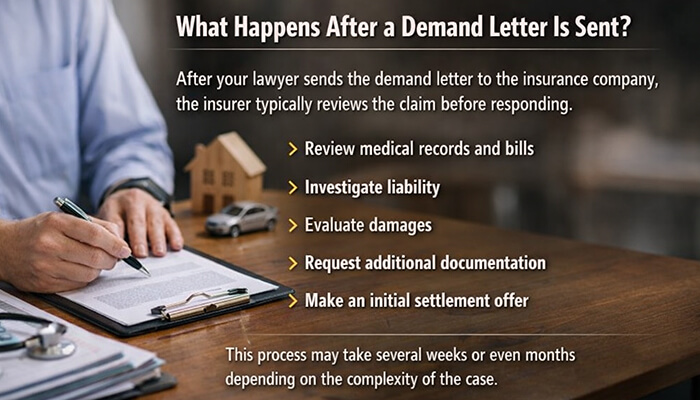
A demand letter is usually the first step in formal settlement negotiations.
After your lawyer sends the demand letter to the insurance company, the insurer typically reviews the claim before responding.
The insurance company may:
- review medical records and bills
- investigate liability
- evaluate damages
- request additional documentation
- make an initial settlement offer
Depending on the complexity of the case, this process may take several weeks or even months.
Why Insurance Companies Sometimes Delay Settlements
Insurance companies are businesses that aim to minimize payouts. Because of this, some insurers may intentionally slow down negotiations, which can contribute to personal injury settlement delays.
Common delay tactics include:
- requesting repeated documentation
- disputing medical treatments
- offering low initial settlement offers
- delaying responses to negotiation letters
- waiting to see if the claimant accepts less compensation
These strategies can prolong settlement negotiations.
How You Can Help Speed Up Your Settlement
While many delays are outside your control, there are steps you can take to help move your case forward.
You can help by:
- attending all medical appointments
- providing documents quickly when requested
- responding promptly to your lawyer
- keeping records of medical expenses and treatments
- asking for periodic case updates
Staying organized and responsive can prevent unnecessary delays.
Is This Normal or Is Your Lawyer Actually Delaying Your Case?
In most situations, settlement delays are normal and necessary to protect your financial interests.
Signs the Delay Is Normal
- your lawyer provides regular updates
- medical treatment is ongoing
- negotiations are actively happening
- the insurance company is reviewing evidence
- discovery or mediation is in progress
These signs usually indicate the case is moving through the normal legal process.
When Should You Be Concerned About Settlement Delays?
Although delays are common, certain situations may require attention.
You may want to investigate further if:
- your lawyer does not respond for several months
- you receive no updates about your case
- deadlines appear to be missed
- your lawyer cannot clearly explain the delay
If this occurs, requesting a detailed case update or seeking a second opinion may be appropriate.
What You Should Ask Your Lawyer
If you are worried about delays, asking direct questions can help clarify the situation.
Consider asking:
- What stage is my case currently in?
- Have settlement negotiations started?
- Are we waiting on medical records or treatment?
- Has the insurance company made any offers?
- What is the next major step in the case?
Clear communication can help reduce uncertainty.
Can You Change Lawyers If Your Case Is Taking Too Long?
In most legal systems, clients have the right to change lawyers during a case.
However, before switching attorneys, you should consider:
- the stage of your case
- the reason for the delay
- potential legal fees or agreements
- whether a new lawyer would improve the situation
Many delays are caused by legal procedures rather than attorney negligence.
How Long Does It Usually Take to Settle a Case?
Settlement timelines vary depending on the complexity of the case.
Simple claims may settle within a few months, while more complex disputes may take one to three years or longer.
Factors affecting settlement timelines include:
- severity of injuries
- number of parties involved
- insurance company cooperation
- court schedules
- strength of evidence
Each case is unique, so timelines can vary significantly.
What Happens After a Settlement Is Reached?
Once both parties agree on a settlement amount, several steps must occur before payment is received.
The process usually includes:
- signing a settlement agreement
- issuing a settlement payment
- depositing funds into the lawyer’s trust account
- paying outstanding liens or medical bills
- deducting attorney fees and case expenses
- distributing the remaining funds to the client
This stage typically takes several weeks.
Final Thoughts
Asking “why is my lawyer taking so long to settle my case” is understandable when you are waiting for financial compensation or closure.
In many cases, delays occur because lawyers are gathering evidence, negotiating with insurance companies, or ensuring that the full value of your claim is properly calculated.
Although waiting can be frustrating, careful preparation often leads to stronger settlement outcomes.
If you are unsure about the progress of your case, communicating openly with your lawyer and requesting a clear update about the current stage and next steps is usually the best approach.
Frequently Asked Questions (FAQs)
1. Why is my lawyer taking so long to settle my case even after negotiations start?
If you are wondering why your lawyer is taking so long to settle your case, negotiations may still be ongoing with the insurance company. Insurers often review medical records, evaluate liability, and make multiple settlement offers before reaching an agreement. This negotiation phase can take weeks or months depending on the complexity of the claim.
2. Why is my lawyer taking so long to settle my case after a demand letter?
After a demand letter is sent, the insurance company must investigate the claim, review medical documentation, and evaluate potential damages. If you are asking why your lawyer is taking so long to settle your case after a demand letter, it is often because the insurer is still analyzing the claim or negotiating settlement terms.
3. Why is my lawyer taking so long to settle my case when liability is clear?
Even when liability appears obvious, settlement delays can occur. If you are asking why your lawyer is taking so long to settle your case, the delay may be related to calculating damages, reviewing medical treatment costs, resolving insurance liens, or negotiating a higher settlement amount.
4. Why is my lawyer taking so long to settle my case after mediation?
If you are asking why your lawyer is taking so long to settle your case after mediation, it may be because both parties are still reviewing the proposed settlement terms. In some cases, additional negotiations or internal insurance approvals are required before the settlement can be finalized.
5. Why is my lawyer taking so long to settle my case and should I be worried?
Many clients worry when a case takes a long time to settle. If you are asking why your lawyer is taking so long to settle your case, delays are often part of the normal legal process. However, if your lawyer is not communicating regularly or cannot explain the delay, it may be reasonable to request a detailed update about your case.
Disclaimer:
This article is for informational purposes only and should not be considered legal advice. Legal processes and timelines vary depending on jurisdiction and case type. For advice regarding your specific situation, consult a qualified attorney.