


A tax rise lawsuit refers to legal actions taken by individuals, businesses, or advocacy groups to challenge an increase in taxes imposed by the government. These lawsuits typically argue that the tax hike is unconstitutional, unfair, or improperly enacted. Taxpayers may file lawsuits if they believe the rise violates existing tax laws, exceeds legal limits, or disproportionately impacts certain groups. Such lawsuits aim to protect taxpayers’ rights, ensure fair taxation, and prevent unlawful tax burdens from affecting individuals and businesses.
In this article, we will explore the Tax Rise Lawsuit process, key allegations, potential outcomes, and what you need to know if you’re impacted by a tax hike.
What Is a Tax Rise Lawsuit?
A tax rise lawsuit is a legal action taken to contest a rise in taxes. Taxpayers might challenge these increases on various grounds, including unfairness, violation of constitutional rights, or procedural issues in how the tax rise was implemented. These lawsuits often involve individuals, businesses, or advocacy groups filing complaints in court to have the tax increase reversed or reduced.
Why Do Tax Rise Lawsuits Occur?
- Unfair Tax Burden: People or organizations feel that the tax increase disproportionately impacts them.
- Legal Violations: Taxpayers argue that the increase violates existing tax laws or constitutional principles.
- Economic Impact: Individuals and businesses claim that the tax rise negatively affects their financial situation or the economy at large.
Common Grounds for Filing a Tax Rise Lawsuit
Taxpayers may file lawsuits against tax hikes based on several legal reasons:
1. Violation of Tax Laws
- Improper Legislation: If the tax increase is seen as a violation of existing tax laws or procedural requirements.
- Excessive Taxation. In some cases, a tax rise might exceed what is allowed under current tax regulations.
2. Unconstitutional Tax Increases
Taxpayers may argue that a tax rise violates constitutional protections such as the right to fair treatment or the prohibition of excessive taxes.
3. Failure to Follow Procedures
Legal challenges often arise when the government does not follow the proper steps when enacting a tax increase, including a lack of adequate public notice or failure to consult with the necessary legislative bodies.
Who Is Eligible to File a Tax Rise Lawsuit?
- Individual taxpayers directly affected by the tax increase
- Businesses or corporations impacted financially
- Trade associations representing affected members
- Local governments (in limited cases)
How Does a Tax Rise Lawsuit Work?
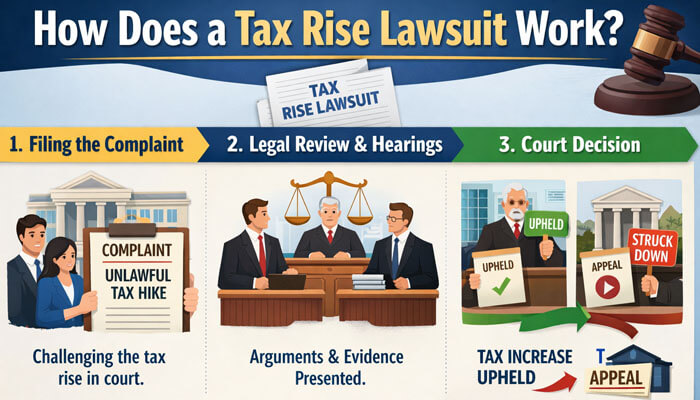
A tax rise lawsuit generally follows a formal process in the courts. Here’s a simplified version of how it works:
1. Filing the Complaint
- The individual or business challenging the tax rise files a complaint with the court.
- The complaint must clearly state why the tax rise is deemed unlawful.
2. Legal Review and Hearings
- The case proceeds through legal reviews and hearings, where both parties (the plaintiff and government) present their arguments.
- A judge will review evidence, including tax laws, economic impact, and constitutional arguments.
3. Court Decision
- The judge will issue a ruling, which could either uphold the tax increase or strike it down.
- In some cases, the case may be appealed to a higher court if either party disagrees with the ruling.
Key Examples of Tax Rise Lawsuits
Here are some notable examples of tax rise lawsuits that have made headlines:
1. California Proposition 13 Lawsuit
- In California, the state’s Proposition 13, which limits property tax increases, faced legal challenges from local governments. Taxpayers argued that these restrictions were unfair to them, and the case went through several rounds of legal review.
2. International Tax Disputes
- Countries like the UK and France have seen numerous tax rise lawsuits from businesses claiming that proposed tax increases would negatively impact their operations. For example, the UK faced legal action from corporations protesting a digital services tax aimed at large tech firms.
3. Local Sales Tax Hike Lawsuits
- Several U.S. states have faced lawsuits over local sales tax hikes, where businesses challenge the increase based on its potential to harm their profitability.
Impact of a Tax Rise Lawsuit on Businesses and Individuals
For Businesses
- Businesses challenging a tax rise may claim that the increase will negatively affect their bottom line, drive up costs, or discourage investment.
- A successful lawsuit could mean that the business is spared from the tax rise, allowing for continued profitability without the additional burden.
For Individuals
- Individuals may challenge tax rises if they feel the increase is too steep or that they are unfairly impacted.
- A ruling in favor of individuals could lead to a reduction in taxes owed, providing financial relief.
Tax Rise Lawsuit Timeline: Key Stages and Estimated Dates
| Stage | Description | Estimated Timeline |
| Initial Tax Increase | The government announces a tax rise at the local, state, or federal level. | Month 1 |
| Complaint Filing | Taxpayers or organizations file a lawsuit challenging the tax hike. | Month 2–3 |
| Legal Review | The court reviews the lawsuit and sets hearing dates. | Month 3–6 |
| Court Hearings and Evidence | Both parties present their cases, including supporting evidence. | Month 6–12 |
| Court Decision | The judge makes a ruling on the legality of the tax rise. | Month 12–18 |
| Appeals (if applicable) | Either party may appeal the court’s decision, prolonging the process. | Month 18–36 |
| Outcome | A successful lawsuit can lead to a reduction or elimination of the tax rise. | Month 36 or longer |
How to Prepare for a Tax Rise Lawsuit
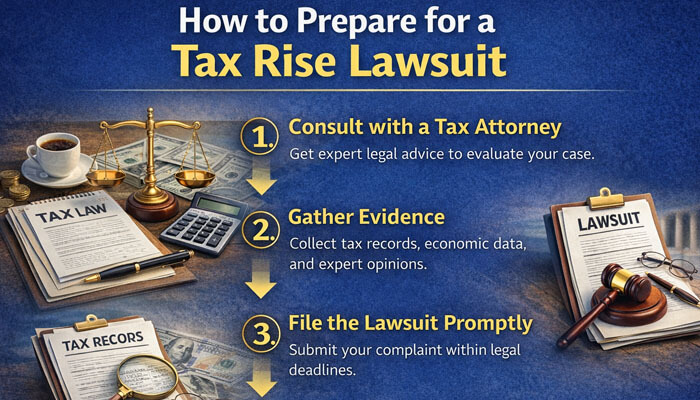
If you or your business is considering filing a tax-rise lawsuit, here are the steps you can take:
1. Consult with a Tax Attorney: A qualified tax attorney can help you understand whether you have a valid case and guide you through the legal process.
2. Gather Evidence: Collect evidence that supports your case, such as tax documentation, economic data, or expert opinions on how the tax rise affects your situation.
3. File the Lawsuit Promptly: Lawsuits involving taxes often have strict deadlines. Make sure to file your complaint within the required timeframe.
Conclusion
A tax rise lawsuit can be a powerful tool for individuals and businesses who feel that tax increases are unfair, unconstitutional, or improperly implemented. Whether challenging a local sales tax hike or a statewide increase, understanding the legal process, grounds for filing, and potential outcomes is key.
If you’re considering challenging a tax rise, be sure to consult with an attorney to evaluate your case and determine the best course of action. With the right guidance, a tax rise lawsuit could provide significant financial relief and uphold your rights as a taxpayer.
Tax Rise Lawsuit FAQs
1. Who filed the tax rise lawsuit?
Individuals, businesses, or advocacy groups file lawsuits when they believe a tax rise is unlawful, unfair, or violates their rights under the law.
2. Why is the tax rise lawsuit important?
It ensures tax increases are implemented fairly and legally, protecting taxpayers from unjust or unconstitutional taxation and ensuring proper procedures are followed.
3. What are the main allegations in the lawsuit?
The key allegations include violations of tax laws, unconstitutional taxation, failure to follow legal procedures, and the discriminatory impact of the tax rise on specific groups.
4. What could happen if the lawsuit succeeds?
If successful, the tax rise may be reversed or reduced, and affected taxpayers could be refunded for overpaid taxes.
5. How does this lawsuit affect everyday taxpayers?
It helps everyday taxpayers by challenging unfair tax increases, potentially reducing their financial burden and ensuring a more transparent, equitable tax system.
6. How long will the tax rise lawsuit take?
The lawsuit could take anywhere from several months to a few years, depending on legal complexity, the case’s scope, and whether it goes through multiple rounds of appeal.
Disclaimer: This article is for informational purposes only and should not be considered legal advice. For personalized guidance on a tax rise lawsuit, consult a qualified attorney who specializes in tax law.