



If you are researching the average medical malpractice settlement in the United States, you are likely trying to understand what a case might realistically be worth. Settlement amounts vary widely depending on the state, the severity of injury, and the type of medical error involved.
This guide explains:
- What is the average settlement for medical malpractice
- How much is the average medical malpractice settlement in real cases
- What is the average payout for medical negligence
- Why “average” numbers can be misleading
- When you may need a lawyer
This is general U.S. legal information, not specific legal advice.
What Is the Average Settlement for Medical Malpractice?
Across the United States, reported averages often fall between:
- $250,000 to $500,000 for many non-fatal cases
- $500,000 to several million dollars in catastrophic injury cases
- Higher amounts in cases involving permanent disability, brain injury, or wrongful death
However, these figures combine thousands of very different cases. Many claims resolve for less than $100,000, while a small number of multi-million-dollar cases increase the overall average.
A more realistic way to think about the average settlement for medical malpractice is this:
Most moderate injury cases settle in the low-to-mid six figures, while life-altering injury cases can exceed seven figures.
But averages alone do not tell the full story.
How Much Is the Average Medical Malpractice Settlement by Case Type?
Settlement value depends heavily on the type of medical error involved.
1. Surgical Errors
Examples:
- Operating on the wrong site
- Leaving instruments inside the body
- Severe post-operative complications
These cases often settle between $300,000 and $1 million+, depending on lasting harm.
2. Misdiagnosis or Delayed Diagnosis
Common with:
- Cancer
- Stroke
- Heart attack
If the delay significantly reduces survival chances or causes permanent damage, settlements can reach high six or seven figures.
3. Birth Injuries
Severe birth injuries (e.g., oxygen deprivation leading to lifelong disability) are among the highest-value claims because they involve:
- Lifetime medical care
- Loss of earning capacity
- Long-term suffering
These cases can result in multi-million-dollar settlements.
4. Wrongful Death from Medical Negligence
If malpractice results in death, the average payout for medical negligence often reflects:
- Lost future income
- Funeral expenses
- Loss of companionship
- Pain and suffering before death
Settlement amounts vary widely depending on age, income, and state law. Some states cap non-economic damages, which can significantly limit payouts.
Why State Law Matters

Medical malpractice law is primarily governed by state law, not federal law.
This means your potential average medical malpractice settlement depends heavily on where the case is filed.
Key differences between states include:
1. Damage Caps
Some states limit:
- Non-economic damages (pain and suffering)
- Total recoverable damages
For example:
- California has long imposed caps on non-economic damages (recently adjusted under state law reforms).
- Texas limits certain damages in medical malpractice cases.
- Florida has had complex litigation over damage caps in past years.
In states without caps, jury verdicts and settlements may be significantly higher.
2. Statute of Limitations
Each state sets a deadline for filing a malpractice claim — often 1 to 3 years from discovery of injury. Missing this deadline usually ends the case entirely.
3. Pre-Suit Requirements
Some states require:
- Medical expert affidavits
- Pre-suit notices
- Mandatory review panels
These procedural steps affect both cost and settlement leverage.
What Influences the Average Settlement for Medical Malpractice?
Rather than focusing only on averages, courts and insurers evaluate specific damages.
1. Severity of Injury
Permanent disability, paralysis, or brain injury dramatically increases value.
2. Economic Damages
These include:
- Medical bills (past and future)
- Lost wages
- Loss of future earning capacity
- Rehabilitation costs
Cases with large documented economic losses typically result in higher settlements.
3. Non-Economic Damages
These cover:
- Pain and suffering
- Emotional distress
- Loss of enjoyment of life
In capped states, this category may be limited by statute.
4. Strength of Liability Evidence
Medical malpractice cases require proof that the provider:
- Owed a duty of care
- Breached the medical standard of care
- Caused measurable harm
Weak causation evidence can significantly reduce settlement value — even if an error occurred.
5. Insurance Policy Limits
Hospitals and physicians carry malpractice insurance. Settlement discussions are often influenced by policy limits, especially in moderate cases.
Jury Verdict vs Settlement in Medical Malpractice Cases
Most medical malpractice claims resolve through settlement rather than trial. Here’s how they compare:
| Factor | Settlement | Jury Verdict |
| Speed | Faster resolution (often before trial) | Can take years including appeals |
| Risk Level | More predictable outcome | Highly unpredictable |
| Average Payout Size | Often lower than top jury awards | Can be higher — but not guaranteed |
| Legal Costs | Lower overall litigation costs | Much higher due to trial prep & experts |
| Privacy | Often confidential | Public record |
| Emotional Stress | Less stressful | More stressful (court testimony required) |
| Appeal Risk | Rare | High possibility of appeal |
Although jury verdicts can exceed several million dollars, the majority of malpractice claims resolve through negotiated settlement. This is why the “average medical malpractice settlement” tends to be more moderate than publicly reported verdicts.
Common Misconceptions About Average Medical Malpractice Settlement Amounts
Myth: Every malpractice case is worth millions.
Fact: Not true. Most cases do not reach seven figures.
Myth: If there was a mistake, you automatically win.
Fact: Medical errors alone are not enough. You must prove causation and damages.
Myth: Average numbers tell me what my case is worth.
Fact: Averages combine minor and catastrophic cases, which skews perception.
Do You Need a Lawyer for a Medical Malpractice Case?
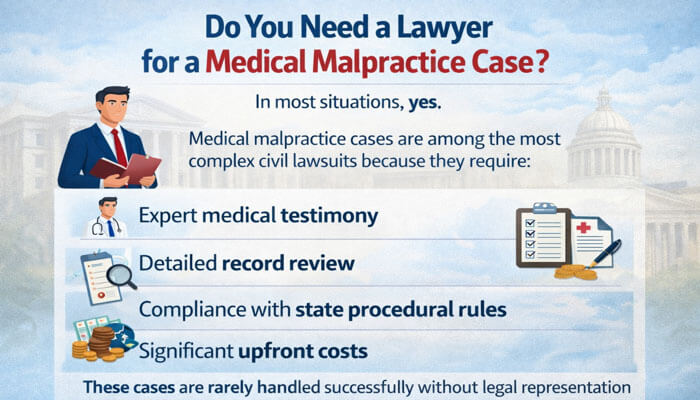
In most situations, yes.
Medical malpractice cases are among the most complex civil lawsuits because they require:
- Expert medical testimony
- Detailed record review
- Compliance with state procedural rules
- Significant upfront costs
These cases are rarely handled successfully without legal representation.
When People Sometimes Avoid Filing
Some individuals decide not to pursue a claim if:
- Damages are relatively small
- Expert review suggests weak causation
- Filing costs exceed potential recovery
An initial case evaluation often helps determine viability before major expenses occur.
How Long Does a Medical Malpractice Case Take?
Typical timeline:
- 3–6 months: Case investigation and expert review
- 1–2+ years: Litigation process
- Additional time if trial or appeal occurs
Complex cases involving severe injuries often take longer due to expert testimony and negotiations.
Practical Next Steps If You Suspect Medical Negligence
- Request complete medical records immediately.
- Document symptoms and financial losses.
- Check your state’s statute of limitations.
- Consider consulting a malpractice attorney for case screening.
Early review is important because delays can eliminate legal options.
Final Summary
The average medical malpractice settlement in the U.S. often falls in the mid-six-figure range, but real outcomes vary significantly based on:
- State law
- Damage caps
- Injury severity
- Evidence strength
- Economic losses
If you are asking, “how much is the average medical malpractice settlement?” the honest answer is: it depends more on the facts of your case than on national averages.
Understanding your state’s laws and deadlines is just as important as knowing general payout figures.
Disclaimer
This article provides general legal information about U.S. medical malpractice settlements. Laws vary by state, and this is not legal advice for any specific situation.
Frequently Asked Questions (FAQs) on Medical Malpractice Settlements
1. Do most medical malpractice cases settle out of court?
Yes. The majority of medical malpractice claims resolve through settlement rather than trial. Settlements are generally faster, less expensive, and less risky than jury trials. Only a small percentage of cases go all the way to verdict.
2. What factors affect the average settlement for medical malpractice?
Several factors influence the average settlement for medical malpractice, including:
- Severity and permanence of injury
- Total medical expenses
- Lost income and future earning capacity
- Strength of expert testimony
- State damage caps
- Insurance policy limits
Stronger evidence and higher documented losses generally increase settlement value.
3. Are medical malpractice settlements taxable?
In most cases, compensation for physical injuries or illness is not taxable under federal law. However, punitive damages and certain interest payments may be taxable. Tax treatment can vary based on the structure of the settlement.
4. What Are the Odds of Winning a Medical Malpractice Lawsuit?
Medical malpractice cases are difficult to win. Many claims are dismissed or settled before trial. If a case goes to trial, doctors often win more than half the time. Strong expert testimony and clear proof of injury significantly improve the chances of success.
5. Is It Worth Suing for Medical Malpractice?
It can be worth suing if the injury is serious, permanent, and caused major financial loss. It may not be worth it for minor injuries because malpractice cases are expensive and time-consuming. The decision usually depends on the strength of evidence and the potential settlement value.