


Losing a loved one is devastating. When the death may have been caused by someone else’s negligence or misconduct, you might wonder: how do you prove wrongful death? The answer depends on your state laws, available evidence, and the legal process.
This guide explains how to prove wrongful death, the legal elements required, practical steps, and when you may need a lawyer.
Disclaimer: This article provides general legal information and is not legal advice. Consult a licensed attorney for guidance specific to your situation.
What Is a Wrongful Death Claim?
A wrongful death claim allows surviving family members to seek compensation when someone dies because of another person or entity’s negligence, recklessness, or intentional acts.
Common examples include:
- Fatal car accidents caused by another driver
- Medical malpractice resulting in death
- Workplace accidents
- Defective products leading to death
- Criminal acts like assault or manslaughter
Each state sets rules for who can file a claim, what damages are available, and the statute of limitations (deadline to file).
The Four Elements Needed to Prove Wrongful Death
To prove a wrongful death claim in court, you generally need evidence supporting four key elements:
1. Duty of Care
The defendant owed a legal obligation to the deceased.
Example: Drivers must follow traffic laws; doctors must follow medical standards.
2. Breach of Duty
The defendant failed to meet that obligation.
Example: A driver runs a red light; a doctor misdiagnoses a treatable illness.
3. Causation
The breach directly caused the death. Courts ask: Would the death have occurred “but for” the defendant’s actions?
4. Damages
Survivors experienced measurable losses due to the death. Common damages include:
- Lost income and financial support
- Funeral and burial expenses
- Emotional suffering and loss of companionship
Without clear evidence for each element, a wrongful death claim may not succeed.
How to Prove Wrongful Death: Practical Steps
1. Collect Medical and Accident Records
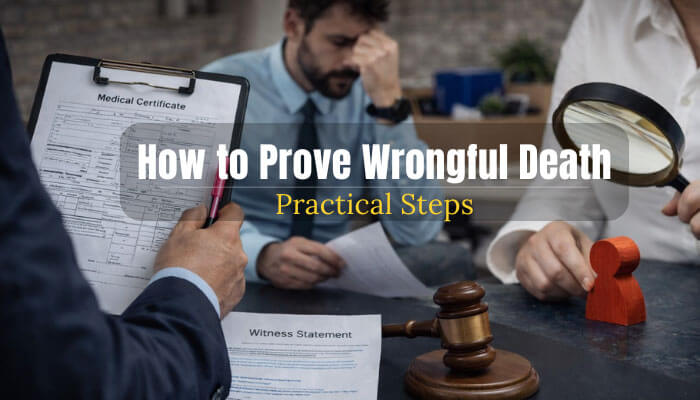
Obtain hospital records, autopsy reports, police reports, and investigative findings. These form the backbone of your claim.
2. Gather Witness Statements
Statements from people who saw the incident or know relevant facts help prove liability.
3. Document Financial Losses
Include pay stubs, tax records, and proof of funeral costs to support damages.
4. Identify Negligence or Intent
Show that the defendant acted in a way a reasonable person would not, or intentionally caused harm.
5. Hire Experts When Needed
Accident reconstruction, medical experts, or forensic specialists can clarify complex causes of death.
Real-World Examples of Proving Wrongful Death
Example 1: Car Accident Case
In a 2022 case in Florida, a driver ran a red light and caused a fatal collision. The family collected:
- Police and accident reports
- Eyewitness statements
- Medical examiner records
They successfully proved duty, breach, causation, and damages, resulting in a $1.2 million settlement.
Example 2: Medical Malpractice Case
In California, a patient died after a misdiagnosis during routine surgery. The family worked with medical experts to show:
- Breach of standard of care
- How the misdiagnosis caused the death
- Financial and emotional damages
The case settled for $2.5 million after demonstrating all four wrongful death elements.
State-Specific Considerations
Wrongful death laws vary widely by state:
- California: Only certain family members can file; damages include loss of love, companionship, and financial support.
- Florida: Filing deadlines are generally 2 years; damages may include lost parental guidance for minor children.
- New York: Courts allow claims for both pecuniary (financial) and non-pecuniary losses.
Tip: Check your state’s wrongful death statutes before filing. Small differences in eligibility or damages can affect your case.
Do You Need a Lawyer for a Wrongful Death Claim?
You don’t always need a lawyer, but they are often helpful:
When a lawyer is helpful:
- Liability is disputed
- The death involves medical malpractice or complex accidents
- Large financial damages are possible
- Multiple defendants or insurance companies are involved
When you might handle it yourself:
- The case is straightforward and uncontested
- Damages are minimal and easier to calculate
Many wrongful death lawyers work on a contingency fee basis (25–40% of the settlement or judgment).
Common Misconceptions About Proving Wrongful Death
Myth: “You can sue anyone after a loved one dies.”
Fact: Only certain relatives or representatives can file, depending on state law.
Myth: “If someone is at fault, you automatically get a large payout.”
Fact: Courts carefully review evidence, damages, and liability. Large settlements are not guaranteed.
Myth: “Filing is fast.”
Fact: Wrongful death cases can take months or years, especially if liability is contested.
Next Steps If You Suspect Wrongful Death
- Document everything – records, photos, communications, and witness info.
- Check your state statute of limitations – missing the deadline may bar recovery.
- Consider a consultation with a lawyer – even brief guidance can clarify risks and options.
- Decide on filing vs. settlement negotiation – depending on liability and damages.
Frequently Asked Questions (FAQ)
Q: How do you prove wrongful death?
A: By showing duty, breach, causation, and damages using records, witness statements, and expert testimony.
Q: How to prove wrongful death in court?
A: Collect evidence of negligence or intentional harm, document financial and emotional losses, and present clear causation.
Q: Do I need a lawyer for a wrongful death claim?
A: Not always, but a lawyer is usually helpful in complex or high-stakes cases. Simple uncontested cases may be handled independently.
Q: How long does it take to win a wrongful death case?
A: Settlements can take months; trials may take years depending on complexity and jurisdiction.
Q: Who can file a wrongful death lawsuit?
A: Typically spouses, children, parents, or legally appointed representatives, varying by state.
Conclusion
Proving wrongful death requires careful documentation, clear evidence, and a thorough understanding of the legal elements: duty, breach, causation, and damages. While the process can be complex, following practical steps—collecting records, gathering witness statements, documenting financial and emotional losses, and consulting experts—can strengthen your case.
State laws vary, so knowing your state-specific rules and deadlines is critical. In many situations, working with an experienced wrongful death lawyer can improve your chances of a successful claim, especially when liability or damages are disputed.
Ultimately, the goal of a wrongful death claim is not only to seek compensation but also to ensure accountability and support for surviving family members. Careful preparation, evidence, and professional guidance are key to navigating this challenging process successfully.