

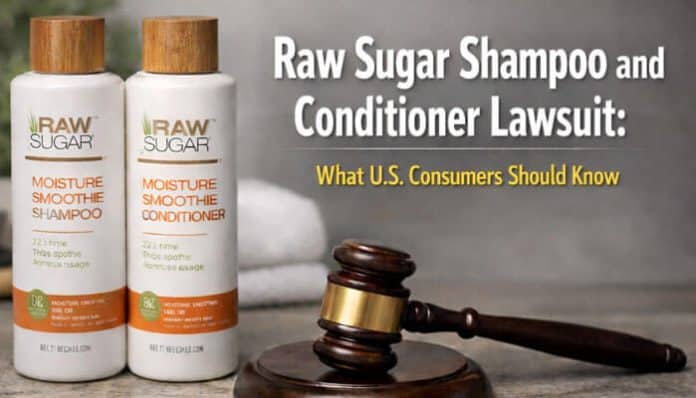

The Raw Sugar shampoo and conditioner lawsuit refers to consumer discussions and potential legal claims involving allegations of scalp irritation, hair shedding, and marketing concerns related to Raw Sugar Living products.
If you are researching whether an active case exists, whether compensation is available, or whether you may have a legal claim, this guide explains the issue in clear legal terms — without exaggeration or settlement speculation.
About Raw Sugar Living
Raw Sugar Living is a U.S.-based personal care brand that markets shampoos, conditioners, and body products using plant-based ingredients and “clean” branding. Its products are widely sold through major national retailers.
Online discussions surrounding the brand typically focus on:
- Ingredient safety concerns
- Hair loss or scalp irritation complaints
- Marketing terms such as “natural” or “clean”
It is important to distinguish between consumer complaints online and formal court filings. Not every complaint results in litigation, and not every lawsuit results in a certified class action or settlement.
Current Status (As of February 2026)
As of this writing, there is no publicly confirmed nationwide class action settlement involving Raw Sugar Living shampoo or conditioner products.
Individual claims or lawsuits may be filed in specific jurisdictions, but the existence of social media complaints does not automatically mean a certified class action exists.
Consumers seeking confirmation can review federal filings through PACER or relevant state court databases.
What Types of Lawsuits Typically Arise in Hair Product Cases?
Consumer cosmetic lawsuits in the United States generally fall into two categories:
1. Product Liability Claims
Allegations that a product caused physical injury, such as:
- Hair loss
- Chemical burns
- Severe scalp irritation
- Allergic reactions
2. False Advertising or Deceptive Marketing Claims
Allegations that branding or ingredient descriptions misled consumers (for example, use of terms like “clean” or “natural”).
Each type of claim involves different legal standards and potential remedies.
Legal Theories Commonly Involved
Hair product lawsuits typically rely on one or more of the following legal theories:
- Product liability (defective design or failure to warn)
- Negligence
- Breach of express or implied warranty
- State consumer protection statutes
For example:
- California applies its Unfair Competition Law (UCL)
- Texas uses the Deceptive Trade Practices Act (DTPA)
- New York relies on General Business Law § 349
Because consumer protection laws vary by state, outcomes can differ significantly depending on jurisdiction.
What Would Someone Have to Prove?
To succeed in a product injury claim, a plaintiff generally must establish:
- The product was used as intended.
- A measurable injury occurred.
- The product caused the injury.
- Financial damages resulted.
Hair loss cases can be legally complex because:
- Hair shedding has multiple potential causes (stress, hormonal changes, medications).
- Expert medical evidence is typically required to prove causation.
- Cosmetic products are regulated differently from prescription drugs and medical devices.
Without medical documentation linking the product to the injury, recovery is unlikely.
How Much Could a Raw Sugar Shampoo and Conditioner Lawsuit Be Worth?
There is no fixed payout amount.
If a claim involves documented personal injury, potential compensation could include:
- Medical expenses
- Dermatology treatment costs
- Lost wages (rare in cosmetic cases)
- Pain and suffering (if significant injury occurred)
If a case were marketing-based and certified as a class action, compensation would likely be different and typically modest, such as:
- Small refunds
- Product vouchers
- Partial reimbursement (often under $50 per claimant)
Most consumer cosmetic class actions result in limited per-person payments unless widespread, medically documented injury is proven.
Is This a Class Action?
A class action lawsuit requires:
- One or more named plaintiffs
- Court certification of the class
- Formal notice to eligible consumers
Online discussions alone do not create a class action. Certification is a formal legal step that must be approved by a court.
If no class has been certified, compensation mechanisms do not yet exist.
Do You Need a Lawyer?
Whether hiring an attorney makes sense depends on the severity of the situation.
You may consider consulting a lawyer if:
- You required medical treatment
- A dermatologist diagnosed chemical burns or significant scalp damage
- Hair loss required ongoing treatment
- Your damages exceed small-claims court limits
You may not need a lawyer if:
- Irritation resolved quickly
- Your financial loss is limited to the purchase price
- A class action claim form is available
Most personal injury attorneys work on contingency. However, minor cosmetic injury claims often do not justify full litigation.
Ingredient Safety and “Clean” Marketing
Consumers often assume that “natural” or plant-based products are inherently safer. Legally, however:
- “Natural” is largely a marketing term.
- Plant-derived ingredients can still trigger allergic reactions.
- The FDA does not pre-approve cosmetic products before they enter the market.
An adverse reaction alone does not automatically establish a defective product.
Common Misunderstandings
1. Online complaints automatically mean a lawsuit exists
Not necessarily. Formal court filings must be verified.
2. Hair loss automatically proves defect
Medical causation must be demonstrated.
3. Large settlements are typical in shampoo cases
They are uncommon without widespread, documented injury.
4. What To Do If You Believe You Were Harmed
If you suspect a product caused injury:
- Stop using the product.
- Photograph the condition.
- Seek medical evaluation.
- Preserve receipts and packaging.
- Document when symptoms began relative to use.
If medical bills are involved, a product liability consultation may clarify options. If your loss is minor, pursuing a refund through the retailer may be more practical than litigation.
Bottom Line
The Raw Sugar shampoo and conditioner lawsuit discussions largely center on consumer complaints and potential legal theories involving product liability or marketing claims.
Whether a viable case exists depends on:
- Verifiable medical evidence
- Proof of causation
- State-specific consumer protection laws
- Whether a court has formally certified a class action
Most cosmetic product disputes result in limited compensation unless significant, provable injury occurred.
Disclaimer: This article provides general legal information for U.S. consumers and is not legal advice. Laws vary by state, and individual circumstances matter.
Frequently Asked Questions
1. Is there an active Raw Sugar shampoo and conditioner lawsuit?
As of February 2026, there is no confirmed nationwide class action settlement involving Raw Sugar Living products. Consumers should verify official court filings to confirm any active case.
2. What is the Raw Sugar shampoo and conditioner lawsuit about?
Discussions typically involve scalp irritation, hair shedding, ingredient safety concerns, or marketing claims like “natural.” Not all complaints result in formal litigation.
3. Is the Raw Sugar shampoo and conditioner lawsuit a class action?
A class action requires court certification. Online complaints alone do not create a certified lawsuit.
4. How much could a Raw Sugar shampoo and conditioner lawsuit be worth?
There is no fixed payout amount. Personal injury claims may involve medical expenses, while marketing cases often result in modest refunds.
5. What must someone prove in a hair product injury lawsuit?
A claimant must show product use, measurable injury, and medical proof linking the product to the harm. Hair loss cases often require expert evidence.
6. Do I need a lawyer for a Raw Sugar shampoo and conditioner claim?
You may need a lawyer if you required medical treatment or suffered significant documented injury. Minor irritation may not justify formal litigation.
7. Does “natural” labeling make Raw Sugar products legally safer?
No. “Natural” is largely a marketing term and does not eliminate the risk of allergic reactions or irritation.