

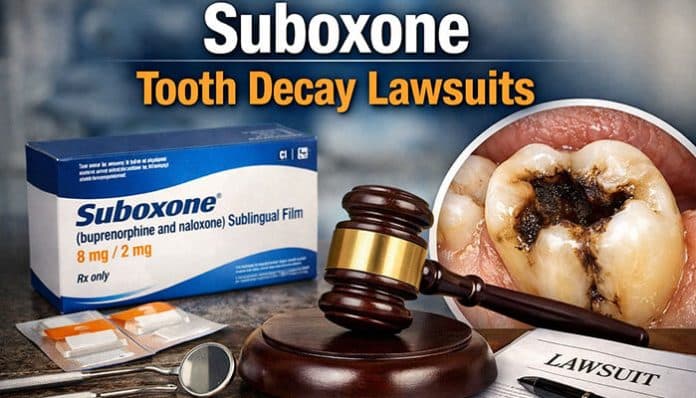

Suboxone is a medication commonly used to treat opioid addiction. While it can be effective in helping individuals manage their addiction, it has recently come under scrutiny for its potential side effects, particularly in relation to dental health. Tooth decay associated with Suboxone use has led many individuals to file a Suboxone tooth decay lawsuit.
This article delves into the concerns surrounding Suboxone and tooth decay, what causes it, and how those affected can seek legal recourse.
Understanding Suboxone Tooth Decay Lawsuit Claims
A Suboxone Tooth Decay Lawsuit arises when individuals attribute severe tooth decay to Suboxone, a medication used to treat opioid addiction. While effective for addiction treatment, it may cause significant dental side effects.
Suboxone’s connection to tooth decay is primarily related to its ability to cause dry mouth (xerostomia), which significantly impacts oral health.
Dry mouth reduces the saliva that helps wash away food particles, neutralize acids, and protect against bacteria.
This leads to a higher risk of tooth decay, cavities, and gum disease. Other factors like medication-induced acid reflux, can further exacerbate these dental problems.
Common causes of Suboxone-related tooth decay include:
- Dry Mouth (Xerostomia)
- Acid Reflux
- Increased Bacterial Growth in the Mouth
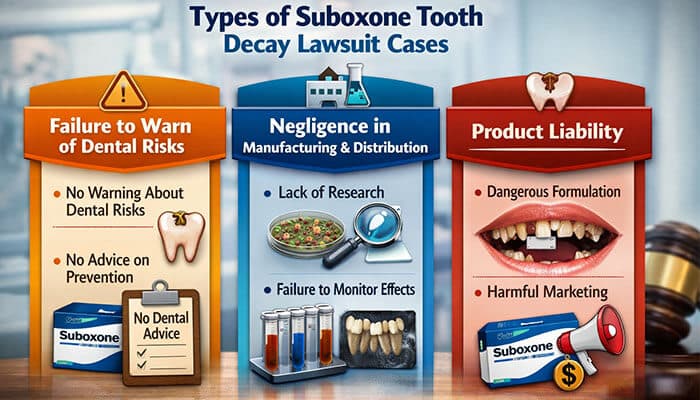
Types of Suboxone Tooth Decay Lawsuit Cases
Suboxone tooth decay lawsuit cases typically fall into the following categories, depending on the circumstances surrounding the patient’s dental issues.
1. Failure to Warn of Dental Risks
Many users claim that the pharmaceutical companies behind Suboxone did not properly warn them about the risk of tooth decay and other dental issues.
-
No warning about dental risks
-
No advice on prevention
2. Negligence in Manufacturing and Distribution
This type of case involves claims that Suboxone manufacturers did not adequately research or monitor the drug’s impact on oral health.
-
Lack of research on the oral health impact
-
Failure to monitor side effects
3. Product Liability
In product liability cases, plaintiffs argue that Suboxone’s design or marketing caused harm, particularly tooth decay.
- Dangerous formulation for teeth
- Inadequate marketing and warnings
Summary of Common Suboxone Tooth Decay Lawsuit Cases and Liable Parties
| Type of Case | Typical Cause | Potentially Liable Parties |
| Failure to Warn of Dental Risks | Inadequate warning about tooth decay risks | Pharmaceutical companies, doctors, and healthcare providers |
| Negligence in Manufacturing | Suboxone’s formulation contributes to dental issues | Manufacturers, distributors |
| Product Liability | Suboxone design or marketing defects leading to tooth decay | Pharmaceutical companies, manufacturers |
| Failure to Monitor Oral Health | Lack of monitoring by healthcare providers while on Suboxone | Doctors, healthcare institutions |
Case Evaluation and Legal Guidance
A lawyer reviews your case to determine if Suboxone caused your dental issues. They evaluate medical records, dental history, and prescriptions to assess if legal action is possible.
-
Review medical and dental records
-
Evaluate prescription history
1. Investigating the Cause of Tooth Decay
To build a strong case, the lawyer investigates your dental problems by gathering medical records and consulting dental professionals or experts about Suboxone effects.
-
Consult dental experts
-
Review medical studies and records
2. Identifying Liable Parties
The lawyer identifies all responsible parties involved, including pharmaceutical companies, prescribing doctors, and healthcare providers, to hold them accountable.
-
Identify pharmaceutical companies
-
Determine the responsibility of doctors and healthcare providers
3. Calculating Damages and Compensation
Here’s Calculating Damages and Compensation in a Suboxone Tooth Decay Lawsuit:
| Type of Damage | Compensation |
|---|---|
| Dental Treatment Costs | Costs for fillings, root canals, crowns, and other dental procedures. |
| Pain and Suffering | Compensation for the physical and emotional impact of dental damage. |
| Loss of Income | Compensation for lost wages if dental issues affect work ability. |
| Emotional Distress | Compensation for the mental anguish caused by tooth decay and related issues. |
| Future Dental Costs | Estimated future costs for ongoing dental treatments due to Suboxone use. |
4. Negotiating With Insurance Companies
Your lawyer communicates with insurers, ensuring they don’t settle for less than your claim is worth and negotiating the best outcome for you.
-
Handle insurer communications
-
Negotiate a fair settlement
Filing Lawsuits and Representing You in Court
If a settlement is not reached, the lawyer files a lawsuit and represents you in court, presenting your case to secure compensation.
-
File lawsuits within legal deadlines
-
Prepare and present evidence in court
Providing Ongoing Support and Advocacy
Throughout the process, the lawyer provides updates and answers questions, handling the legal complexities to reduce your stress.
-
Keep you informed throughout the process
-
Reduce legal burdens and stress
Who Can File a Suboxone Tooth Decay Lawsuit?
Individuals who used Suboxone for a long period and developed significant dental issues may be eligible to file a lawsuit. In cases of death related to Suboxone use, family members or the estate’s legal representatives can also file.
-
Suboxone users with dental problems
-
Family members of deceased individuals
-
Legal representatives of the estate
When Should You Contact a Suboxone Tooth Decay Lawyer?
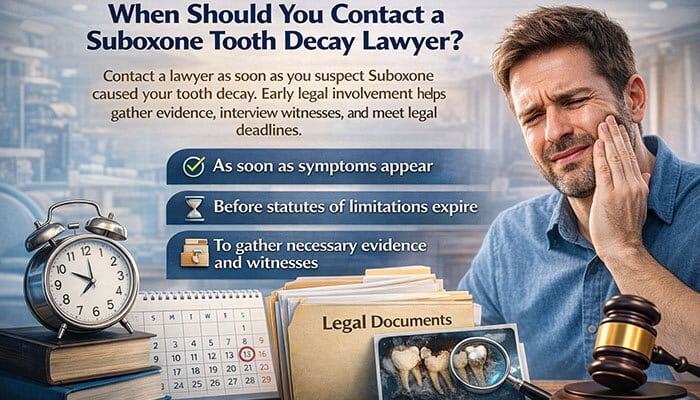 Contact a lawyer as soon as you suspect Suboxone caused your tooth decay. Early legal involvement helps gather evidence, interview witnesses, and meet legal deadlines.
-
As soon as symptoms appear
-
Before statutes of limitations expire
-
To gather necessary evidence and witnesses
Why Hiring a Suboxone Tooth Decay Lawyer Matters
Suboxone tooth decay lawsuits are complex, and without the expertise of an experienced lawyer, it may be challenging to secure fair compensation. A skilled lawyer will ensure that:
- Legal deadlines are met
- Proper compensation is pursued
- All liable parties are held accountable
Most lawyers specializing in Suboxone lawsuits work on a contingency fee basis, meaning you don’t have to pay unless your case is successful.
How Much Does a Suboxone Tooth Decay Lawyer Cost?
The cost of hiring a lawyer for a Suboxone tooth decay lawsuit is usually structured so that you don’t pay anything upfront.
-
Contingency Fee Basis—Most lawyers work on contingency, meaning they only get paid if you win or settle your case.
-
Typical Fee Percentage—The lawyer’s fee is typically 33% to 40% of the total settlement or award.
-
No Upfront Costs—You generally pay no upfront or out‑of‑pocket legal fees.
-
Expenses Covered After Win—Case expenses (like expert fees or filing costs) are usually reimbursed only if your case is successful.
Final Thoughts
A Suboxone Tooth Decay Lawsuit can help individuals and families affected by Suboxone’s harmful side effects receive the compensation they deserve. If you have experienced severe dental issues due to Suboxone use, seeking the help of an experienced lawyer is crucial to securing justice and protecting your legal rights.
Frequently Asked Questions (FAQs)
1. How much does a Suboxone tooth decay lawyer cost?
Ans: Most lawyers work on a contingency fee basis, meaning they take a percentage of the settlement or verdict. There are no upfront costs, and you only pay if you win your case.
2. What evidence do I need for a Suboxone tooth decay lawsuit?
Ans: You’ll need medical and dental records that document the extent of your tooth decay, as well as prescription records showing your use of Suboxone.
3. Can I file a lawsuit if I’ve already stopped using Suboxone?
Ans: Yes, you can still file a lawsuit even if you no longer use Suboxone. The statute of limitations for filing varies by state, so it’s essential to consult a lawyer as soon as possible.
4. What is the potential compensation for a Suboxone tooth decay lawsuit?
Ans: Compensation can vary widely depending on the extent of your dental issues, but it may include medical bills, pain and suffering, lost wages, and emotional distress.
5. What happens if my case doesn’t go to trial?
Ans: Most Suboxone tooth decay lawsuits are settled before going to trial. Your lawyer will negotiate with the responsible parties to reach a fair settlement.
Disclaimer: This article is for informational purposes only and does not constitute legal advice. Consult a qualified attorney for personalized guidance regarding your specific situation. No attorney-client relationship is formed by reading this article.