



If you’ve been involved in a car accident that wasn’t your fault, you may be wondering, “Should I get a lawyer for a car accident that wasn’t my fault?” While it may seem straightforward to file a claim with the at-fault driver’s insurance, the reality is that even in no-fault accidents, things can quickly become complicated. Insurance companies often look for ways to minimize payouts, and even minor disputes about liability can turn into major obstacles in receiving fair compensation. This is where a skilled lawyer can make a significant difference in ensuring that you get the compensation you deserve.
When asking, “Should I get a lawyer for a car accident that wasn’t my fault?”, it’s essential to consider the severity of the accident, the complexity of the case, and the level of insurance dispute involved. Even if you believe the other driver is fully responsible, handling the case on your own can result in missed opportunities for a higher settlement, especially if injuries or extensive damages are involved. A personal injury lawyer with experience in car accident claims can help protect your rights and navigate the legal process, ensuring you are not taken advantage of by insurance companies.
Do I Need a Lawyer for a No-Fault Car Accident?
- Insurance companies often offer low settlements.
- Injuries may become more severe later.
- Complex cases with multiple parties need legal expertise.
- Insurance tactics may reduce your compensation.
- Legal deadlines must be met to preserve your claim.
- Lawyers help negotiate better settlements.
- Contingency fees mean no upfront cost for you.
- Documentation of damages can be tricky without a lawyer.
- Lawyers protect your rights and fight for fair compensation.
What Happens After a Car Accident That Wasn’t Your Fault?
Once you’re involved in a car accident where you’re not at fault, there are several immediate actions you need to take:
- Call the police to file a report.
- Seek medical attention, even for minor injuries.
- Notify your insurance company and provide details of the accident.
- Gather evidence: take photos of the scene, get witness statements, and collect the other driver’s information.
However, even if you do everything right, you could face complications due to delays from the insurance company, fault disputes, or an inadequate settlement offer. This is where having a lawyer becomes critical in making sure your rights are fully protected.
Key Issues That Arise:
| Issue | Explanation |
| Fault disputes | The other driver or their insurer may deny full responsibility. |
| Insurance tactics | Insurance companies may offer lower settlements or delay claims. |
| Documenting damages | Proving injury or property damage requires clear documentation. |
Even when you’re not at fault, these complications can delay your recovery and reduce the amount of compensation you receive.
Why Insurance Adjusters May Not Be Your Friend
Insurance adjusters work for the company’s bottom line, not for your best interests. Their goal is to settle claims quickly and as cheaply as possible, often offering less money than you deserve.
How Insurance Adjusters Act:
- Delay settlements to pressure you into accepting a low offer.
- Undervalue medical claims and injuries to avoid paying full compensation.
- Shift blame to make you seem partially responsible, even when the accident was entirely the other driver’s fault.
Having a lawyer who specializes in car accidents can help you avoid these tactics. They will handle the communication with the insurance company and ensure that you are fairly compensated.
When to Consider Hiring a Lawyer for Your Car Accident
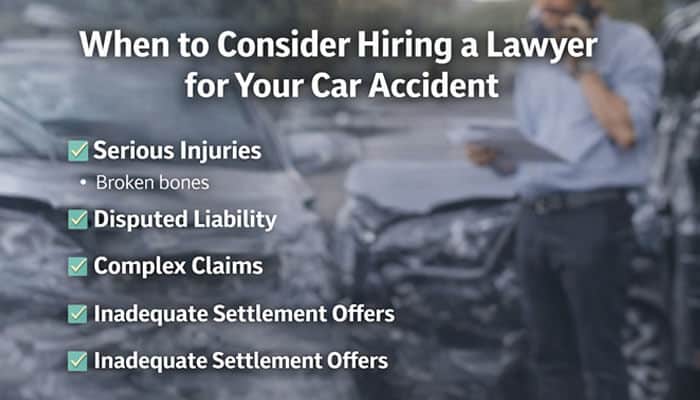
Here are specific scenarios when hiring a lawyer is a smart choice:
✔ Serious Injuries
- Broken bones
- Traumatic brain injuries (TBI)
- Spinal injuries
- Whiplash or long-term pain
If you have suffered significant injuries, a lawyer can help ensure that both immediate and future medical costs are covered. They can also help assess long-term implications like rehabilitation or disability.
✔ Disputed Liability
If the insurance companies disagree on who was at fault or try to claim that you were partially at fault, hiring a lawyer is crucial. They can gather and present evidence that clearly shows the other driver’s responsibility.
✔ Complex Claims
If the accident involved multiple vehicles, commercial vehicles, or uninsured/underinsured motorists, a lawyer is necessary to navigate the complexities. They will gather expert testimony, conduct investigations, and ensure that all responsible parties are held accountable.
✔ Inadequate Settlement Offers
If the insurance company offers a settlement that seems too low, a lawyer can negotiate on your behalf to secure a more favorable payout. Studies show that individuals who hire a lawyer typically receive higher compensation than those who handle their claims on their own.
What Does a Car Accident Lawyer Actually Do?
Hiring a lawyer for a car accident means having an expert to advocate for you. Here’s what they do:
| Task | Lawyer’s Role |
| Evaluate the Case | Review police reports, medical records, witness testimony, and physical evidence to determine the full extent of your damages. |
| Insurance Negotiations | Handle all communication with the insurer to make sure you’re not pressured into an early, low offer. |
| Prepare for Litigation | If necessary, file a lawsuit and represent you in court to fight for full compensation. |
| File Necessary Paperwork | Ensure that all paperwork is filed on time, avoiding costly legal mistakes. |
Things Lawyers Do to Strengthen Your Case:
- Collect accident scene photos
- Secure witness statements
- Get expert testimonies (e.g., accident reconstruction)
- Provide a detailed estimate of future medical costs
- Protect against statute of limitations issues
A lawyer will also advise you on how to handle conversations with insurance companies to avoid accidentally lowering your claim’s value.
How Lawyers Are Paid: Understanding Contingency Fees

Most car accident lawyers work on a contingency fee basis, meaning you don’t pay unless you win your case.
Benefits of Contingency Fees:
- No upfront costs — You only pay if you win.
- No out-of-pocket expenses — Lawyers’ fees are deducted from the settlement.
- Lawyers are motivated to secure the highest settlement possible, as their fee depends on the result.
Typically, lawyers take around 33-40% of the final settlement or court award.
Common Mistakes That Can Hurt Your Claim
Avoid these common mistakes that can negatively affect your car accident claim:
| Mistake | Consequence |
| Accepting the first settlement | Likely far less than you deserve. |
| Giving recorded statements | Adjusters may use your words against you. |
| Not seeking medical attention | Minor injuries can worsen, and lack of documentation can hurt your case. |
| Posting on social media | Insurers may use your posts to argue that your injuries are less severe than claimed. |
Having a lawyer can help you avoid these mistakes and ensure that your case is handled correctly.
The Importance of Timely Action in Car Accident Cases
Time is critical in car accident claims. There are strict statutes of limitations (typically 2-3 years) within which you must file your claim. Failing to meet these deadlines could mean losing the right to recover compensation.
- Loss of evidence: Evidence such as eyewitness testimony or accident scene details may disappear over time.
- Medical issues: Your injuries may worsen, and a lawyer can help link ongoing issues to the accident to ensure future costs are covered.
Conclusion
In conclusion, if you’ve been involved in a car accident that wasn’t your fault, you might wonder, “Should I get a lawyer for a car accident that wasn’t my fault?” While it may seem straightforward to deal directly with insurance companies, the reality is that the claims process can be more complicated than it appears. Insurance companies often try to minimize payouts, and even minor disputes over liability can turn into significant hurdles, especially when injuries or property damage are involved.
Hiring a car accident lawyer can help ensure that your rights are protected and that you receive the full compensation you deserve. A lawyer can guide you through the complex legal process, handle negotiations with insurance companies, and take care of all the necessary paperwork. Whether you’re dealing with serious injuries, disputed liability, or low settlement offers, a lawyer will help you navigate the system effectively.
Ultimately, if your case involves significant damages, medical expenses, or legal complexities, the answer to “Should you get a lawyer for a car accident that wasn’t your fault?” is yes. A skilled attorney will not only help you secure fair compensation but also ease the stress of managing your claim, allowing you to focus on recovery and moving forward.
Frequently Asked Questions (FAQs)
1. Should I get a lawyer for a car accident that wasn’t my fault?
Yes, hiring a lawyer is recommended, even if the accident wasn’t your fault. A lawyer helps ensure you get fair compensation by navigating disputes and handling insurance negotiations.
2. Do I need a lawyer for a car accident that wasn’t my fault?
While you aren’t legally required to hire a lawyer, it’s highly recommended if you’ve suffered injuries, faced disputes over liability, or received a settlement offer that doesn’t seem fair. A lawyer can help ensure you are fully compensated for medical bills, property damage, and lost wages.
3. How much does a lawyer cost for a car accident case?
Most car accident lawyers work on a contingency fee basis, meaning they charge no upfront fees. They only get paid if you win your case, typically taking 33-40% of the final settlement or court award. This arrangement makes it easier for you to pursue legal help without worrying about upfront costs.
4. What should I do if the insurance company offers me a low settlement?
If the insurance company offers a low settlement, it’s important to consult a lawyer before accepting it. Lawyers can negotiate with insurers on your behalf, ensuring that you receive a settlement that reflects your actual damages, including future medical costs and lost income.
5. Can I file a lawsuit for a car accident even if the other driver was at fault?
Yes, if the other driver was clearly at fault but their insurance refuses to provide fair compensation, or if you need additional compensation for pain and suffering, you can file a lawsuit. A lawyer will help assess the strength of your case and guide you through the legal process.
6.How long do I have to file a car accident claim in my state?
The time limit for filing a car accident claim varies by state, but most states have a statute of limitations between 2 and 3 years from the date of the accident. It’s crucial to consult a lawyer promptly to ensure that your claim is filed within the appropriate timeframe.
Disclaimer:This article is for informational purposes only and does not constitute legal advice. For personalized legal guidance, please consult a qualified attorney to discuss your specific case.
