


When a defective product causes harm, it can lead to severe physical injury, emotional distress, and significant financial burdens. In such cases, a product liability lawyer plays a crucial role in helping victims seek justice and compensation. These specialized attorneys hold manufacturers, retailers, and distributors accountable for unsafe products that endanger consumers. Whether the product defect lies in design, manufacturing, or marketing, a product liability lawyer has the expertise to navigate complex legal issues, ensure your rights are protected, and help you recover the damages you deserve.
This guide explores everything you need to know about product liability lawyers, including the types of defects that lead to legal claims, how the process works, and what to expect when pursuing a case.
What Is a Product Liability Lawyer?
A product liability lawyer is a legal expert who represents individuals or businesses in cases involving injuries caused by defective products. These lawyers specialize in holding manufacturers, distributors, and retailers accountable when their products cause harm. Whether the injury results from a design flaw, a manufacturing defect, or inadequate warnings, a product liability lawyer helps the victim navigate the complexities of the law and secure the compensation they deserve.
Product liability lawyers focus on proving that the product in question was defectively designed, produced, or marketed, and that these flaws caused harm to the consumer or bystander. These attorneys usually work on a contingency fee basis, meaning they are only paid if the case results in a favorable outcome for the plaintiff.
The Role of a Product Liability Lawyer
A product liability lawyer helps individuals who have been harmed by defective products. Their role is to seek compensation by holding manufacturers, distributors, and retailers responsible for unsafe products that cause injury or damage.
1. Case Evaluation and Investigation
The attorney starts by assessing the strength of the claim. This includes gathering evidence to prove that a defect in the product directly caused the injury.
- Gathering Evidence: Includes photos, medical records, and expert testimony.
- Identifying the Defect: Determines whether the defect is due to design, manufacturing, or marketing.
2. Legal Guidance and Advice
The attorney provides legal advice about the different theories of product liability and explains how they apply to the case. They also inform clients about deadlines for filing a lawsuit.
- Legal Theories: Strict liability, negligence, and breach of warranty.
- Statute of Limitations: The lawyer explains the time limits for filing a claim.
3. Filing the Lawsuit and Representation
If the case is strong, the lawyer files a complaint in court and represents the plaintiff throughout the legal process, including managing all necessary legal documentation.
- Filing the Complaint: Officially initiates the lawsuit.
- Managing Discovery: Exchanges evidence and information with the defendant.
4. Negotiating Settlements or Going to Trial
The attorney will negotiate settlements to resolve the case quickly, but will take the case to trial if a fair settlement cannot be reached. They aim to get the best possible compensation for the client.
- Negotiation: Strives for a settlement without trial.
- Trial: If no settlement, the lawyer presents the case in court.
5. Maximizing Compensation
The attorney ensures the victim receives appropriate compensation, including medical costs, lost wages, pain and suffering, and sometimes, punitive damages for especially reckless conduct by the defendant.
- Types of Compensation: Medical expenses, lost wages, and emotional distress.
- Punitive Damages: Awarded in cases of particularly egregious behavior.
Why Product Liability Matters
1. Consumer Protection
Product liability laws are crucial because they ensure consumers’ safety. In the modern global marketplace, products can quickly reach consumers, but if they’re defective, the results can be catastrophic. Product liability laws protect consumers from harm, ensuring that they have legal recourse if a product causes injury.
2. Business Accountability
Product liability laws also serve to hold businesses accountable for the safety of their products. When a manufacturer or seller produces or sells a defective product, they can be held legally responsible for the harm it causes. These laws encourage businesses to implement safety standards and quality control to prevent harm to consumers.
3. Compensation for Victims
Victims of defective products can recover various forms of compensation, such as medical expenses, lost wages, pain and suffering, and in some cases, punitive damages. Legal action also sends a message to companies about the importance of maintaining safe production practices.
Types of Product Defects
Product liability cases are divided into three main categories of defects. These categories help determine the legal theories under which a claim can be filed.
1. Design Defects
A design defect occurs when a product is inherently unsafe because of its design. This flaw is present even if the product is made exactly as intended.
Example: If a toy is designed with small parts that can easily detach and cause choking, it would be considered a design defect, making the product unsafe for children.
Legal Theory: In design defect cases, the lawyer must prove that the product was defectively designed and that the defect made the product unreasonably dangerous.
2. Manufacturing Defects
A manufacturing defect arises when a product is not manufactured according to its original design. This defect happens during the production process, affecting only certain units of the product, not the entire product line.
Example: A batch of car tires that were manufactured with improper materials, leading to the tire’s blowout on the road.
Legal Theory: In manufacturing defect cases, the lawyer must prove that the product deviated from its intended design during the production process, causing harm.
3. Marketing Defects (Failure to Warn)
Marketing defects, or failure to warn, occur when a product’s instructions or warnings are inadequate or nonexistent, leading consumers to use the product improperly and become injured.
Example: A cleaning product with no warning about its toxicity or the need for ventilation, leading to respiratory problems when used indoors.
Legal Theory: These cases argue that the manufacturer or retailer failed to provide adequate information about the product’s risks or proper usage, leading to consumer injury.
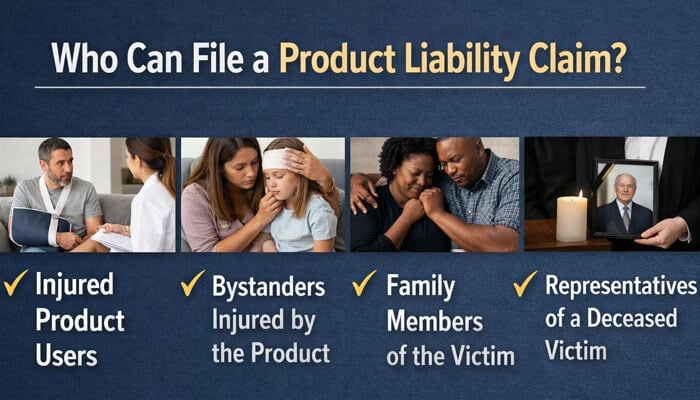
Who Can File a Product Liability Claim?
1. Consumers
Anyone who directly uses or consumes a defective product and suffers harm is eligible to file a product liability claim. This includes injuries from consumer products, medications, medical devices, etc.
- Direct users of the defective product.
- Includes consumers harmed by a variety of products.
2. Bystanders
Even if you weren’t the intended user of the product, if you are injured due to a defective product, you can file a claim. For example, if a defective car part causes an accident and injures someone in another vehicle, they may have grounds for a lawsuit.
- Bystanders injured by a defective product can also file claims.
- Includes people hurt in accidents caused by faulty products.
3. Family Members of the Injured
If someone is injured or killed due to a product defect, their family members, such as spouses or children, may also file a claim for wrongful death or emotional distress.
- Family members can seek compensation if the defect results in death or severe injury.
- Includes spouses, children, and other dependents.
4. Businesses
Sometimes, businesses can be harmed by defective products. For instance, a retailer might be affected if a defective product is recalled or causes damage to the store. These businesses have legal recourse to seek compensation.
- Businesses harmed by defective products can seek compensation.
- Includes damages from product recalls, lost sales, or reputation harm.
Product Liability Lawyer vs. Personal Injury Lawyer
While both focus on injury cases, the difference lies in the type of injury caused and the legal approach:
| Product Liability Lawyer | Personal Injury Lawyer |
| Specializes in defective products | Handles all types of injury cases |
| Focuses on product law | Deals with broader negligence law |
| Works with experts in product safety | Works with medical/legal experts |
Legal Theories in Product Liability Cases
Product liability lawyers typically rely on different legal theories to prove their cases. The type of theory used depends on the nature of the defect and the evidence available.
1. Strict Liability
In strict liability cases, the injured party does not have to prove that the manufacturer was negligent. The mere fact that the product was defectively designed, manufactured, or marketed and caused injury is enough to hold the manufacturer responsible.
Key Points:
- No need to prove negligence.
- Just prove that the defect existed and caused harm.
Example: If an automobile manufacturer produces a car with a faulty brake system, and the brake fails, causing an accident, the company can be held strictly liable for the accident even if they didn’t intentionally cause the defect.
2. Negligence
Negligence cases involve proving that the manufacturer failed to use reasonable care in designing, producing, or marketing the product. This means the lawyer must show that the manufacturer knew or should have known about the potential hazards.
Key Points:
- Requires proof of the manufacturer’s failure to exercise reasonable care.
- Can apply to both design and manufacturing defects.
Example: A pharmaceutical company that fails to conduct proper safety testing on a new drug can be sued for negligence if the drug causes harm to users.
3. Breach of Warranty
Warranty claims arise when a product fails to meet the standards set by the manufacturer or retailer, whether expressed or implied. These claims may focus on the product’s inability to perform as promised, or its failure to meet legal standards.
Key Points:
- Legal responsibility for failing to meet product standards or expectations.
- Applies to both expressed and implied warranties.
Example: A washing machine that fails to work as described in the manual may lead to a breach of warranty claim.
How a Product Liability Case Works
Product liability cases can be complicated, but here’s a simplified breakdown of the process:
1. Case Evaluation
The first step is a consultation with a product liability lawyer. They will review the details of the case, including the product involved, the nature of the defect, and how it caused injury or damage.
2. Filing the Complaint
Once the lawyer determines that there’s a valid claim, they will file a complaint in a civil court. This document formally accuses the defendant of causing harm due to the defective product.
3. Discovery
During the discovery phase, both sides exchange evidence and testimonies, including documents, depositions, and expert opinions. The plaintiff may have to prove that the defect existed and led to the injury.
4. Settlement/Negotiation
Before reaching trial, most cases are settled. Lawyers may negotiate a settlement to avoid the lengthy and expensive trial process. Settlements are often favorable for both parties as they guarantee compensation without the uncertainty of a trial.
5. Trial
If a settlement cannot be reached, the case will proceed to trial. During trial, both sides will present their evidence, and a judge or jury will decide if the defendant is liable and what damages, if any, should be awarded.
Damages You Can Recover
The purpose of product liability claims is to compensate victims for the harm caused by defective products. Damages may include:
- Medical Expenses: Coverage for past and future medical bills incurred due to the injury.
- Lost Wages: Compensation for wages lost due to the inability to work while recovering.
- Pain and Suffering: A monetary value for the emotional and physical distress caused by the injury.
- Punitive Damages: In extreme cases where the defendant’s actions were particularly harmful or reckless, punitive damages may be awarded to punish the defendant.
Product Liability Statute of Limitations by Jurisdiction
The statute of limitations is the time limit within which a plaintiff must file a product liability claim. If this period expires, the court may dismiss the case, and the victim may lose the right to seek compensation. The statute of limitations varies by jurisdiction, type of defect, and specific circumstances surrounding the case.
| Jurisdiction | Time Limit | Notes |
| California | 2-3 years | Starts from the date of injury. |
| New York | 3 years | Begins from the date of injury or discovery. |
| Texas | 2 years | Starts from injury date or when discovered. |
| Florida | 4 years | Starts from discovery of the defect. |
| Illinois | 2 years | From the injury date or defect discovery. |
| Georgia | 2 years | Begins from injury date. |
| UK | 3 years | From the injury or discovery date. |
This table format provides a clear comparison of the statute of limitations across different jurisdictions, helping readers easily understand the time limits they must adhere to when filing a product liability claim.
How to Choose the Right Product Liability Lawyer
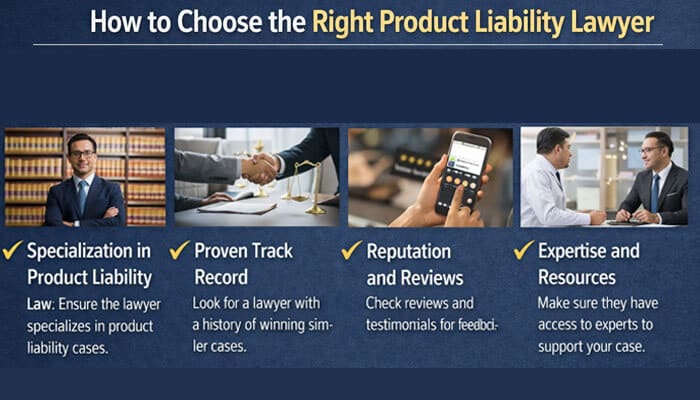
Choosing the right product liability lawyer is crucial to ensure you receive fair compensation for injuries caused by defective products. A skilled lawyer with experience in product liability cases can navigate the complexities of the law, work with experts, and maximize your chances of winning. Here are key factors to consider when making your choice
- Specialization in Product Liability Law: Ensure the lawyer specializes in product liability cases.
- Proven Track Record: Look for a lawyer with a history of winning similar cases.
- Reputation and Reviews: Check reviews and testimonials for feedback.
- Expertise and Resources: Make sure they have access to experts to support your case.
- Clear Communication: Choose a lawyer who communicates effectively and keeps you informed.
- Contingency Fee Structure: Ensure they work on a contingency fee basis.
- Consultation Availability: Schedule a consultation to assess their approach.
Why You Should Hire a Product Liability Lawyer
Hiring a specialized product liability lawyer is essential for the success of your case. Here’s why:
- Expertise in Complex Cases: Product liability cases often involve complex legal and technical issues. A skilled lawyer can navigate these complexities and build a strong case.
- Access to Resources: Lawyers have access to experts in various fields, including product safety specialists, engineers, and medical professionals.
- Maximized Compensation: Experienced lawyers know how to negotiate settlements and ensure that victims receive the maximum compensation possible.
Common Products Involved in Liability Cases
Some of the most common products that result in product liability claims include:
- Pharmaceuticals and Medical Devices: Faulty drugs or medical implants.
- Consumer Electronics: Defective phones, laptops, or household appliances.
- Automotive Parts: Brakes, airbags, or tires that fail and cause accidents.
- Children’s Toys and Cribs: Products that may pose choking hazards or injuries.
- Industrial Machinery: Malfunctioning equipment that causes workplace injuries.
Conclusion
If you’ve been injured by a defective product, a product liability lawyer plays a crucial role in helping you navigate the complex legal landscape. These lawyers specialize in holding manufacturers, distributors, and retailers accountable for their unsafe products. They provide vital support in securing the compensation you deserve, whether the harm resulted from a design defect, manufacturing flaw, or failure to warn.
By working with a skilled product liability attorney, you can ensure your rights are protected and that you pursue all available legal avenues for compensation. They’ll guide you through the process, gather critical evidence, consult with experts, and negotiate the best possible settlement or pursue a trial if necessary. With their expertise, you can achieve justice and potentially prevent others from suffering the same harm caused by defective products.
A product liability lawyer ensures that negligent companies are held accountable and that victims are properly compensated for their losses, including medical bills, lost wages, pain and suffering, and punitive damages. Their specialized knowledge and experience make all the difference in achieving a successful outcome.
Product Liability Lawyer FAQs
1. What does a product liability lawyer do?
A product liability lawyer specializes in helping individuals who are injured by defective products. They hold manufacturers, distributors, and retailers accountable for unsafe products, guiding victims through the legal process to secure compensation.
2. How do I know if I have a valid product liability claim?
If you’ve been harmed by a defective product, a product liability lawyer will assess your case by reviewing evidence, identifying the defect, and determining whether the defect directly caused your injury. They can help you decide if you have a valid claim.
3. How long do I have to file a product liability claim?
The statute of limitations for filing a claim typically ranges from 2 to 4 years, depending on your jurisdiction. It’s important to consult with a product liability lawyer as soon as possible to ensure you meet any deadlines.
4. How much does a product liability lawyer cost?
Most product liability lawyers work on a contingency fee basis, meaning you don’t pay unless you win your case. The lawyer’s fee is usually a percentage of the settlement or award, allowing victims to access legal representation without upfront costs.
5. Can a product liability lawyer help me get punitive damages?
Yes, if the manufacturer’s actions were particularly reckless or egregious, a product liability lawyer can help you pursue punitive damages in addition to compensatory damages for your medical bills, lost wages, and emotional distress.
Disclaimer: This article is for informational purposes only and does not constitute legal advice. Product liability laws vary by jurisdiction, and the use of this content does not establish an attorney-client relationship. For specific legal guidance, consult a licensed product liability lawyer.
