

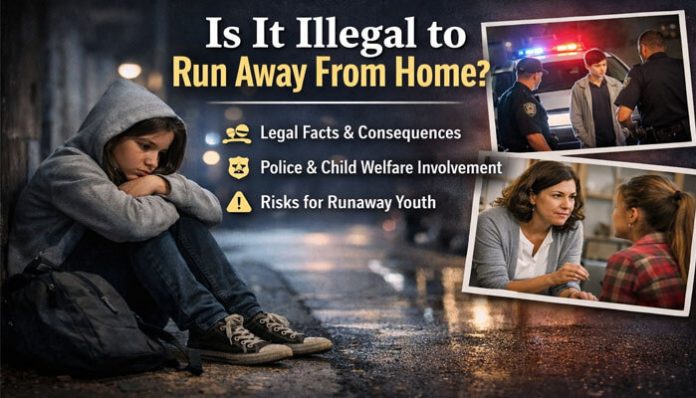

Running away from home may sometimes feel like the only option for a young person struggling with family conflict, abuse, or emotional distress. But many teens — and even adults — aren’t sure what the law actually says about leaving home without permission. “Is it illegal to run away from home?” and “What are the consequences of running away from home?” are common. The legal landscape can be confusing, especially because rules vary by jurisdiction.
This article breaks down how the law views running away, what it means legally for minors versus adults, and the real-life consequences — both legal and personal — that can result from fleeing home.
Understanding the Term “Running Away”
In legal and social service contexts, running away means leaving your home or the care of a parent/guardian without permission and staying away overnight or for an extended period. It’s different from:
- Temporarily staying with a friend with parental permission
- Leaving home as an adult (which is legally allowed)
- Being emancipated (where a minor is legally independent)
In most cases, running away involves a minor (under 18).
Is It Illegal to Run Away From Home?
No — in most jurisdictions, running away from home is not a criminal offense for the youth who leaves.
However:
- Some states treat it as a status offense — meaning an act that is only considered an offense because of the status of the person committing it (i.e., being a minor).
- A runaway may be reported to law enforcement so they can help locate and return the minor to their parent or guardian.
- Adults who help a minor run away may face legal consequences (e.g., interference with custody, harboring a runaway).
Why Laws Differ by State/Country
There is no universal federal law in the United States making it a crime simply to run away. Family laws are usually state-specific. Some states may:
- Classify running away as a juvenile status offense
- Mandate police involvement to ensure the minor’s safety
- Allow minors to be returned home without arrest
Importantly, most laws include safeguards — authorities are typically required to consider the minor’s safety and reasons for leaving before forcing a return.
What Happens When a Minor Runs Away? Legal Processes
Although running away isn’t usually a crime, police and child welfare systems often respond to protect the minor:
A. Police Involvement
- A parent or guardian can file a missing person/runaway report with police.
- Officers may attempt to locate, speak with, and return the minor.
- Police may ask questions to ensure the youth is safe (e.g., mental state, potential abuse).
B. Intake and Assessment by Child Services
In some cases:
- Child Protective Services (C.P.S.) may be involved
- A welfare check or home visit may occur
- Court involvement may happen if neglect or abuse is suspected
C. Return to Parent/Guardian
Often, the goal is reunification, unless there is clear evidence that the home is unsafe.
What About Emancipation? A Legal Alternative
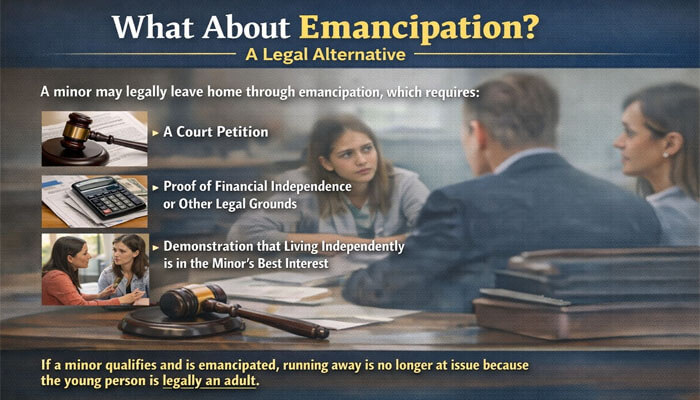
A minor may legally leave home through emancipation, which requires:
- A court petition
- Proof of financial independence or other legal grounds
- Demonstration that living independently is in the minor’s best interest
If a minor qualifies and is emancipated, running away is no longer at issue because the young person is legally an adult.
Consequences of Running Away From Home — A Full Breakdown
Even though running away usually isn’t automatically illegal, there are significant consequences — both legal and personal.
A. Legal Consequences
1. Status Offense Record
- Some states may record the runaway incident in juvenile records
- Could affect future juvenile proceedings
2. Police and Court Involvement
- Mandatory meetings with juvenile court officers
- Possible shelter placement ordered by the court
3. Liability for Adults Who Help a Runaway
Adults who knowingly shelter or transport a runaway minor without parental consent can face charges (e.g., contributing to the delinquency or interference with custody).
B. Personal and Social Consequences
1. Safety Risks
- Exposure to exploitation, violence, and trafficking
- Homelessness and survival challenges
2. Educational Disruption
- Missing school
- Falling behind academically
3. Family and Emotional Impact
- Worsened family tension
- Trauma, isolation, depression
4. Risk of Criminal Behavior
- Some runaways may engage in survival crimes such as theft
- Others may be coerced into illicit activities by adults or peers
C. Long-term Life Consequences
Studies consistently show that runaway youth face elevated chances of:
- Homelessness in adulthood
- Substance abuse
- Mental health disorders
- Difficulty forming stable relationships
These outcomes are often related to the circumstances that led to running away — such as abuse or neglect — but being away from support systems increases the risk.
When Running Away Becomes a Safety Necessity
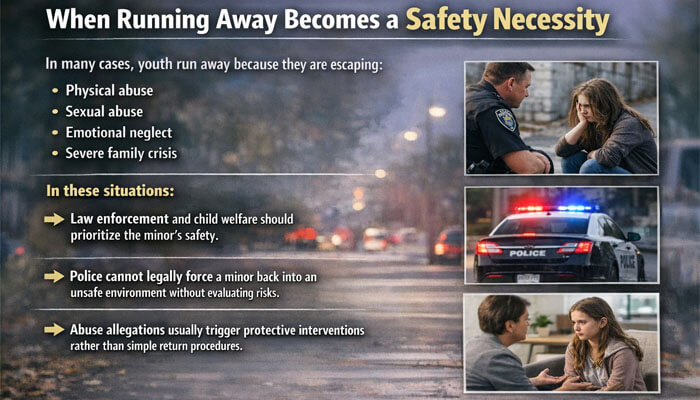
In many cases, youth run away because they are escaping:
- Physical abuse
- Sexual abuse
- Emotional neglect
- Severe family crisis
In these situations:
- Law enforcement and child welfare should prioritize the minor’s safety.
- Police cannot legally force a minor back into an unsafe environment without evaluating risks.
Abuse allegations usually trigger protective interventions rather than simple return procedures.
What Should a Minor Do Instead of Running Away? Practical Steps
If a minor feels unsafe at home, the following options are safer and more effective than running away:
A. Confide in a Trusted Adult
- Teacher, school counselor, religious leader
- Extended family member
B. Contact Child Protective Services
Every state has a hotline for reporting abuse or neglect.
C. Seek Legal Advice
A youth advocate, legal aid, or attorney can explain rights and options.
D. Consider Safe Shelter Options
Temporary shelters and youth support services exist to protect minors in crisis.
Resources Available for Runaway Youth
There are numerous organizations dedicated to helping teens in crisis:
- National Runaway Safeline (U.S.)
- Emergency youth shelters
- Crisis hotlines
- Mental health services
- School social workers
These resources act as support alternatives to running away, offering emotional and legal assistance.
Key Takeaways
Is it illegal to run away from home?
- Generally, no running away alone is not treated as a crime for minors in most jurisdictions.
- Law enforcement may be involved to ensure safety, not punishment.
What are the consequences of running away from home?
- Potential juvenile records in some cases
- Police and child welfare involvement
- Exposure to personal, social, and emotional risks
- Legal penalties for adults who assist runaways illegally
Important Note
If the home environment is dangerous, authorities should consider protective measures rather than simply returning a youth. Abuse and neglect trigger child welfare responsibilities.
Final Thoughts
While running away from home is rarely charged as a crime, it is not a decision to take lightly. The law prioritizes the safety and welfare of minors, and the consequences — both legal and realworld — can be serious and long-lasting.
If you or someone you know is considering leaving home due to problems, conflict, or danger, it’s wise to seek help from trusted adults, counselors, legal professionals, or dedicated support organizations before taking action.
Is it illegal to run away from home? FAQs
Q: Is it illegal to run away from home?
A: Running away is typically not a criminal offense for minors. However, some states treat it as a status offense, which means the minor might face legal procedures to ensure their safety.
Q: Can police force a runaway minor to return home?
A: Police can intervene to ensure a minor’s safety, but they cannot force a return if there’s evidence of abuse or neglect. The minor’s well-being is the priority.
Q: What should a minor do if they feel unsafe at home?
A: Instead of running away, minors should contact a trusted adult, child protective services, or a youth shelter. Legal advice can also provide alternatives for safety.
Q: Can adults face consequences for helping a runaway?
A: Yes, adults who knowingly assist a minor to run away without parental consent may face legal consequences, such as charges related to interference with custody.
Disclaimer: This content is for informational purposes only and does not constitute legal advice. Laws vary by jurisdiction, so consult a qualified legal professional for guidance. If you are in danger or feel unsafe, contact local authorities or a trusted support service immediately.
